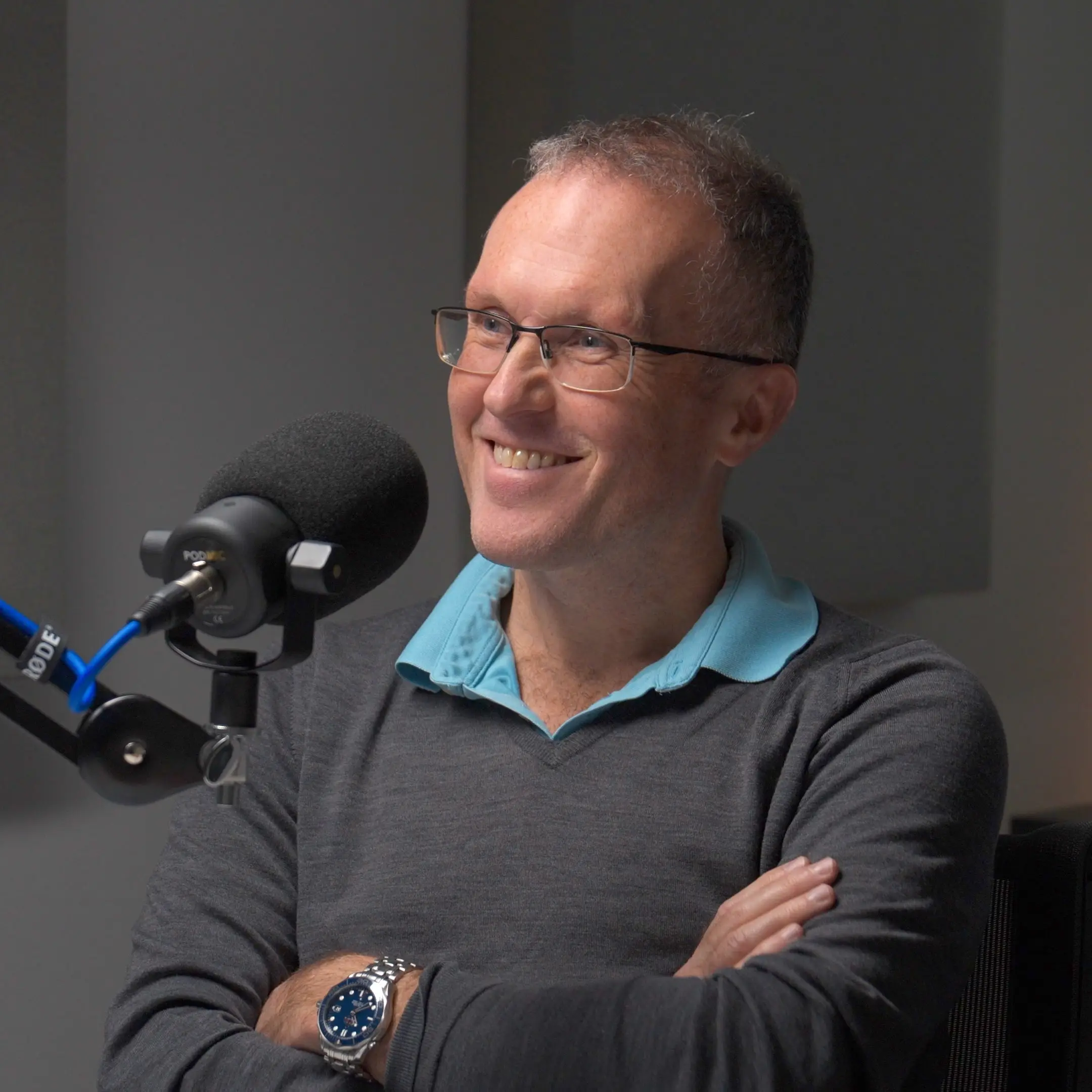
Building a £10 Billion Vision: Inside the Ellison Institute of Technology with Lisa Flashner


.png)
.png)

How does one of the most significant private investments in UK science and technology history take shape on the ground in Oxford?
In this episode of Oxford+, host Susannah de Jager speaks with Lisa Flashner, Chief Operating Officer of the Ellison Institute of Technology, about Larry Ellison's ambitious vision to establish a transformative research campus in Oxford. They explore why Ellison chose Oxford as the home for EIT's first major European campus, the Institute's four main pillars of work: medical sciences, clean energy, sustainable agriculture, and AI and robotics, and the physical plans for a campus that will eventually house up to 7,000 people.
Lisa brings a unique perspective, having spent 15 years as COO of the Ellison Medical Institute in Los Angeles before relocating to Oxford. She discusses the cultural differences between US and UK innovation ecosystems, the Institute's "all boats rise" philosophy of collaboration with the University of Oxford and the broader ecosystem, and addresses early suspicions about whether EIT would drain talent from the university. Announced in October 2025, the Ellison Institute confirmed plans to spend more than £10 billion on talent and science programmes over the next decade. A major vote of confidence as the UK seeks to strengthen its position in global science and technology. From the Cowley Branch Line to the restoration of the Eagle and Child pub, this conversation offers a comprehensive look at how ambitious private investment can accelerate Oxford's transition from world-class discovery science to real-world impact.
Lisa Flashner is the Chief Operating Officer of the Ellison Institute of Technology, where she leads strategic planning, operations, real estate, construction, and expansion efforts for the Oxford campus. Before relocating to Oxford, Lisa spent 15 years as the Chief Operating Officer of the Ellison Medical Institute in Los Angeles, where she led complex operations, large-scale programme execution, and strategic partnerships across science and health. She continues to support the Ellison Medical Institute as a senior adviser and serves as a board member of the Ellison Institute Research Foundation. Lisa holds a Bachelor of Science in Accounting from the University of Illinois, a magna cum laude law degree from Georgetown University Law Center, and is a Certified Public Accountant. Her role at EIT places her at the centre of one of the most significant private investments in UK science and technology, overseeing the development of a campus that will ultimately accommodate up to 7,000 employees and house cutting-edge research in medical sciences, clean energy, sustainable agriculture, and AI and robotics.
[00:00:01] Susannah de Jager: Welcome to Oxford Plus the podcast focused on innovation around Oxford. We look at everything across the ecosystem, the institutions, the people, the technology. If you need to learn anything about Oxford, whether it's how to take a first step in through the door, or as an experienced investor wanting to go deeper, this is the podcast for you.
[00:00:23] Oxford has long stood at the crossroads of tradition and discovery, and now it's entering a new chapter of innovation with one of the most significant private investments in UK science and technology in history. The Ellison Institute of Technology, founded by Oracle co-founder Larry Ellison, has chosen Oxford as the home of its first major European campus. A commitment that signals confidence in this city's research excellence and its potential to accelerate discoveries into real world solutions.
[00:00:53] Our guest today is Lisa Flashner, Chief Operating Officer of the Ellison Institute of Technology, who plays a central role in shaping and delivering that vision. Before taking on her current role in Oxford, Lisa spent many years in Los Angeles as the COO of the Ellison Medical Institute, where she led complex operations, large scale program execution, and strategic partnerships across science and health.
[00:01:17] Today we'll explore why Ellison chose Oxford, what the Institute's missions and ambitions are, the physical plans for the campus, and the opportunities this brings to researchers, students, and the UK innovation ecosystem. We'll also talk about Lisa's unique perspective having worked in both the US and the UK innovation cultures and how cultural differences between these environments shape how science, entrepreneurship and collaboration actually unfold. We will also cover pubs.
[00:01:47] This is a conversation about place, purpose, and how ambitious investment rooted in deep respect for science and community can help Oxford and the UK drive the next wave of global impact.
[00:01:59] Lisa, thank you so much for joining today.
[00:02:02] Lisa Flashner: Well, thank you for having me.
[00:02:05] Susannah de Jager: So first I'd love you just to set out the stall for anyone listening that isn't familiar, what is the Ellison Institute of Technology and maybe a bit on your four main pillars.
[00:02:16] Lisa Flashner: Sure, so the Ellison Institute was founded by Larry Ellison to really think about solving some of the world's most difficult global problems and really thinking about it in sort of a long term view of how we look at full stack solutions. And so these aren't point technologies, we're not a granting organization, but really taking technology and science and translating it to impact.
[00:02:42] We have four main areas that we're doing, as you mentioned, so medical sciences including generative biology, clean energy, sustainable agriculture and AI and robotics and underpinning that is a large investment in scholarship and students. So training our next generation of scientists and technologists.
[00:03:02] Susannah de Jager: So it's spectacularly broad.
[00:03:04] Lisa Flashner: Yes.
[00:03:05] Susannah de Jager: Which is great. Why is this so important to Larry?
[00:03:10] Lisa Flashner: You know, Larry is looking at his legacy and thinking about the problems in the world and a different way of addressing them. We all know there are major global problems around health certainly climate change and agriculture and he's looking at it, thinking that the way we've tried to address those, whether through philanthropy or traditional academia, isn't really solving these problems. Even venture right, it is much more of a short term focus and what's the return financially on it and he's looking and thinking the return should be impact and it should also be commercially sustainable.
[00:03:44] So his view philanthropy's great, right? It's can solve a problem for a certain period of time. But when the philanthropist withdraws his or her money, that solution is no longer there. So if we can come up with commercially sustainable entities that we spin out and address these problems and they are sustainable on their own. Hopefully the problem is addressed over the long term.
[00:04:06] Susannah de Jager: Very clear and you used an expression there, in your first answer, you were talking about full stack. It seems obvious, but what does it mean to you?
[00:04:14] Lisa Flashner: It means looking at these problems that require a whole bunch of different solutions. So when you look at something, it's not just a point technology, it's regulatory issues, it's collecting data, it's understanding the AI and the way to address it in a complex manner. So these are solutions that take many points in the stack in order to solve them. As opposed to coming up with the next great cool piece of technology, which is interesting, but unlikely to address very complex problems like sustainable agriculture.
[00:04:47] Susannah de Jager: How did the vision start in terms of its scale, the physical space, what was the initial vision?
[00:04:54] Lisa Flashner: Larry started this vision in Los Angeles where I was a member of the Institute in Los Angeles, which is the Ellison Medical Institute, which primary focus is cancer research and through that he started to look more broadly at what other areas could he focus on? And during COVID, he spent quite a lot of time working with scientists here in Oxford and was really impressed with the science that was being done here.
[00:05:18] And I think that started to spark his view of where else could he do something like this and what else could it be? So it started off, I'm going to say, quote, unquote "small" with our acquisition of two pieces of property, what we refer to as Littlemore House and Littlemore Brook, which is about 300,000 square feet, and the ambition then was about 700 staff. Once that got started, which was early 2022, he started to meet more scientists here, he started to think more broadly about global problems, and at the end of last summer, we announced the acquisition of another 2 million square feet. So about two thirds of the Oxford Science Park and an ambition to really look at growing this to about 5,000 employees and a much broader view of problems that we are going to try to address.
[00:06:02] So the ambition is broader, deeper, bigger, and we hope, really if we could solve a few of these great problems, right? A great success for the world.
[00:06:12] Susannah de Jager: And where are you at in terms of the scaling of that vision, because that's a massive number of people and a huge campus. So I'd love to know, kind of where you are andwhat the rough not going to hold you to it, but timeframe is?
[00:06:28] Lisa Flashner: So the two main buildings are under construction. They should open mid 2027. So those are on track, which will house mostly our AI team and robotics team. The other three main buildings, which is for generative biology and plant sciences, those are under construction as well. They'll follow in 2028 and 2029. And then the full campus, when you think about two and a half million, and the master plan will be sometime over the next five to 10 years, depending on the scale and the size and where we go with it. So, keeping pace, we have over 300 staff right now. I think people don't realize. We're not waiting for the buildings to open. We have had really great success, I think hiring both in and around Oxford, in London as well as globally. I mean, our reach is higher the best, bring them here to the UK.
[00:07:17] We also have a building in London, so we do have a building primarily recruiting AI talent, but it is for all of our staff to use. Which really helps us have a footprint in London and I think helps us recruit everybody loves Oxford, five days a week, making the trip out here can sometimes be challenging if you live in South London.
[00:07:37] Susannah de Jager: Talking about talent, you say there's no problem. In your opinion, what is it that people are subscribing towards here?
[00:07:44] Lisa Flashner: I think what people are looking at is a place where it is very mission driven, but looking towards impact. We've really been able to attract people with great focus, willing to work hard, excited about what we can accomplish and wanting to be surrounded by other people who feel this urgency to do something different.
[00:08:07] We've been able to track people of that mindset, which has been fantastic, and I think that then attracts more people who want to be in that ecosystem. But for us so far, now we're 300 people in, we've had quite good success attracting people and having people wanting to relocate to Oxford.
[00:08:26] Susannah de Jager: So you've now been here nearly 18 months.
[00:08:29] Lisa Flashner: Correct.
[00:08:30] Susannah de Jager: And there's not been that much information kind of coming, which I sort of understand because it's been evolving and changing. But within that vacuum, there has been a bit of, I think what you and I candidly called it, almost a bit of suspicion, and one of those areas in particular was around whether there would be a brain drain from the university.
[00:08:51] I'd love you to speak a little bit about that because it's definitely out there as a thought.
[00:08:57] Lisa Flashner: The Institute has decidedly been somewhat quiet about who we are. We really feel like let's do something. Let's talk about our successes as opposed to talk about what we want to do. So, I know there has been a bit of a vacuum about who we are, and we're starting to come out of that a bit. But what we really want to do is champion the things that we accomplish. So the University of Oxford is our most important partner. We are here in Oxford because of the university. Larry has great respect for the scientists there, for the university itself, and for the great minds that it's produced for centuries.
[00:09:31] So the first thing we did when we got to Oxford was to put together a strategic alliance agreement with the university, which covers everything from hiring faculty appointments, projects that we work on together, student scholarships, kind of the whole broad spectrum, and one of the things that we really wanted to be mindful of is not to be a brain drain from the university. So now that we're 18 months in, I would tell you that two of our senior scientists have joint appointments. That's it. The rest, were not at the university or come from other universities such as Cambridge.
[00:10:05] And when we look across the 300 employees, less than half a dozen have come from the university, from the academic side of the university. So really, instead it's been great projects and programs and funding, 70 students this year growing to several hundred over the next few and we fund two major projects in the university right now. A project on correlates of immunity and a project on lithium air batteries.
[00:10:34] I know there's still this thought out there that you know, we're going to show up and we are going to drain the university of their greatest scientists. But I think you'll find, and the facts play out that the opposite has happened. We've brought a lot of scientists here to Oxford and they now have university appointments. So we think it's been quite additive to the ecosystem.
[00:10:53] Susannah de Jager: Were there any other myths that you heard circulating?
[00:10:56] Lisa Flashner: I think there's tons of myths.
[00:10:58] Susannah de Jager: Go on! Go on!.
[00:10:58] Lisa Flashner: No, no, no. I think we, we're new 18 months is still relatively new and hopefully people have patience with us to really prove ourselves. I mean, Larry is very committed to this mission. He's committed to changing these problems. He's here to bring great minds to fund this place.
[00:11:17] It's not really a myth because it was a headline that he was scaling back his ambition. But, over the summer we, as I said, acquired two thirds of the science park. We invested in Wild Bioscience, which is a spin out of the university. One of the major investors is OSE. So we've partnered with them to grow that as well. So we continue to hire at pace and so I think it's the opposite of scaling back and we have said publicly that Larry's commitment to invest over 10 billion here in the next decade, of which, significant amount of that is already committed.
[00:11:51] Susannah de Jager: And it's a difficult position because on the one hand is this huge shifting the gravitational pull of Oxford and in the same breath you are still iterating the vision to a degree. Like, to pretend that it's all going to be fixed and planned from day one is belies the reality entirely.
[00:12:09] Lisa Flashner: And I promise you, we will change again and we'll pivot and if you are going to solve these very difficult problems, we have to be flexible. The worst thing to do is just keep going down a straight path, even though it doesn't look like it's going to be successful. So I cannot make apologies for the fact that the Institute is going to shift and pivot and take on new projects and also move away from projects.
[00:12:29] I think that's what trying to be mindful of the urgent problems that we have. It's to move quickly and to change things when they're not working.
[00:12:40] Susannah de Jager: You spoke there about co-investing with OSE on
[00:12:44] Wild Biosciences. When we caught up prior to this interview, you spoke about that all boats rise mentality. I think that really comes through when you're communicating the way that you are collaborating with the existing kind of institutions here. You touched upon a couple of other things you're involved in. I'd love to hear how you are interacting with them. In particular, the Super Cluster Board and the Cowley Branch Line.
[00:13:07] Lisa Flashner: We are big believers in all boats rise. So we believe in a very robust ecosystem here in Oxford, Oxford Cambridge, across the UK. So that means not just having resources here at the Institute, but also partnering alongside venture firms and private equity firms and philanthropists, and of course the university.
[00:13:25] But also key to that is infrastructure. How do we upgrade infrastructure? So the Institute is here in South Oxford. It is not the easiest place to get to. There has been a big push to extend the train line, the Cowley Branch Line, from Central Oxford here to South Oxford, stopping both at the science park and at the business park. And we have spent the last, wow, I don't know, two or three years supporting that effort, which was announced over the summer,that will be happening, which is fantastic. We love partnering with central government to make that happen and really what does that do that helps the university get students and professors from Central Oxford here to South Oxford. But it also connects Oxford to Cambridge and to London and really expands the ecosystem that we have here.
[00:14:10] And South Oxford, which is, one of the more, I would say, areas in the UK that struggles. This really opens up an opportunity to both bring talent here and have talent here move more easily around the UK.
[00:14:24] Susannah de Jager: I often think that it's not understood by people that haven't been based here, just how much inequality there is within Oxford and it's one of the most diverse city regions with I think a life expectancy differential between South and North Oxford of 12 years on average. Which is just mind blowing. So I think that's really important and I'm glad you are lending your weight to those conversations.
[00:14:48] Lisa Flashner: And I think it's important to mention when I talk about 5,000 jobs. I think people think about the scientists and the technologists. But when you think of a campus of two and a half million people, that is all sorts of jobs from food service to mechanics to gardeners, right? Maintenance people. I mean, it is jobs across the spectrum, admin jobs, and so it will really help support the ecosystem here in South Oxford and we are big believers, right? Make our community stronger, that's going to make the Institute stronger and I think put a system in place that can dramatically change, I would say the outlook, the economic outlook, of this area.
[00:15:25] Susannah de Jager: Coming to the way that you interact with employees, but not necessarily that cohort,
[00:15:29] I'd love you to speak about how you're going to interact with the Ellison scholars that come through here.
[00:15:34] Lisa Flashner: So Larry is a huge believer in education and especially the education that one could get at Oxford. So our Ellison Scholars program is about both undergrads and grad students, but really looking around the globe and not only just finding academically stellar students. Obviously they have to get into Oxford. But students who have proven through their prior work that they have a commitment to changing the world. So these are exceptional students, both academically and as well as proving their commitment to making the world a better place. And we have found that the students, we have our first cohort who started in October, many of them wouldn't even thought of applying to Oxford. Just it wasn't on their radar.
[00:16:14] So what we are hoping to do is bring students to the university who wouldn't have come here before. We also have a center for doctoral training in AI, fundamentals of AI. And we all know it is hard to find people really well trained in AI and so getting these individuals to Oxford, having them get a graduate degree in AI will have the opportunity to have those students when they graduate, stay here in the Oxford ecosystem.
[00:16:43] We also have a doctoral training in generative biology. So in very focused areas to have these students come to Oxford and I think partner with us both through their education in Oxford, but the work that we're doing here at the Institute.
[00:16:57] Susannah de Jager: I'd love to dig into something you said there that some of those students wouldn't have considered applying to Oxford before. Why do you think that is?
[00:17:05] Lisa Flashner: I think for much of the world considering coming to the UK just isn't on their radar. I mean, US students in particular, right? I think there are a small group that do. But, they think more of kind of the obvious places, Harvard, Stanford, et cetera, and haven't really put on their radar what it means to go to Oxford.
[00:17:23] And I think when you get a connection, you have somebody reach out to you and our scholars team is amazing at looking at great organizations around the world that work with students in secondary school and expose them to other opportunities, of which they can go to. And then I think joining a cohort, going internationally can be daunting to students, but when they know they have a cohort of anywhere from 10 to 20 other students, it all feels, I think, a bit easier to imagine yourself there.
[00:17:51] Susannah de Jager: And you've effectively got two global brands that are also unifying, that make the sort of visibility, the cache. It seems abstract to people in the UK that Oxford doesn't have enough, but you are right.
[00:18:02] Lisa Flashner: I will also say maybe as an American I can say this, we are probably being bolstered a bit about what's going on in the US and certainly the retraction of funding of US institutions, especially in the area of science. And I do think people in the US, both students who are looking to go to school in the US, but also scientists are thinking, what are other opportunities out there in the world?
[00:18:23] And so, while it's unfortunate, obviously we want scientific funding happening everywhere in the world. It is an opportunity for us here in the UK and certainly at the Institute to be an attractive place to have that kind of talent come here. Whether it's permanently or for the next few years to lend their brains and their science to what we're trying to accomplish and train the next generation of great scientists and technologists.
[00:18:50] Susannah de Jager: I'd love to dig into some of the differences between the UK and the US in a moment, but before we do, how are you working with the academics? How should they think about applying here and how it might work for them? In the same sort of vein as what you just described for the scholars.
[00:19:06] Lisa Flashner: So one of the things we are doing is fundamental research and I think that is quite attractive to a lot of academics. Because we really are kind of breaking it down, how do we think about these problems differently, what science needs to be developed? But we are looking at in, but what's the translation to impact? And for us, impact isn't writing the next paper or chasing the next grant, it's solving the next problem.
[00:19:28] So I think academics who want to come here, that's a different mindset and I think it's important to understand that is our goal. There's a lot of great science happening in the university, and we will continue to partner with them in those scientific endeavors. But what we're really focused on is what is the problem that we're trying to solve here?
[00:19:46] Susannah de Jager: And it's something I've heard in other interviews from various people. I think, Lord Lionel Tarassenko in particular spoke about this, it's changing within the traditional academic institutions in the UK. But there still was that sort of division between pure academia and almost a slightly sense of it was a bit grubby or mucky to want to get things out into the world, and I feel like this encapsulates a kind of whole scale shift to the other side of that Rubicon.
[00:20:13] Lisa Flashner: And I think when you talk to young people, they want their work to have impact, right? The globe is a very different place. Both our ability to know what's going on in an instant anywhere in the globe, but also looking at what's going to happen in the next few decades. We have to solve some of these problems, right?
[00:20:29] Young people are attracted to both doing research, right? Understanding and breaking down what the scientific problem is. But also wanting to see it have impact in the real world.
[00:20:39] Susannah de Jager: Coming on to some of the core differences between the UK and the US. We've spoken explicitly about some of them, but also danced around some, because I think that what we've just been discussing is one of the key perceived differences between US universities and UK universities historically.
[00:20:56] What do you see? Because you've come straight from LA into this ecosystem. I'd love to know what you see as the differences.
[00:21:02] Lisa Flashner: So it's interesting coming especially from the west coast of America. There is a view there, right? Fail fast.And it was interestingwhen I first came here, a number of people said to me, do you really mean that? Is it really okay to fail? And you know, I've said, you can look at Silicon Valley entrepreneurs, right? They can have four failed startups and they still get funding for their fifth. So that view very much is embedded in the ecosystem in the US and I think that's something in the UK that people are starting to understand and want to move in that direction.
[00:21:33] But here at the Institute, what we need to do is prove that it's true, right? Have a few things fail, but continue to fund the scientists and the science around it. I think there is a great hunger here to have that type of urgency and start to really think about spin outs and addressing problems in the same way. But what I really enjoy here is the deep scientific thought. The understanding that science takes a long time and the willingness to kind of dig in and roll with that. Which I think sometimes in the US we are looking for a bit of the quick wins. Especially one might say in Silicon Valley, i'm one American, so I'm not speaking for everybody.
[00:22:14] But I do think one of the things Larry is attractedin Oxford is this breaking down problems and knowing that it's hard, but also willing to stick with it to solve it. So marrying those two things I think is incredible. I've said to a lot of people, I mean, Larry's resources here are fantastic, right? We can do a lot with them. But his focus and his intellect and the way he thinks about problems, that's going to make the real differenceand his engagement with the Institute and our scientists have really proven to set us on this kind of a different trajectory.
[00:22:45] Susannah de Jager: And one can imagine that. Larry Ellison is this huge successful, absolute, kind of hegemonic force, right? Globally. And so the idea that as a scientist, you have somebody like that in your corner, must be hugely empowering and how does that work on the ground? How often is he here?
[00:23:01] Lisa Flashner: He's here in Oxford quite a bit, especially over the summer. But he spends a lot of time having strategic conversations directly with our scientists and thinking through their problems and helping develop their strategy and their process around the problems that we're trying to solve.
[00:23:16] So he's very engaged in the Institute. Which is daunting, and fun,all at once
[00:23:23] Susannah de Jager: I can imagine. You spoke about ambition, talent, these are quite well perceived. The other thing that often gets spoken about as a huge difference and measurably is one, is the domestic market size.You are quite nascent, so this is perhaps a little unfair, but how do you see that playing out in things that are started here, scale here initially. Do you have thoughts on that?
[00:23:46] Lisa Flashner: As you said, I'm quite new, so I've spent a lot of time listening and reading about capital markets here and growing spin outs, and why does everything end up in the States? And I think that's a complex problem, I don't think there's one issue, right? It's not just talent, it's not just investment. I think it's a whole bunch of things. Where big markets, a lot of the big markets are in the US so I understandcompanies wanting to move to where their customers are.
[00:24:11] I think it's something we're not really worrying about right now. I mean, fortunately we have the resources. We know there are other investments here in the UK. So I think as we develop spin out companies and we decide where they're best situated, then you know, we will do what's best for addressing the problem. But you know, we certainly bring capital to the table and startup capital, which I think in some instances is really hard to access here and at least you know that first stage of growth capital.
[00:24:38] Susannah de Jager: You touched earlier upon the international opportunity for the UK with some of the disruption that Trump's government has caused in academia in America. I'd love to dig into that just a little bit more. How do you think that's going to play through in the opportunity more broadly for the UK here?
[00:24:56] Lisa Flashner: Well, we've seen mid-level and senior scientists applying to positions that we have here and willing to relocate, and I don't think three years ago they would have been as willing to do that. I do think if you're a scientist, coming to the UK is probably the next best thing to being in the US, right?
[00:25:14] We somewhat speak the same language as an American, I'll say more challenging than I realize. But there's great institutions here, London's a wonderful city, there's opportunity for you if you have young children for them to go to great schools. So I think it is attractive. It's an opportunity for the UK to bring some talent here for whatever period of time that may last.
[00:25:36] Susannah de Jager: We've touched a little bit on some of the myths and the initial suspicion. You spoke about how the first thing you did here on the ground was negotiate an agreement and work really closely with the university, who are your number one partner. I'd love to know, what are you doing in other arenas to really build out the fabric of those important relationships here on the ground?
[00:25:57] Lisa Flashner: I think like all relationships, they're about connections to people, right? So it is really important across the Institute, and I would say, across the university that we develop these personal relationships, right? I've spent a lot of time with Irene [Tracey]. I think she's fantastic.What an amazing woman to be leading Oxford. So that's a really important relationship. Through the Ellison Scholars, we have really strong relationships with the heads of colleges, since that's where most of our students are and then scientifically, our lead scientists spend a lot of time in and around Oxford, understanding where there are opportunities to work together on different programs and projects. So those are our key relationships.
[00:26:35] Susannah de Jager: And most recently, there's obviously been a new entity, Equinox, equitable innovation Oxford. Which is very much meant to create this vector in to the whole ecosystem. I know you guys have joined it, how's that all going?
[00:26:49] Lisa Flashner: I think this is an incredible endeavor that Irene is initiating and really important to us as we said, all boats rise, right? In order to build a thriving ecosystem, you need to bring all the different members of it together, whether that's government or the university, industry, and I think here in Oxford we have a real opportunity to strengthen those relationships and then fill up the bucket so that the boats continue to rise. And so we're huge supporters of it. I'm really excited to see what that group can do to strengthen the ecosystem here in Oxford and connected, of course, around the UK.
[00:27:25] Susannah de Jager: Because this is one of the, I might say, myths because I hope it will be at one point. But I think it's an observable weakness historically of the Oxford ecosystem is that people have felt it's quite impenetrable, it's quite hard to get your arms around and understand where to enter it, and obviously that's exactly what Equinox is trying to help with.
[00:27:42] So I mean, that's the reason I set up this podcast, right, was to give more visibility. So
[00:27:47] Lisa Flashner: As a newbie here in Oxford, it is very confusing. So it's nice to have an inroad and to have key people that can be available to help you understand it. And I will also say I have found over the last few years, the people here in Oxford have been incredible across the board, reaching out both on a personal level to introduce me to people, but also on a professional level to really understand Oxford and to have the Institute be a great partner and a willingness and an openness to see what we can do here. So I'm super appreciative of the people in and around Oxford.
[00:28:22] Susannah de Jager: And it's so fascinating to hear you say that even you found it difficult with a role at something as large and visible as the Ellison Institute, and so it almost makes the point even more strongly of how important this is for anyone that's a sort of a single agent or just wanting to learn more. How do you see the Ellison Institute of Technology changing the face of UK wide innovation?
[00:28:45] Lisa Flashner: Well, my hope is if we are successful, right, and we continue to develop great science, this science then translates into entities that get spun out and can address these problems. Those entities then spin out other entrepreneurs, right? Those entrepreneurs start other companies. We bring capital here into Oxford and into the UK and we start to develop an ecosystem that is really robust and really known for translating science into impact.
[00:29:13] So while obviously the success of the Institute is my main focus, I do think the success of the Institute will help elevate and escalate the success around the UK. We will become bigger than the Institute itself.
[00:29:28] Susannah de Jager: We don't have time to go into all the four core pillars, because I think it could be four separate podcasts, I'm sure.
[00:29:35] Lisa Flashner: You should probably have the scientist here to do that.
[00:29:37] Susannah de Jager: Great, we'll plan that for next time. But I'd love to just get a little bit more detail, and you've mentioned it a few times, but you know, generative biology to take one. What are you doing in that space? Give us a bit more color on how it's really working here on the ground.
[00:29:51] Lisa Flashner: We're very excited for our Generative Biology Institute, which we refer to as GBI, being led by Jason Chin, an incredible scientist,who's moved here from the LMB in Cambridge, and he had a large lab at the LMB, but really what he's doing here is developing hundreds of scientists to focus on this really next generation of biology, of generative biology, which is a fascinating area of science that really unlock biology and problem solving in ways that we've never done it before. So his work in generative biology, I think coupled with the work that we're doing in AI, really can accelerate the discoveries here and change everything from the way we look at cancer, to food production, to Alzheimer's, I mean, the applications are endless and Jason is such an incredible scientist and really focused on developing the next generation of scholars in that area. So we think this will be an incredible area for the Institute, but as importantly for the UK.
[00:30:52] Susannah de Jager: And it's one of those things that, I've heard it in my time when I was at a cancer vaccine company for a while, but that we're shifting from chemistry to biology being the way that we're going to solve modern medical problems and issues, and so it's really exciting to hear that you guys are focused on that.
[00:31:10] Lisa Flashner: Right, and I think when you couple biology with artificial intelligence, we can move so much faster in that field which can really solve some of these incredible medical problems that we're facing.
[00:31:21] Susannah de Jager: Having moved across from the US you have that amazing opportunity for a short period where you're sort of uninitiated and you see things more clearly than those that are in the ecosystem already. What do you think the biggest underappreciated opportunity is for Oxford and the UK?
[00:31:37] Lisa Flashner: I've said it before, but I think it's taking the incredible scientific talent here and translating it into solving some of these big problems and then following these companies through their life cycle. So supporting them, hopefully keeping some of them here in the UK and then spawning more entrepreneurs who are then going to look at more problems.
[00:31:58] So I think there's an under appreciation for the talent here, which I think is silly to say about Oxford, because everybody knows they're incredible talent. But also working with that talent to really apply the science to real world problems.
[00:32:13] Susannah de Jager: And finally I had to ask what are the plans for the Eagle and Child?
[00:32:18] Lisa Flashner: Of course we always end every interview with the Eagle and Child. We're super excited about the Eagle and Child. A lot of people say, why did you buy a pub? I would say, why not? It was one of the, I would say, one of the greatest opportunities I had to go on a pub call to find the best pub we should buy. We definitely found the most difficult. So the Eagle and Child is under construction. It will open in mid 2027. It'll be restored to kind of all of its glory. What we think is fascinating about pubs, especially here in the UK, it's a place where great minds come together, whether you're a student or you live in Oxford, or you're a great academic to debate some of these big problems and so to bring the Eagle and Child back to what it once was we're really excited about it. It will also include a cafe and a restaurant, so it'll be open to the public, kind of around the clock. So the opportunity for people to actually see the Eagle and child in its next version of itself.
[00:33:13] Susannah de Jager: I quite like that. I think it's quite cool because obviously the pub side of things is very Oxford and we've got across the road the Lamb and Flag and they both have this huge amount of culture and history imbued through them and this kind of amazing academics that came before. It's where people like J. R. R. Tolkien, C.S Lewis met, they chatted round tables. It's not just the scientific side of things and the innovation, it's this whole literary side, which is why Lisa's looking at me like, oh God, it's the absolute one that everyone's asking about all the time.
[00:33:47] the time,
[00:33:48] all the time. But what you seem to be combining in there is some of the West coast vibes of the coffee shop too.
[00:33:54] Lisa Flashner: But isn't that where great, you know, yeah. Conversations now have, and, and chats are over, you know, your espresso. So it, it's a bit of all of that. And then of course, a great gastro pub in the back.
[00:34:05] Susannah de Jager: Amazing.
[00:34:06] Lisa Flashner: So yes, we will have the pub and the cafe and the restaurant, above the pub there are also rooms and those will be places for our scholars to come when they're on campus and meet, and little private spaces for them to also have a special place to come to the Institute there inside Oxford.
[00:34:22] Susannah de Jager: Which again, I feel like taps into the history of the place because you hear about this, that behind that door sometimes in somewhere in Oxford this conversation was had at a time, and I love that you are recreating that.
[00:34:34] Lisa Flashner: And I've heard there's a tunnel underneath between the Lamb and Flag and the Eagle and Child.
[00:34:38] Susannah de Jager: Yeah.
[00:34:39] Lisa Flashner: I'll get back to you on that.
[00:34:40] Susannah de Jager: Yeah. No, and everyone's really, really pumped about Larry's going to fund its recreation. Yes. Yeah. So absolutely. I look forward to it, Lisa.
[00:34:48] Lisa Flashner: Thank you.
[00:34:50] Susannah de Jager: Thanks for listening to this episode of Oxford+, presented by me, Susannah de Jager. If you want to stay up to date with all things Oxford+, please visit our website, oxfordplus.co.uk and sign up for our newsletter so you never miss an update. Oxford+ was made in partnership with Mishcon de Reya and is produced and edited by Story Ninety-Four.

More episodes+
Ethics & Innovation: Inside Microsoft's AI for Good Lab
Ethics & Innovation: Oxfordshire's Divide Between Opportunity and Access
Ethics & Innovation: Serving, not Harming and Connection, not Convenience
Ethics & Innovation: Can Trust Keep Up With AI?
Ethics & Innovation: Building an Innovation Ecosystem That Includes Everyone

Ethics & Innovation: Can AI Close the Justice Gap?

Ethics & Innovation: What Makes Us Human in the Age of AI?
Ethics & Innovation: Civic AI, Data Soil and Digital Democracy

Ethics & Innovation: Does AI Actually Understand Our World?

Ethics & Innovation: The Social Media Ban, Sovereign AI, and the Race We Can't Stop
Recycling Capital and Talent in Oxford's Innovation Economy

Unconscious Bias, Responsible AI, and the Future of Workforce Decisions

Bridging the Gap between Scientific Research and Industrial Impact
OX Tech Week: From Pub Meetups to a City-Wide Tech Festival
Healthcare Innovation When Lives Are at Stake
Building a More Inclusive Innovation Ecosystem in Oxfordshire
Lord William Hague on Talent, Technology, and Capital
Building a World-Leading Climate Tech Ecosystem in Oxfordshire
Defence Innovation in the UK: How Startups Win Government Contracts

The Multiplier Effect: Funding Companies, Ecosystems, and the Future of the UK
Oxford North: The New Innovation District in Oxford

The Cluster Effect: How Bicester Motion is Driving the Future of Mobility
The Psychology of Scaling Companies and Teams with Professor Robin Dunbar: Part 3
The Psychology of Scaling Companies and Teams with Professor Robin Dunbar: Part 2
The Psychology of Scaling Companies and Teams with Professor Robin Dunbar: Part 1

The Future of Genetic Medicine with Zandy Forbes, CEO of MeiraGTx
How Founders Pledge Uses Data to Maximise Philanthropic Impact

The Oxford Trust at 40: How Innovation and Education Power Oxford's Future

Can Sirona Rival Ozempic? A New Chapter in Obesity Treatment with Camilla Easter

Aligning Founders and Investors with David Mott

Building Billion-Pound Outcomes with Jack Edmondson

How Machine Learning in Oxford Is Transforming Medicine Worldwide with Lionel Tarassenko

Bringing Science to Society with Molly Stevens

How Oxford University Innovation Bridges Science and Business with Mairi Gibbs
What Formula One Teaches Us About Startups and Success with Adam Parr

Risk and Reward in Early-Stage Tech Investments with George Robinson

Charting Fresh Career Paths with Sue Douglas

From Oxford MBA to Startup CEO with Lily Elsner

Navigating Market Dynamics with Marcus Stuttard

Harnessing Local and Global Talent with Sarah Haywood

Navigating Capital Markets with John Derrick
Building Oxford’s Future with Anna Strongman

Breaking the Myths Around University Spin Outs with Irene Tracey

Navigating the Future of Oxford Sciences Enterprises with Ed Bussey

Oxford's Role in the Next Industrial Revolution with Dave Norwood

Diversifying the Investment Ecosystem with Rowan Gardner

Pension Investment and the Mansion House Compact with Nicholas Lyons

Lessons from the Motorsports Cluster with Mark Preston

From Research to Reality with Cici Muldoon

Nurturing Founder-Driven Ventures in Oxford with Peter Crane