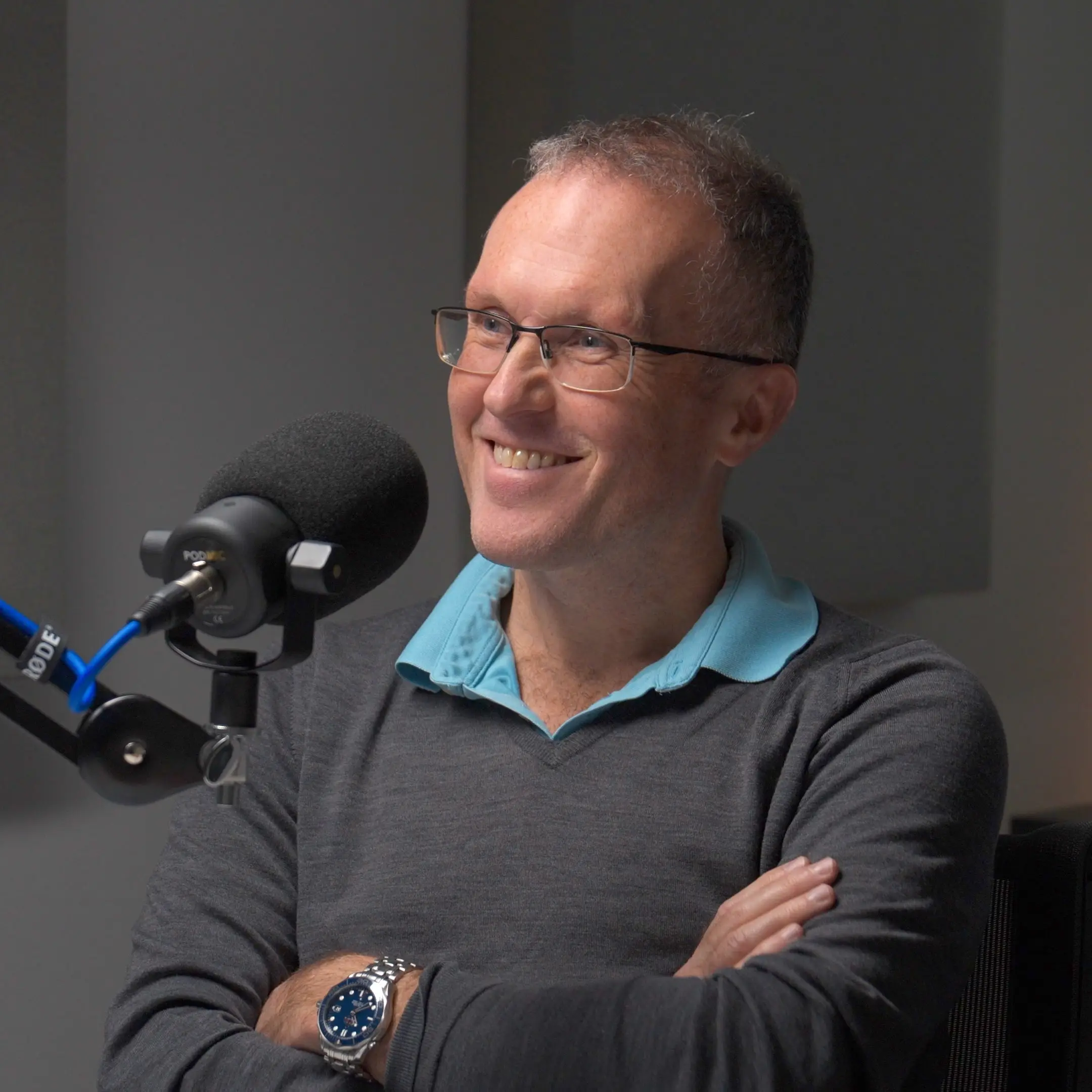
Defence Innovation in the UK: How Startups Win Government Contracts


.png)
.png)

How do you sell to a customer where the decision-maker is actually five different people, and half of them might move roles before the contract lands?
In this episode of Oxford+, host Susannah de Jager speaks with Dr Alison Hawks, co-founder and CEO of BMNT Ltd, about why defence innovation is becoming a structural opportunity, and why procurement literacy is often more important than the technology itself. They unpack the realities of B2G: long buying cycles, complex stakeholder incentives, and the traps that stall companies after a promising pilot.
The conversation lands at a timely moment. The UK’s Strategic Defence Review commits to an ‘always on’ munitions pipeline, including building at least six new energetics and munitions factories, signalling how seriously government is now treating sovereign capability and industrial resilience
From Commercial X and changing acquisition culture to data sovereignty, Oxford’s role in defence innovation, and what investors should look for in founders, this episode offers a practical map for navigating a market that rewards patience, clarity, and credible pathways to adoption.
Dr Alison Hawks is co-founder and CEO of BMNT Ltd, the UK arm of BMNT, where she advises governments and technology companies on accelerating adoption of commercial innovation in defence and national security. She also serves as Chair of the Board of Trustees of the Common Mission Project UK, a charity delivering mission-driven entrepreneurial education programmes in the UK. She was named Woman of the Year for Innovation and Creativity at the Women in Defence Awards (2022)
[00:00:00] Alison Hawks: We have got to get this generation to care about defence and national security. It is critical. Everything that we stand for and our values that we hold really dear and those big problems that we're trying to solve, they relate to defence and national security.
[00:00:15] Susannah de Jager: Welcome to Oxford Plus the podcast focused on innovation around Oxford. We look at everything across the ecosystem, the institutions, the people, the technology. If you need to learn anything about Oxford, whether it's how to take a first step in through the door, or as an experienced investor wanting to go deeper, this is the podcast for you.
[00:00:37] As the UK and its allies rethink national security, resilience, and technological advantage, defence innovation has become an increasingly important and increasingly accessible opportunity for companies working in areas like ai, autonomy, cyber, space and advanced manufacturing.
[00:00:55] Yet, defence remains a uniquely difficult market to enter. Government is the customer, procurement cycles are long and highly regulated, and for smaller or first time suppliers, the system can feel opaque and very unforgiving. Understanding how governments actually buy, and why, is often if not more important than the technology itself.
[00:01:16] Our guest today is Dr. Alison Hawks, co-founder and CEO of BMNT, Begin Morning Nautical Twilight, a global advisory firm that works with governments, defence organisations, and technology companies across the UK, US, and allied markets, to help bridge that gap between innovation and acquisition. Before founding BMNT, Ali advised the US Department of Defence as a director of research for the Section 809 Panel, a congressionally mandated commission tasked with reforming US defence acquisition policy and regulation. She has also lectured at King's College London, Imperial College, London, and Georgetown University. Alongside this work, Ali co-founded the Common Mission Project in the UK. First founded by Steve Blank, Pete Newell and Joe Felter in the US, an educational charity that supports mission-driven entrepreneurship through programmes such as Hacking for Defence and Hacking for the Ministry of Defence. Now delivered across dozens of universities in the US and the UK.
[00:02:17] In this conversation, we explore why defence innovation represents a structural opportunity, why procurement literacy is often so underestimated, and how smaller companies can realistically engage with government without losing momemtum or mission along the way.
[00:02:34] Ali, thank you so much for joining today.
[00:02:36] Alison Hawks: Thank you for having me.
[00:02:37] Susannah de Jager: You are focused on the defence sector, and for some of us, this feels like something that was a bit latent until recent global politics has brought it really back into the fore. From your perspective, why is it such an inevitable opportunity that we are seeing right now?
[00:02:55] Alison Hawks: The world just feels really uncertain right now and we're seeing the return to hard power by the US administration within great power competition. We're seeing our adversaries like China and Russia using technology as power projection. And then alongside that has been around 40 years of deinvesting in research and development by the government. So whereas 50 years ago, 60 years ago, the government was developing these cutting edge technologies. We use the famous examples of GPS and the internet, but we don't fund our labs anymore to do that and so with that disinvestment, commercial industry has naturally not only caught up to defence, but is now leading defence. And because of that, I think it is inevitable for these tech companies really establish the neo primes like the Anduril the Palantir, and then these emerging tech companies, to be interested in defence and to have a part to play within this instability.
[00:03:53] Susannah de Jager: So you spoke there about tech being used as a power projection, which is I think a really interesting way to capture what we are seeing. Tech is a very broad term and defence tech captures lots of things from sort of basic data plays to IP to more kind of frontline defence and drones and things, and obviously space. What are the sectors that you are seeing the most movement in, in the UK specifically at the moment?
[00:04:22] Alison Hawks: I have a very particular perspective because of my vantage point. So I have kind of three distinct vantage points. One is helping these companies navigate and enter the defence market. The second is growing a business over the last six years of, B B2G into government and understanding the complex problem sets that government is trying to solve. And then co-founding and running the UK's defence investor network where we convene defence investors with senior folks in government to have a conversation and generate some education and awareness. And I also, teach at Imperial College, London and Kings.
[00:04:53] So from those vantage points, the three areas that I see dominating are ai, autonomy, and advanced manufacturing. We tend to, in the younger generation, think of drones equates to defence, especially with ai. But it's not just drones. The applications, as you say, for AI is intelligence analysis, decision support, force generation, logistics optimisation, predictive maintenance. There are so many applications and what is happening is either you have specific AI applications for these types of capabilities, or AI is the operating system for hardware and that's where it comes into play with kind of that sense effect and decide with drones.
[00:05:35] Susannah de Jager: Fascinating. So the core of what you do at BMNT is really helping companies navigate up that spectrum into government. You articulated it briefly there, but how should a smaller company or indeed an investor in a smaller company think about the pitfalls of that process if they weren't to use an experienced advisor such as yourselves? Because it's a learned skill.
[00:06:01] Alison Hawks: It is. It's taken me six years and I'm still learning, and I do this for a living. There are three main pitfalls that we see with small companies and we work with companies, as clients, but we also meet companies for coffees and kind of help them out informally, and I think these are the main three. Companies will, small companies as new market entrants, will treat the government as a commercial customer. They're not a commercial customer and defence on the inside is kind of highly idiosyncratic. And I was actually just speaking to a client yesterday and we were talking about the difference in the commercial sector where it takes three or four meetings to identify the budget holder or the decision maker, and then another three or four meetings to kind of pitch and win the deal.
[00:06:45] That doesn't mean it's easy or it's fast, but it's much more straightforward. And they were relaying that they've had 150 meetings in the last year in defence, and they have not identified that one person that can pull the trigger on a contract And the reason is there are five people that you're selling to at any one time. So you're selling to that end user. You're selling to the senior leader who you need to have buy-in and support from. You're selling to the technical and security accreditor, and you're selling to the policy person, and then around that orbit, which I call customer cluster, there are kind of any number of antibodies, other supporters, kind of early adopters, entrepreneurs. But the difficulty is those five people in a sales cycle of around 18 months, three of those will attrite because they go on to different jobs because everyone's in jobs for a few years.
[00:07:36] So it's a relationship game where you have to build relationships, but then those relationships go away and you have someone replaced your end user or your senior leader that says, that's not my priority anymore and we're going to shift. So it's really difficult for a small company. When we think about the primes, they have the resources and the institutional knowledge and a thousand touch points into defence and they're touching all those simultaneously and there's also a lot of trust and brand awareness and relationships built out.
[00:08:06] If you have a small company of five people, 10 people, 15 people, those 15 people aren't going to be the 15 touchpoints constantly touching into defence. You're going to have one or two people who are focusing on defence, especially if you have a commercial business. So one of the pitfalls is looking at the government and saying, well, that will be like another commercial customer. They're not. It requires a lot of resource. It requires a different commercial model, usually a different product development pathway, and all of these people in your customer cluster have different incentives.
[00:08:35] The second is, and I see this a lot, especially with a kind of mushrooming interest in defence across Europe and a lot of companies popping up, is not deeply understanding the problem being solved. I have been in pitches where I have seen a company pitch a great product with so much passion, and they're not using the language of the customers, they don't understand the complexity in which their customers operate in, and then the thousand decisions that customer has to make once they take on that product or that capability. So what we really encourage is, as much as you can talk to as many people as you can to really understand, find the end user, get the feedback, and use the language that they use to describe the problem they have.
[00:09:18] And finally, is being commercially ready. So companies, and I found this too when I started my company, it's really seductive to go into a sole source mentality and to say, I want to do a sole source so I don't have to compete for this contract, and I'm going to do a little pilot with my customer and I'm going to develop trust and performance, et cetera.
[00:09:37] All of those things are really good things. But the risk appetite, and because of the financial statutory thresholds for sole source, they have a different compliance and risk calculus and so what I see companies do is it's great that they have a sole source. They get in the door. They learn the problems. They get some past performance. But they don't necessarily prepare for the transition to an enterprise solution or wider adoption because the wider adoption means competition, but it also means different compliance regulations and then different commercial regulations, and it can inject eight months to a year just to become technically compliant after a pilot. So I think that's something that people don't think about is they finish the pilot and then think I'm ready to compete.
[00:10:21] The other thing to think about is how is the commercial officer thinking about these things? So in the Ministry of Defence, what they want is they want a thriving ecosystem. They want,the A stream companies competing for a government contract and they want the best technology to have a competitive advantage and drive strategic effect. If they put a company on a sole source contract, through commercial regulation, that might mean that they can't compete for a follow on contract. They don't want that. They want everyone to be able to compete so they have a really healthy ecosystem.
[00:10:52] So I think understanding what is the decision calculus from the commercial point of view of how do we maintain a really thriving ecosystem? How do we get these people on contract to test their capabilities? But then how do we ensure that all of that competition is fair and we bring the best players in the game? So those are the top three.
[00:11:10] Susannah de Jager: Even just hearing you describe that in that detail, it's so complicated and one knows this. It's government procurement. People talk about it all the time. But it really brings it home. So then taking it in the more positive side, if those are the things that these companies are subject to and the reasons why they might misstep lose time, obviously time costs money if you're at these stages. How does understanding the acquisition policy and these forces affect your clients and whether their attempt and their company, quite frankly, succeeds or stalls? What are you doing for them?
[00:11:50] Alison Hawks: It is a great question because there are two ways to think about this question. One is a 30,000 foot view, which is if you are looking over a maze or a labyrinth, and let's say that maze is acquisition policy, and the kind of idiosyncrasies of how we buy things. You're able to see where the dead end are. You're able to see if I turn right, then I can go left and I can get out the other side of the maze faster. But then when you walk into the maze, the hedges are still very high and you might forget a door or the doors might change. We think about this a lot with our customers. How much do they need to know to be able to be successful and break into the market? And I think where we see our role is we have that expertise and knowledge so we can help them navigate the maze while they're in it. I think it's too much to ask a small company to deeply understand acquisition and try to figure it out. It's not just six years of having a company here. I worked in acquisition in the now the Department of War. I've been in the defence and security space for 16 years. So it's having that cumulative knowledge is really hard to develop quickly.
[00:12:56] Understanding the policies and the pathways around acquisition. So what are those front doors like the Defence and Security Accelerator commonly referred to as DASA, maybe JHub, which is Strategic Commands, now CSOC Innovation Hub, or the RAF's Rapid Capability Office, the Royal Navy's Disruptive Capability Technology Office, all of those are great front doors, and that is understanding some parts of acquisition. What's really difficult is how do you convert from those shallow and early front doors into the core programmes and defence equipment and support, or core work programmes potentially in DSTL. That's the gold dust that people are after.
[00:13:37] It's not impossible to get a pilot. If you have a very good strategy, you can get onto a contract within 12 months here in the UK. But if you don't understand that bigger step into getting into a programme and understanding the enterprise and how it buys, you will see a gap of up to three years of trying to figure it out.
[00:13:54] Susannah de Jager: And three years is vast.
[00:13:55] Alison Hawks: Well, you're dead. You have no revenue.
[00:13:57] Susannah de Jager: What are the things that you still get wrong from time to time? Because as I hear you say that, I'm like amazing, the sparkle dust, and I'm sure you're amazing at it. But things are changing rapidly so you must still be sometimes taking the steps yourselves or maybe not.
[00:14:13] Alison Hawks: It's a great question. What we get wrong is there are inevitable blind spots everywhere. And so policies change, communication is not distributed in a way that every single person in the industry kind of gets the same communication. There are different forums over other forums. So I think, I don't know so much about getting it wrong, but it's more about how do you absorb all of the change and all of the information quickly enough to make sense of it and then develop a strategy around it.
[00:14:44] Oftentimes too, we fall prey to this all the time is, you're in a meeting and the customer, oh, this sounds fantastic, this is exactly what we need. Really looking forward to working with you on this. The more effusive a government customer is in a meeting, the less likely they are to put you on contract. I have learned that the hard way many times because the people who know how hard it is are very pragmatic with industry. And they can really set their expectations. Whereas the people who really don't understand how money works are getting a business case through are like, this is awesome. You're going to be on contract. I can't wait to work with you. Every time someone says that, I walk away from the meeting thinking that's never going to happen.
[00:15:20] Susannah de Jager: And you have to communicate that. You have to be the bearer of bad news, right? Where you're like, oh no, that wasn't good and they're like, but it was so good.
[00:15:27] Alison Hawks: Well, definitely. We're a translator in that way, which is they walk out of the meeting thinking the same thing I've thought many times of we're going to go on contract and nope, you're not. That person is not going to acquire what you have to sell.
[00:15:37] Susannah de Jager: And it's interesting, isn't it? The psychology behind these things and just the forces of play. I've had that experience of people changing when I was dealing with government on the other side of the table, but also sometimes cultural things, right? Like I always found when I went to America actually, that the most positive meetings were often the ones where we never got follow up and the ones where I thought they'd been really tough on us, were the ones where it was really serious and the follow up was really effusive and positive and I was like, gosh, I would not have called that right.
[00:16:03] Alison Hawks: I think Rupert Everett, the actor, calls that the "American No", which is, you're so wonderful, we'll call you next week and you're going to come in and it's going to be wonderful. He's kind of learned that from Hollywood and he calls that the "American No".
[00:16:14] Susannah de Jager: I love that. I haven't heard that before. How is the increasing focus on sovereignty changing this space? Because it's such a buzzword now. And so what are you seeing in your side?
[00:16:28] Alison Hawks: So I see the same thing. Companies are using it to dominate their narratives or to bolster their narratives and to match policy where it exists and to match the demand signals that are being put out in big papers and signals like the Strategic Defence Review that defence released earlier this year, and then their defence industrial strategy. And now we're all waiting on the defence investment plan.
[00:16:51] But I think for the companies, it's showing up in three ways across the ecosystem. The first is in supply chain resilience. So this reawakening of the European defence market is one where supply chain resilience becomes a really critical value proposition and companies are using that. Not only against or to mitigate against supply chain with adversaries, for example, China, and I think to my knowledge, and I might be wrong, there are only two drone companies that do not have component parts from China in them. That's Neros and Skydio. With the thousands of drone companies that are popping up every day, that's pretty extraordinary.
[00:17:25] So this type of narrative is really important, but I think also against US foreign policy changes and its involvement in NATO, things like semiconductor supply chains, critical minerals, cyber infrastructure, if it matters for national security and we don't control it, it's a vulnerability. I think this creates opportunities for UK companies, and I see them taking these opportunities to demonstrate that domestic capacity and capability.
[00:17:51] The second I would say is data sovereignty and this is really interesting. So the questions are where is the data processed, and by who? Now, some of these bigger companies, their business model has been to own the data and they've been very successful in doing that. These new generation of companies, especially around AI, are pushing against and competing with these bigger companies by allowing the MOD to own all of the data. And in fact, that's their core business model. That is a very easy yes for defence to move down a business case and move it further than saying, no, we own some of the data because of these reasons, and that pushes it into a decision tree of about 90 more decisions to be made.
[00:18:30] So I think there's a new generation of companies who are addressing this kind of sovereignty through the data of no MOD, you own all the data, you do what you want with it, it's yours, and that is pretty game changing.
[00:18:40] The third is technology sovereignty. So I think the UK wants sovereign capabilities and key technologies. I don't think that means a not invented here syndrome, but I think it does mean that ensuring critical capabilities can be sustained, maintained, developed, and scaled without dependence on potentially unreliable partners is really important. I think we see this most starkly in defences investment that they outlined, or commitment that they outlined, in the Strategic Defence Review of committing to six new munitions and energetics factories, as is Always On concept. That is the most significant industrial commitment that defence has made in a long time. So I think it's a theme and it could be a buzzword, but I think it has real legs that companies are using, to gain market share, to enter the market, but also they are critical to our national security and defence in the world that we live in.
[00:19:29] Susannah de Jager: Super interesting. So break it down for me a little bit more like granularity, day to day, what are you doing for your clients? How does it look? if I was a new client and in a meeting, what would you be, not promising, but kind of saying that you can really help with and how would you be managing expectations also?
[00:19:47] Alison Hawks: A lot of our clients come to us because they are in a dark room looking for a light switch. It's really hard to understand how to enter defence. Where's the right front door? What's that commercial positioning? What else do I need to think about? Oftentimes clients will say, oh, I've,met this guy and he's great, or whomever in defence and just from being around in the ecosystem for 16 years is that guy's never delivered anything. Don't hitch your cart to him. So part of it is enabling our customers to turn on a light switch and have some clarity.
[00:20:21] The other part is we cannot get you to a contract faster, and we don't do sales or business development for our clients. But what we can do is remove the friction and accelerate your pace. So if you are a good team with a great product, we can help you accelerate the pace by which you enter the market. But it's really down to you. And our go-to go-to-market services exist because we saw a recurring problem, great companies with great products hitting a wall of complexity they weren't equipped to handle as a new market entrant.
[00:20:49] We didn't just kind of see this, we've lived it. I brought BMNT here to the UK in 2019. In fact, I launched it in January of 2019, and three months later found out I was pregnant. I also launched our charity. So kind of launching these two things and then thinking, how am I going to also juggle having a baby?
[00:21:05] But I've never taken outside investment and the US company was only four and a half years old when we launched here. So I had a really short window to capture our contract and revenue and it wasn't a great strategy looking back on it, thinking through that kind of pressure. But in the last six years, I've won over 35 contracts in the FCDO, in MOD, DSTL, the RAF, the Army, the Royal Navy, and the Cabinet office. I've had multi-year contracts, I've been on trials, experiments, pilots, I've been through every door. So I know what you, if you are my potential customer, I know what you're going through and I can empathise with it, and I can help you not make the same mistakes that I made.
[00:21:47] And when I thought about developing this service was really when I was here in 2019, if I could work with a partner what could they have done for me that would've accelerated my access to revenue by six to eight months? And that was our kind of founding principle and we built from there.
[00:22:03] So we do three things. Three main things. Strategic positioning. So we help companies understand their customer's buying behaviour, how to identify funded problems, and how to follow the money. This sounds really, really basic, but a lot of companies waste a lot of time pitching to the wrong people. We fix that. The other thing that we do that makes us very different is we wrap around government affairs with our operational go to market offering. So enabling our customers to understand policy engagement and the relationship between defence and Whitehall is so critical to strategic positioning. And we are the only advisory firm in the UK doing this, combining the operational go to market with government affairs.
[00:22:42] The second way that we help customers is through commercial readiness. So we really help companies unpick what contracting authorities apply to them, what compliance requirements that they might need, and how to structural proposals within a government buying process. I have lost more proposals than I have won. So I really understand what not to do. But we're really, like I said, that translator between government and industry. For example, there is a commercial framework called GCloud 15 and the applications for it close on the 31st of January. It is the preferred mechanism by which all of defence buys software capabilities. So if you're a software company and you learn on February 1st about GCloud 15, you don't have access to that for 24 months.
[00:23:26] That's a handicap. So I think this is why, from an investor's perspective, for maybe some of your listeners, this is why defence is so idiosyncratic. Why wouldn't you have an open marketplace all of the time where people can compete? But they have certain frameworks that their commercial authorities, they'll have one, one called MCF3. That's only for the primes. So that's for the Deloitte, KPMG, PA Consulting, you have to demonstrate a certain level of revenue, past performance, et cetera. So if a customer wants to work with you but is not particularly savvy and they put out a competition on MCF3, well, I can't compete on it.
[00:24:03] So I think that there's a part of it where the education on the inside of the MOD of what is available to them to buy is really important. So we not only do we do that through our own B2G work, but we do that with our clients. So we help them educate the customer on what are the best ways to buy their capability.
[00:24:21] And then the third is adoption readiness. So we have a proprietary and structured approach for how we help our clients think about defence adoption through customer discovery. And this really supports that strategic positioning, commercial readiness. And it's something that's, actually really overlooked and I like to think of it as our secret sauce of years of repetitions over and over and over of working with the government alongside them as they solve complex problems and really understanding their behaviour and their incentives and being able to kind of connect that and flip that light switch on for our clients.
[00:24:53] Susannah de Jager: Yeah, it's the 10,000 hours of defence procurement, right? And it's not even these six years, as you touched upon, you also have all your time that you spent on the Section 809 Panel in the US. I'd love you to speak about a little bit of that experience and how that plays into what you're doing now, because clearly you literally wrote the book on some of this in the US.
[00:25:14] Alison Hawks: Well, I was one of a huge team of people at the 809 Panel, and I was probably had the least expertise and understanding in defence acquisition actually on the panel. But it was really interesting. It had a set of commissioners and then it had around 12 research groups that were tasked with experts in these topics. They were either seconded from jobs or they were active duty or there were people like me that were recruited onto the panel and it was really trying to find what are those big blockers that we can unlock through recommendations to defence and change of regulation or legislation to Congress, so how can we do that?
[00:25:52] Now we produced hundreds of recommendations and they were adopted, but we haven't really seen the impact of them until now in this administration where Pete Hegseth is ripping up the rules of procurement and doing things differently. But two of the things I learned that I felt was very formative of being kind of a part of government in that kind of policy acquisition area was policy creates, or blocks, opportunities and small changes in acquisition we found on the 809 Panel can unlock huge spending.
[00:26:22] So we put forward a recommendation to expand something called Other Transactional Authorities. So these are OTAs are to think of it very simply, kind of quick ways to put people on contract. So things like AFWERX or SOFWERX, or kind of the more edge innovation entities can then put a company on contract within 48 hours using things like OTAs. I mean, compared to the UK that's, as Steve Blank would say, that's a really big idea. But we created different software acquisition pathways through 809 and those changes directly enabled companies to work with the DOD in ways, well now Department of War, in ways that were not legally possible before. So I saw the impact that these types of panels or changes that can be made. But it's taken almost nine to 10 years for these to really mature and be adopted.
[00:27:11] The second that really struck me as culture matters. Not only inside and kind of the different approaches to solving problems that we brought together at the 809 panel, but going out and trying to change the way that contract officers or programme managers think about how they write requirements or solve problems. If you don't give them a different mental model to solve problems, if you don't give them the opportunity to solve problems differently, nothing will change. And the biggest barrier is not regulation. There is an argument in the UK and I think less now in the US since it's kind of ripping up of the rule book that we need all of these different, or new procurement, pathways and mechanisms. We don't. We have thousands. We have thousands and we have everything we need to buy what we want, when we want it. What we don't have, the last people we tend to look at, is the acquisition workforce. We tend to pass them over because they're in the contracting backwater.
[00:28:07] The UK there is a shining example and anyone investing in defence technology will have heard of them is Commercial X. So this is an entity that has been built on a mindset that there is a sense of urgency around adopting critical technologies for competitive advantage. What's very interesting about Commercial X is they will get companies on contract quickly. The contract officers are very lateral thinking. They're willing to think about risk differently and they have attracted so much of industry. But if you think about how many new authorities Commercial X required to do this, zero. All they did was change the mindset requirement for the commercial officers. And so I think it's less about how do we fund these innovation entities and do you know innovation scouts? The innovation exists, we can find the innovation. But it's more we need the people to be able to think innovatively and put these technologies on contract.
[00:29:08] And I'll give you an example. We worked with a company that is very advanced in AI and they're now on contract with one of the frontline commands. And the frontline command didn't really have a regulation or compliance mechanism for this technology. It required the contract officer a lot of dexterity of thought to understand and really know. My client, the frontline command person who wants to buy this. They need to test this in order for us to be better and to see if we can use these technologies.
[00:29:41] Okay. So my role is to figure out from a compliance and risk point of view, how do I take this technology, which is not really regulated to the way that we've regulated other technologies, and how do we fit that into our risk profile? So we need that commercial officer times a thousand, and we would have a very different defence innovation ecosystem.
[00:30:00] Susannah de Jager: That's such an involved mindset for acquisition. Because normally if you're in that seat, the impetus or the onus is on the person selling to you to create it. But I think what's coming through when you describe these processes is how collaborative this needs to be.
[00:30:20] The education of the stakeholders, of the decision makers of the whole ecosystem on the other side. I thought that when you were speaking about the fact that somebody might unknowingly ask you to bid for something that you actually functionally can't bid for is doesn't surprise you, but in some ways it's quite shocking,
[00:30:37] Alison Hawks: That's happened to me.
[00:30:38] Susannah de Jager: And I think that what's really so interesting hearing you describe it is this point around, more so than any commercial arrangement, this is a sort of push pull. It's diplomacy in its own right, because you don't want people to feel silly that they don't know something.
[00:30:55] And so the way you present it, and you need to be so knowledgeable as the person approaching in order to shape it. and I think it's very specific is what comes through as I hear you talking. Do you ever turn down clients?
[00:31:10] Alison Hawks: Yes, a lot. And the reason is the people in my company, we represent past operators, we have a diverse background. I mean, I was an academic, then I was in acquisition, then started a company. We bring people in who are deep experts in what they do, and a few of us really understand how to follow the money. And if we can't follow the money to a funded problem or we can't see that problem on the horizon in terms of what's interesting from a policy perspective, like quantum for example, it's not worth you paying me because it'll be very hard to generate revenue out of defence if you haven't convinced them to care enough about a problem and spend money on it.
[00:31:49] We call that viability. 95% of problems fall down on viability or companies fall down on viability because they will go and pitch something. Everyone loves it. It's a great piece of technology. It's really cool. Yes, it would totally change your working day, but does the organisation care enough about that problem to solve it, and then the willingness to put the resources behind it to put it on contract and then to spend money for it? That's pretty rare.
[00:32:16] And we also turn down clients, who we can't see ourselves working with. It's a very basic human thing. Could I go have a beer with this person? Could I get along with this person? Our role is really as a critical friend. So with a lot of our clients, we have really frank discussions. We give very constructive feedback, and there's no room for kind of competition between us. And so for clients that we feel like they don't necessarily maybe have the right mindset or the personality, then we just immediately make a judgement call. Probably, we field almost five companies a week, and we have a very small clientele.
[00:32:50] How do you see UK defence innovation ecosystem in the next five to 10 years? And I'd love to know how you see Oxford more locally playing into some of those forces? Because we've obviously got amazing kind of Harwell, Culham and the university itself here. In the next five to 10 years around defence innovation, I feel pretty optimistic because we've learned now five to seven years of lessons of what has worked and what hasn't. Defence has gone through a major structural reform. So very briefly, for your listeners that may not really understand defence, we've gone from a decentralised system where the frontline commands, so the RAF, the Navy, the Army, are semi-autonomous from the Chief of the Defence staff and make their own decisions. That has changed under Defence Reform. So the chief of the defence staff now has direct oversight over each of the heads of the frontline commands. And then you have kind of two major entities. One is the Military Strategic Headquarters, MSHQ, which is going to field and generate the demand signals and then you have the National Armand Director Group, the NADG. And the NADG has kind of. DSTL, DENS,a lot of the innovation hubs, strategic command, all of that sat under it. If you think about it in a diagram, you get the demand signals from MSHQ into the NAD and it kind of goes down through something called options and commissioning and that is the wide front door into industry. The reform, whether people like it or hate it, I think it's quite controversial, is that this is defence listening and deciding to do something different instead of doing what it has always done and now testing a different model. I think that is only a good thing. I think that there is political consensus across Labour, Conservative and Reform. I think they all believe defence innovation is critical to national security and economic growth and so I think that support contributes to building stability for long-term investment.
[00:34:42] And then I think to your point about Oxford, the UK has genuine strengths to build on. So AI research at Oxford, then you also have Cambridge, DeepMind, space technology at Harwell, cyber capabilities at Cheltenham advanced materials infusion research at Culham. These are not aspirations, these are existing world class capabilities that need better pathways to procurement. I think the challenge is connecting the dots and we have the brilliant research, we have operational requirements, and we have procurement mechanisms. But the connective tissue is weak. That's changing.
[00:35:16] So a couple of examples. If you see the Golden Valley Development Group, it's really pulling in GCHQ as a real partner. It's investing in infrastructure to be able to attract the talent and the startups and then it's providing the services to enable those startups to scale and grow through commercial partners. I think particular to Oxford, and I'm less familiar with Cambridge, but Oxford has OSE. Ed Bussey really understands defence and he's very active in engaging with it. And I feel like that is widening the aperture for Oxford in particular.
[00:35:46] But I think in the next five years, I'd love to see the UK as a leader in European defence innovation, and that's not about spending more money, I think it's more about what is the speed by which we can get something from a demonstration into deployment. I would also love the UK to claim these critical technologies and this talent that we have in our universities. I mean, world class talent. I wish it would claim it as that and say we can be the strategic ball bearing between the west and the east. We can help Europe go to the west. We can help the west integrate into Europe or further afield. But we have the talent to be able to be the springboard for the world's best companies.
[00:36:23] What we don't have, one of your previous guests mentioned, was any growth capital and that's a hard problem to solve and that takes a long time. But I think without that growth capital, if that is kind of an immutable fact for now, then we need to put this talent somewhere and instead of lamenting that they go to the US to bigger markets, we're never going to generate a Silicon Valley here. We're never going to have trillions of dollars washing around one of the world's best educational institutions. So what can we do? Well, we're very good at fostering this talent. How can we connect them more? So can you connect and make an integrated capability or an integrated corridor between Oxford, culham and Harwell, so that the companies growing up there can talk to each other and build systems together as opposed to companies that then have to come together later in their company life?
[00:37:07] At Oxford, you have world leading AI research, quantum computing, autonomous systems, and the challenge is connecting Oxford researchers with MOD problem sponsors so that the research is useful, not just interesting. If you look at the capabilities of all three, this kind of concept of an integrated corridor is why not embed small teams from the MOD in these integrated corridors? So they're not just liaising with the companies, they're actively feeding problem sets, they're actively giving feedback so that we can build companies that are relevant to defence.
[00:37:40] So an example would be the defence AI centre, the DAIC, if it had a permanent presence in Oxford, if space programme managers spent time in Harwell working directly with emerging companies, and I think that type of co-location, that's very interesting. And I think defence is more open to how they can collaborate and co-locate. So it's no longer, I think, the onus on defence to think of these ideas of how do we integrate these existing world-class capabilities to then be an overall capability for defence and national security.
[00:38:09] Susannah de Jager: I like that. And finally, what advice would you give investors, especially? Because we've spoken quite a lot about the company experience and what they should be thinking of, but for investors looking at defence, either as a specialist area or because they know it's now a huge opportunity, what would your key advice be? You spoke earlier about viability.
[00:38:33] Alison Hawks: It's having a different kind of mental model of how you think about your portfolio companies and then having a different exit profile. So when you're growing a Unicorn or a Palantir or a Helsing, who's going to buy them? You know who's going to acquire them? That's very different from kind of more normal traditional venture capital.
[00:38:50] So I think there are three things. Understand the government is not a normal customer. I think that's the same advice I gave earlier for the companies. Two, prioritise founders who are willing to get out into the field and test their capabilities so they have feedback. In the MOD, if you go in and you have a drone or you have a counter UAS capability, they're going to ask you three questions. Has it been fielded in Ukraine? What is the data? And who can I talk to who fielded it in Ukraine? And if you haven't done that, they won't have a meeting with you. So it's talk to founders who are getting out in the battlefield and testing their technology. And the third is government buys capabilities, not solutions. So if you're a portfolio company, if their go-to-market strategy doesn't include partners or doesn't understand how to integrate and to deliver a system to the customer, I think it's an uphill battle to annual recurring revenue.
[00:39:33] Susannah de Jager: Thank you Ali. I've really enjoyed this and I've certainly learned a lot, so I'm sure people listening also will have.
[00:39:39] Alison Hawks: Thank you very much for having me. It was great.
[00:39:41] Susannah de Jager: Thanks for listening to this episode of Oxford+, presented by me, Susannah de Jager. If you want to stay up to date with all things Oxford+, please visit our website, oxfordplus.co.uk and sign up for our newsletter so you never miss an update. Oxford+ was made in partnership with Mishcon de Reya and is produced and edited by Story Ninety-Four.

More episodes+
Can the UK Create Its First Trillion-Dollar Company?

Ethics & Innovation: Inside Microsoft's AI for Good Lab

Ethics & Innovation: Oxfordshire's Divide Between Opportunity and Access
Ethics & Innovation: Serving, not Harming and Connection, not Convenience
Ethics & Innovation: Can Trust Keep Up With AI?

Ethics & Innovation: Building an Innovation Ecosystem That Includes Everyone

Ethics & Innovation: Can AI Close the Justice Gap?

Ethics & Innovation: What Makes Us Human in the Age of AI?
Ethics & Innovation: Civic AI, Data Soil and Digital Democracy

Ethics & Innovation: Does AI Actually Understand Our World?

Ethics & Innovation: The Social Media Ban, Sovereign AI, and the Race We Can't Stop

Recycling Capital and Talent in Oxford's Innovation Economy

Unconscious Bias, Responsible AI, and the Future of Workforce Decisions

Bridging the Gap between Scientific Research and Industrial Impact
OX Tech Week: From Pub Meetups to a City-Wide Tech Festival
Healthcare Innovation When Lives Are at Stake
Building a More Inclusive Innovation Ecosystem in Oxfordshire
Lord William Hague on Talent, Technology, and Capital
Building a World-Leading Climate Tech Ecosystem in Oxfordshire

Building a £10 Billion Vision: Inside the Ellison Institute of Technology with Lisa Flashner

The Multiplier Effect: Funding Companies, Ecosystems, and the Future of the UK

Oxford North: The New Innovation District in Oxford

The Cluster Effect: How Bicester Motion is Driving the Future of Mobility

The Psychology of Scaling Companies and Teams with Professor Robin Dunbar: Part 3
The Psychology of Scaling Companies and Teams with Professor Robin Dunbar: Part 2
The Psychology of Scaling Companies and Teams with Professor Robin Dunbar: Part 1

The Future of Genetic Medicine with Zandy Forbes, CEO of MeiraGTx
How Founders Pledge Uses Data to Maximise Philanthropic Impact

The Oxford Trust at 40: How Innovation and Education Power Oxford's Future

Can Sirona Rival Ozempic? A New Chapter in Obesity Treatment with Camilla Easter

Aligning Founders and Investors with David Mott

Building Billion-Pound Outcomes with Jack Edmondson

How Machine Learning in Oxford Is Transforming Medicine Worldwide with Lionel Tarassenko

Bringing Science to Society with Molly Stevens

How Oxford University Innovation Bridges Science and Business with Mairi Gibbs
What Formula One Teaches Us About Startups and Success with Adam Parr

Risk and Reward in Early-Stage Tech Investments with George Robinson

Charting Fresh Career Paths with Sue Douglas

From Oxford MBA to Startup CEO with Lily Elsner

Navigating Market Dynamics with Marcus Stuttard

Harnessing Local and Global Talent with Sarah Haywood

Navigating Capital Markets with John Derrick
Building Oxford’s Future with Anna Strongman

Breaking the Myths Around University Spin Outs with Irene Tracey

Navigating the Future of Oxford Sciences Enterprises with Ed Bussey

Oxford's Role in the Next Industrial Revolution with Dave Norwood

Diversifying the Investment Ecosystem with Rowan Gardner

Pension Investment and the Mansion House Compact with Nicholas Lyons

Lessons from the Motorsports Cluster with Mark Preston

From Research to Reality with Cici Muldoon

Nurturing Founder-Driven Ventures in Oxford with Peter Crane