OX Tech Week: From Pub Meetups to a City-Wide Tech Festival


.png)
.png)

What would it take for Oxford to rival Silicon Valley or Boston as a global destination for deep tech?
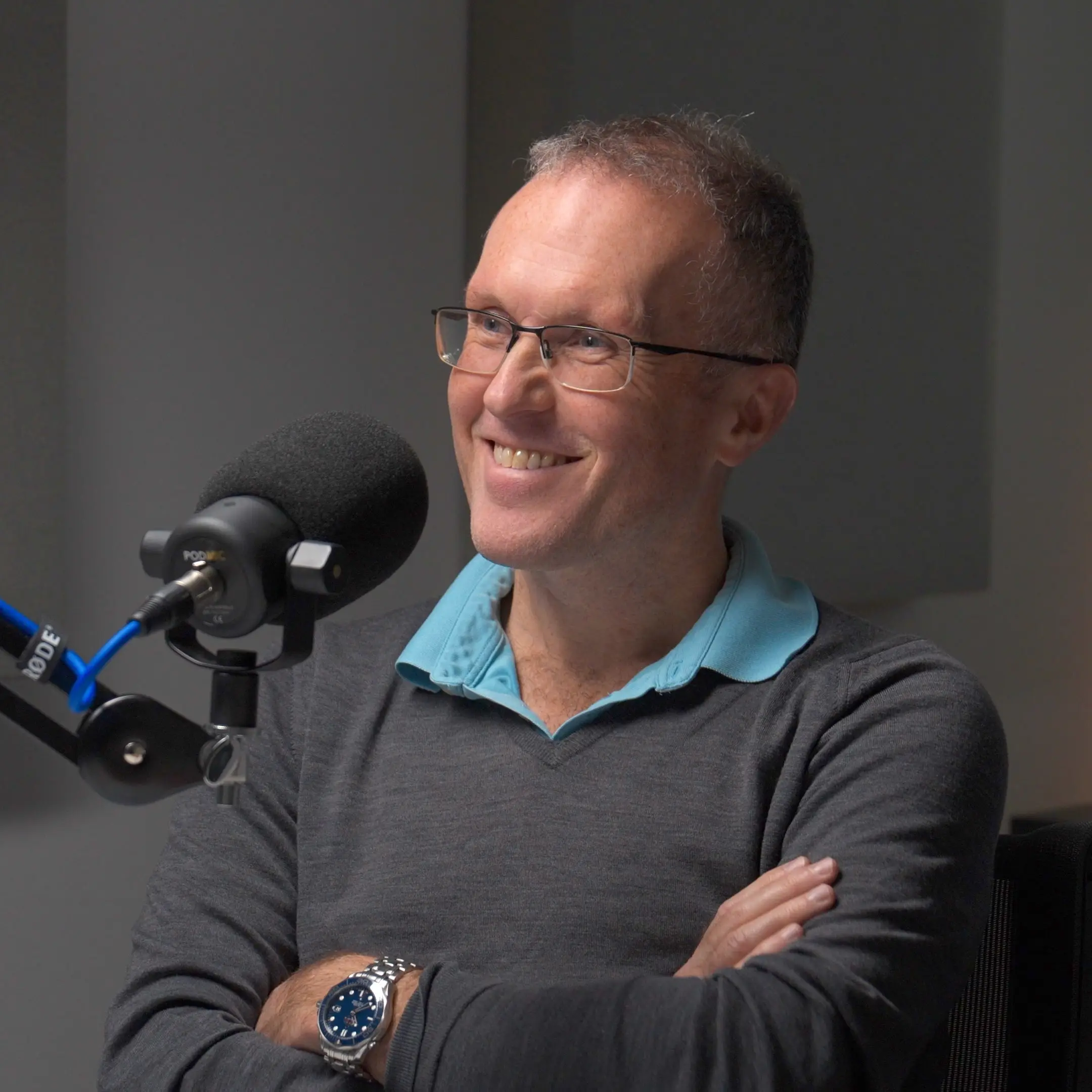
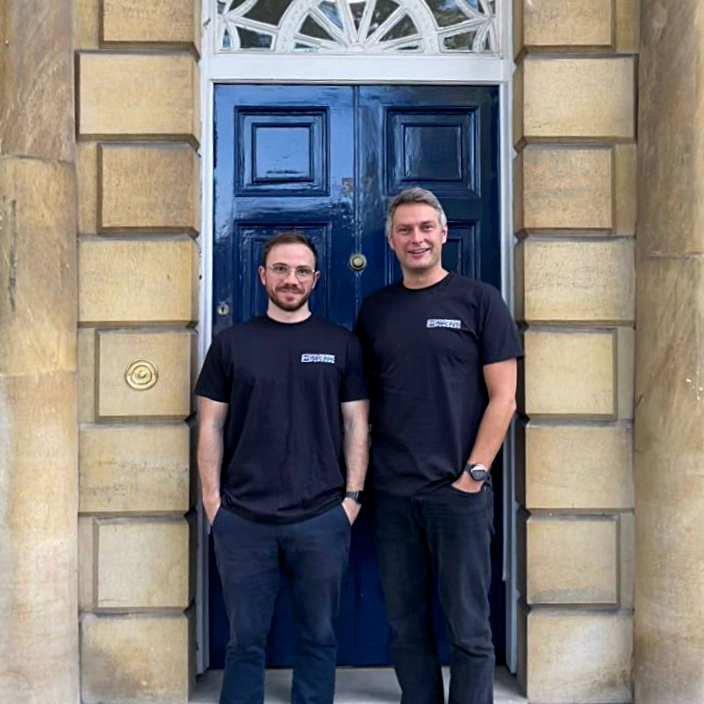
In this episode of Oxford Plus, host Susannah de Jager sits down with Dr Christiaan de Koning and Michael Collyer, co-founders of the Founders and Funders community, to explore how Oxford is organising itself for a new chapter in innovation. What started as a small gathering during COVID has grown into a 4,000-strong network and a registered foundation connecting researchers, founders, investors, and institutions across the city.
Now, with UK startup funding reaching $7.8 billion in Q1 2026 alone – a 60% increase year on year, Oxford is well placed to capture a growing share of that momentum. Christiaan and Michael discuss why the city's problem is not a lack of capital or talent but a lack of connection, and how their upcoming Oxford Tech Week (26–29 May 2026) aims to change that by creating a visible, city-wide platform for the ecosystem.
From the Oxford Innovation Map to the vision of making Oxford the global home of deep tech, this is a conversation about what happens when a city that has always excelled at discovery starts to organise itself around building, scaling, and global relevance.
Founders and Funders – Oxford's community foundation for researchers, founders, and investors
Oxford Tech Week – Oxford's inaugural city-wide tech festival, 26–29 May 2026
Oxford Innovation Map (oxmap.tech) – Interactive map of Oxford-affiliated startups, investors, and innovation hubs
Dr Christiaan de Koning: Christiaan de Koning is an Associate Fellow at Green Templeton College, University of Oxford, and Chair of the Founders and Funders Foundation. He teaches at Said Business School and is a strategic adviser to CIMMYT, the International Maize and Wheat Improvement Centre. His career spans roles with J.P. Morgan, the World Economic Forum, Wageningen University, the EU Commission for Innovation, and the UK House of Lords. He holds a DPhil from Oxford in management research, where his work focused on the commercialisation of CRISPR biotechnology through new ventures. Through Founders and Funders, he has helped build a community of over 4,000 members connecting researchers, entrepreneurs, and investors across the Oxford ecosystem.
Michael Collyer: Michael Collyer is a researcher at the University of Oxford's Internet Institute and co-founder of the Founders and Funders Foundation. He co-established the university's AI network, running events in Oxford and London to connect researchers and entrepreneurs in the AI and machine learning space. His academic work spans information controls, natural language processing, machine learning, and the intersection of artificial intelligence with intellectual property law. Alongside Christiaan, he co-leads the organisation of Oxford Tech Week and the development of the Oxford Innovation Map.
Susannah de Jager: Welcome to Oxford Plus the podcast focused on innovation around Oxford. We look at everything across the ecosystem, the institutions, the people, the technology. If you need to learn anything about Oxford, whether it's how to take a first step in through the door, or as an experienced investor wanting to go deeper, this is the podcast for you. This week on Oxford Plus, we're joined by Dr. Christiaan de Koning and Michael Collyer. Two of the key figures working to reshape how Oxford connects science, capital, and Company building. Over the past few years through the Founders and Funders community, they've been operating at the heart of the Oxford ecosystem. Bringing together researchers, founders, investors, and institutions to bridge the gap that has long defined innovation in Oxford. Extraordinary science, but not always the systems or capital to translate it. That work has surfaced a clear pattern, the quality of the innovation in Oxford is world class, but it remains too fragmented, too invisible, and too hard to engage with from the outside, and that's what makes this moment so interesting.
In May 2026, they are launching the first ever Oxford Tech Week, a citywide platform designed to open up Oxford companies and the people within it to the world. Bringing together deep tech, health, AI, climate, and more. It's an attempt to create not just another event, but a focal point for the entire ecosystem.
So this conversation is really about something bigger. How the Founders and Funders community has evolved from curated conversations into ecosystem infrastructure. Why Oxford, despite its many strengths, needs are more visible, connected and outward facing platform, and what happens when a city that has historically excelled at discovery starts to organise itself around building, scaling, and global relevance? Because if Oxford is entering a new phase, and I believe it is, this feels like one of those key inflection points.
Michael, Christiaan, thank you so much for joining today. For those listening that haven't been to a Founders and Funders event, how did the whole thing start? What is the purpose of the original community that you started?
Christiaan de Koning: Thanks Susanna. Thanks so much for having us. We'd love to tell you a bit more about, about Founders & Funders and how that evolved into Tech Week. So Michael and I, we have been in Oxford for over 10 years. Working lots with researchers, investors, students, policy makers. Basically anyone, any stakeholder you'll find in the Oxford Ecosystem. This was never intended to be something. It grew organically. We started during COVID times. I was running a life sciences network, Michael an AI network, and that went online and we started with 10 people and it grew out, and by the end of the year we had a thousand people and we couldn't really figure out why people kept showing up.
We went back and we asked them and turned out that they found help in talking to peers and we were helping to curate these relationships and fast forward we've got now about 4,000 people in that network and last summer we decided to put it in a foundation and see how we could make it a bit more professional and run it less as a hobby because it was becoming bigger than ourselves and before we knew it we saw that actually people kept bumping into the same bottlenecks. How to get your first funding. How to raise that capital that will get you past Series A into your IPO. Where do you find the blue chip firms to work with to find your first clients or to have your R&D collaboration? And we kept getting the same questions over and over again and we thought, you know what? I think we need to do an event where you got that cross pollination between the different stakeholders, first of all, within Oxford and surroundings and then after that, to make it easy for those that are not that in Oxford to find a landing place because everything is here, we're just is we're lacking the moment where it all brings it together.
So that doesn't led to Tech Week, which is now also getting bigger than we thought.
Michael Collyer: Turning out to be, I think the biggest Tech Event in Oxford's history. We're trying to bring at least a few thousand people to the city at the end of May.
Susannah de Jager: So what comes out from that initial statement and those answers is you start something and it evolves. You are identifying a small gap, but every time you've done that, it's ended up being larger than you had anticipated and it really sounds like it's the human connection that people are so much appreciating and benefiting from. Just taking a step back into those initial evolutions. You said you started in COVID, so I presume it was online. When did you then bring it into physical events? What's the tempo of those been historically?
Christiaan de Koning: I think it's really where our paths merged. Maybe you should tell about the AI network first?
Michael Collyer: Yep. So a few years ago now with some other colleagues set up the kind of university's AI network and there we were running events in Oxford and London doing networking socials and talks. Mainly to give people an opportunity to connect in the kind of the AI machine learning sphere. And then I met Christiaan who was doing more, I think biotech talks online and digital. And we're like, we're engaging with the similar audience, people that are interested in tech, entrepreneurship, innovation. I'm doing more kind of the in-person hosting of events. Chris more online. So we're like, why don't we work together and try and just then have more added valueto kind of the Oxford community so we can connect everyone. So then we kind of joined forces and now we still run monthly events around med tech, climate, deep tech, where we have talks and then we end up at the Lamb and Flag, who I think many in Oxford, will know fondly.
Christiaan de Koning: So basically Michael managed to pack the pu and we were just dry content online and we thought probably the middle ground is where everything comes together nicely.
Susannah de Jager: You both alluded to the fact that you were focused on slightly different areas, but then obviously under Founders and Funders, you are running distinct sector of focused events, but there's the wider community. Do you sense that people wanted more of that breadth?
Michael Collyer: I think if you're building anything, it can be a lonely endeavour if you're doing it by yourself. So I think for me and Chris to join forces and to do something together makes the journey just a lot more fun.
Susannah de Jager: I hear you on that. I find it very lonely doing this. I have Matt, who's my amazing producer, but it's always better to be bouncing ideas off somebody else, so I wholeheartedly agree with that.
Christiaan de Koning: And I think maybe to add to that, we saw that our communities had a lot in common. So one thing that struck us is that we're both working in these spaces with people that are either working in AI, computer science, or in biotech. It was just researched by the Royal Society a few years ago that wrote about almost 97% of the PhDs in postdocs in life sciences, engineering and STEM in the UK leave academia.
That's not a very surprising number because it's fine if people end up doing something else. The surprising bit of that was that actually the majority of those people ended up somewhere completely unrelated to the time that they spent specialising in a subject like oncology or renewable energy for the last 10, 15 years.
So we had a lot of these people in our communities and they were often at the end of the PhD or postdoc or on occasion a disgruntled university professor that said you know what? I want to actually do more with my work, but I don't see it pathway way forward in academia and we thought, surely that can't be, that can't be, that can't be through that you have to go into consult with your, into finance in order to find another pathway.
Especially if you've got so many. I think it was the research by Advanced Oxford, I said over 1600 innovative companies just in Oxfordshire that are growing fast. We've got more capital coming in we're one of the ecosystems that are getting most capital out of Europe that's allocated to early stage and growth ideas.
So how come that connection is not there? So we thought, what if we just start putting people in front of those researchers that have made that leap and that have made that jump? Yeah, we've now had people that were in the early days of these meetings, but it was in the pub or online that have now started the companies even exited them already.
So it's really exciting to see that and it. We just play a little role with the convening them and putting them together and we just find every excuse we can to get the right people in the room for them.
Susannah de Jager: So Oxford is at, it feels to me and clearly to you, an inflection point. There have been amazing successes, but now it feels like that momentum and that sort of head of steam is gathering and it's really being reinforced by multiple factors. You identified some there, people are exiting businesses that perhaps previously we didn't have those examples. There's more capital coming in. Why did you decide that Oxford Tech Week was the sort of missing piece of the puzzle? What are you hoping it's going to bring for the different participant groups?
Christiaan de Koning: We can be pretty short about that because we've got some of the best research in the world, some of the best talent in the world, we're just not very good yet at scaling it and we will not be a silver bullet or a panacea in that. But we hope to provide a platform that can be leveraged by these, first of all, the different stakeholders in the ecosystem to come together and then to create one place and one moment in the year where the outside world can look at Oxford and be like, okay, if I want to talk about deep tech or if I want to talk about life sciences, this is the place to be.
This is the moment in the calendar that we need to be in Oxford to engage with all that fantastic talented research.
Michael Collyer: And then just to add to that. I think launching it for the first year this time and the response has been overwhelmingly positive with many different stakeholders looking to get engaged from different colleges, departments, local government, science parks, startups and so much more.
Part of the beauty of kind of OX Tech week as well is it's kind of semi decentralised nature where we get everyone involved. It is very much kind of a community effort of all these partners that are, taking time to self-organise something to invite people along. So I think for the first one it's definitely from my expectations have been exceeded of what it was supposed to turn out to be. So I'm excited to see how it evolves over the next few years as we get more and more of the ecosystem connected.
Susannah de Jager: It's just so great and I think that, there's a few themes that come out in lots of the interviews I've done, and I know that you will have heard this too, but this kind of sense that Oxford does didn't have a front door, and in many ways it was part of the reason that I set up Oxford Plus. Was not to be the front door, but was to sort of illuminate on some of the people that you should engage with if you're not here, quite frankly, if you are and you maybe haven't met them, this feels like a real kind of acceleration of that in that there still isn't necessarily one physical place you can go. But there can at least be one time when if you want to meet all the participants, everyone will coalesce around that point and then more practically, and I love that you guys have done this by the way, you've actually set up the Oxford Tech Week Map where there will be the physical locations on a map that people can look at and see what those different actors can do for them. Tell me a little bit more about that because I've been thinking that we've been lacking this in Oxford for a while and I'm thrilled to see you've actually done it.
Michael Collyer: So this tentatively titled Oxford Innovation Map that we're building is intended to demystify and take some of that mystery away from what is happening in Oxford or that's Oxford affiliated. So oxmap.tech is the website and the goal is to essentially create the biggest global map of all Oxford affiliated investors and startups globally.
So whether you're building in London, if you're building in Silicon Valley, New York, Sydney and you've lived in Oxford, you've graduated from Oxford, you have an affiliation. It'd be great to showcase you because I think there's some surprising connections to Oxford from some founders that you wouldn't know otherwise. You wouldn't learn from their website. So we're trying to really showcase that and then also in the connection to the leverage that map to say, Hey, if you're visiting Oxford for the first time and you want to maybe see what's happening, what's the depth and breadth where are the science parks, who are the startups, who are the academic kind of innovation hubs. You can go to that map while you're on the train upto explore, get excitedand kind of see really what's happening. So it's really just meant to be a platform to showcase the great work a lot of our colleagues are doing.
Susannah de Jager: It reminds me a little bit as you were describing it there, of how Oxford itself has open days where you can do walking tours around colleges that have their doors open. Often part of the magic and the mystique of Oxford as a place, not just the university, but this kind of crucible of innovation and excellence that is much broader than the university itself is both amazing, but can feel a little bit impenetrable and so I think that, the initiative of Oxford Tech Week, obviously, and the innovation map in particular is a great way for people just to feel that tangible substance of these institutions. They may not have heard of at all, or if they have, they don't know where they're based, they don't know what they might do. So I really like that.
Christiaan de Koning: One thing that we really hope to do is to put Oxford on the map as a category that is more than just a university town.
Because yes, we have the universities, but we have so many exciting fast growing companies. We've got Motorsport Valley. We've got the Ellison Institute now here. We have Harwell with some of the largest national research infrastructures with the diamond light source that has just been refurbished. We've got all these amazing things. You've got GCHQ down the road. Over 40 Science Parks I believe are in Oxford or in Oxfordshire. We have all the ingredients to be a global hub for deep tech. We are for research, but maybe not yet for the commercialisation aspect of that.
So one of the bottlenecks that we found that some of the growing companies here identified is we need more growth capital and we need more blue chip firms. When you look around Oxford, you would expect it to be here. We know many are flirting with the idea of coming here to Oxford. So hopefully we can help with giving them a landing spot to come here.
Susannah de Jager: And it's something I've heard historically that because venture capital is just that little bit less advanced in the UK than in the US, quite often we do have this amazing talent that is further ahead, that's actually British talent that just doesn't happen to be based here at the moment. They may well come back, they may never come back. But they have this goodwill and credibility and knowledge that they could still lend to our ecosystems. So I really like that you are pulling on that thread because I think it often gets overlooked.
Christiaan de Koning: We have some anecdotal evidence of that as well where friends and peers of ours have gone on to raise serious rounds in the US and this maybe is a little bit of a shout out as well to our friends at the Oxford Seed Fund because they're doing a phenomenal job. We see people that are raising, seven, eight digit rounds and come back to the Seed Fund to get 20 or 30 or 50 K. Just because they want to keep that connection with Oxford.
Susannah de Jager: When you talk about the need for more growth capital in the UK, do you have in mind particular sources that you think there should be more capital coming from or would you just be happy with anyone coming into the ecosystem?
Christiaan de Koning: I think people often say we need to have more capital coming in. I'm not sure we necessarily agree with that. I think a lot of the capital is already here. It doesn't know yet how to connect maybe with these initial ideas and vice versa. How researchers, first time founders, how they can actually connect with some of that capital.
I don't know if you look at Europe or the UK, there's an incredible history of SMEs, family firms, there's a lot of dry power that is floating around Oxford and the UK and Europe. It's all here. We sometimes just think that that connection needs to be made or that little bit of education needs to happen or people just need to meet in order to be able to utilise on one hand the fantastic research that we have, and on the other handI think in many degrees as well, sophisticated capital, that's already here.
So yes, even better if more comes in. But we already have quite a bit of capital here.
Susannah de Jager: What do you identify as the most common gaps between that capital and the ideas coming out of Oxford?
Michael Collyer: Very early on it's just an awareness issue of okay, if I don't fit into the kind of OSE, OUI framework, or OSF, how can I get some funding? And there's a lot of kind of mystery around Angel Networks in Oxfordshire. How do I connect with them? So I think step one is raising more awareness of what's out there.
But then step two immediately becomes, once you start looking what's out there, you get kind of decision fatigue cause there's actually quite a lot out there. So then helping with actually making that choice of which kind of investor might be more appropriate for you to help you, not only with some capital, but also with some advice, connections more than just the money.
We're working on step one with the map cause on there's a filter that says investor, so you can see which investors are in Oxford and then see further I think we're refining that now to have subcategories of investors of what stage you're looking at. What's your area? Is it more health? Is it more climate? So eventually we hope to make it a bit more of a sophisticated tool that people can use to engage and then for investors as well, to look on the map and be like, who's raising right now? Who are the founders? And get a bit more of that behind the scenes inside of that startup or spin out that you just can't tell from the website.
Christiaan de Koning: Michael touched on a really important point there because we seem to have a little bit of a blind spot in terms of the activity that's happening in the ecosystem. We tend to refer a lot to spinouts from the universities, but if you compare Oxford to, for example, Stanford lots of spinouts coming out of Stanford. They're pretty much the university that invented the technology transfer office. But really in that ecosystem, only 3% of the ventures that operate are spinouts. That means that 97% of the companies in that space. Yes, they're related in some form or shape to Stanford University, but they might not necessarily be IP heavy companies. They might not necessarily build further on university research. But they do build further on the talent and the ideas and the infrastructure that is play in place there already. So in Oxford, I don't think anyone really knows the exact number, but just given the type of people and the type of questions we're getting clearly there's much more under the hood than most people think.
Susannah de Jager: I think I once heard it called the anti-portfolio, but perhaps we need to rebrand that to be more positive in light of what you just said. I've heard this from a number of people when I've spoken to them that thing of a rising tide raises all boats. This isn't a competition. It's not a sort of pie that we all get a share of. The larger the pie is, the better for everyone. So I like the idea of those two portfolios growing and hopefully complimenting one another.
So digging into Oxford Tech Week. What is the structure going to be? We've obviously spoken about the fact that it's slightly decentralised, but I know that you've also got a core programme you're going to be running.
Are you able to say what you are focusing on? Obviously we need to shout out that the dates. So it's happening on the 26th to the 29th of May. What can people expect?
Michael Collyer: Yeah, so the structure of the inaugural OX Tech Week this year is like we said, a lot of decentralised events throughout the city. Anywhere from up in Oxford North, down to Invent on Botley Road, up to Headington with the Oxford Brooks Enterprise Centre. So we're engaging a lot of different areas of Oxford.
Also looking to do things across the county as well. So people that come and visit aren't just stuck in one building for the entire week, but they can go explore, visit all the cafes, the restaurants, the museums, the colleges. Going back to our main stage that's at a central location in Oxford where we will host a series of keynotes panels and potentially some live music that's AI related to bring together some speakers that either we would like to showcase from Oxford or invite to Oxford to engage with the community.
For example, the founders of OrganOx to bring them on board to talk about their journey from research, to building that company, to exiting and hopefully inspiring others in the audience that, these types of things are possible and here's the support that the university or the county or the city in general with all its different pockets are able to support with. So we'll have a main stage with these keynotes, panels, and various things. Few exhibition stands as well to showcase some of the really interesting startups in Oxford. We're mainly focusing kind of on the mornings and then in the afternoons, evenings, having a bit more of a lighter agenda from our outside to really encourage people to leave that main stage because that's just one element of the Tech Week and push them out into the city. Go explore, engage with the community. Go to that pub quiz. Go to that speed networking events. Go to that investor pitch showcase. 'Cause I think that's where a lot of the beauty will come from Tech Week.
Sure the main stage might have some interesting talks and connecting with people, but there's so many different ways you can connect. The way we've set it up for this year, you can kind of pick and choose which community events you want to go to. Registration is live at the moment for a good chunk of them, and some are filling up fast with over a hundred people already signed up for some of these events. So it's like a smorgasbord menu where you pick and choose what you're really interested in. You don't have to go to something every given hour of a day. We also hope people, take a few hours off and just go, walk around the city, explore, experience Oxford, not just a kind of conference.
Susannah de Jager: I really like the format and it solves what a lot of people don't enjoy about conferences sometimes, which is that sense of being hemmed in and that it's very prescriptive. So I love that you've done that. I also think it plays into something that's quite innately Oxford, which is that people want to be here because they can walk down a corridor or a street and see a Nobel Prize Laureate of a different subject matter or even overhear a conversation in a pub that's going on next door. With this sort of higher volume of people, you're encouraging that.
It'll be really interesting to see how both people that are based in Oxford experience the week and those that maybe haven't spent so much time here, what they come away with. So I'm really looking forward to it myself. But I know you guys have aspirations for this, not to just be a one-time thing. So if people are listening, what can they expect as they look out for the next few years from Oxford Tech Week?
Christiaan de Koning: So that's almost an aspirational question. We're starting small. We're testing the waters. We're trying to find out what works for all the partners. They're really the superstars that's we want to make sure that everybody there is happy and thinks, okay, this is fantastic. Let's do it again and again.
But if we have sort of a North star that would really be Silicon Valley is known for SaaS. Boston is known for biotech. But if you want to talk deep tech, you have to come to Oxford. And that means that in the years to come, we would like to see more of these global parties, these blue chip firms, governments, to get involved, to be here on the ground, to be part of this. This is the first pilot but please come next year.
Susannah de Jager: Amazing. That feels like a wonderful place to leave it. Thank you both so much. I'm really looking forward to it and I hope anyone listening that hadn't already heard about it is also excited and going to go have a quick Google.
Christiaan de Koning: Thank you. Thank you for having us.
Susannah de Jager: Thanks for listening to this episode of Oxford+, presented by me, Susannah de Jager. If you want to stay up to date with all things Oxford+, please visit our website, oxfordplus.co.uk and sign up for our newsletter so you never miss an update. Oxford+ was made in partnership with Mishcon de Reya and is produced and edited by Story Ninety-Four.


More episodes+
Ethics & Innovation: Inside Microsoft's AI for Good Lab
Ethics & Innovation: Oxfordshire's Divide Between Opportunity and Access
Ethics & Innovation: Serving, not Harming and Connection, not Convenience
Ethics & Innovation: Can Trust Keep Up With AI?
Ethics & Innovation: Building an Innovation Ecosystem That Includes Everyone

Ethics & Innovation: Can AI Close the Justice Gap?

Ethics & Innovation: What Makes Us Human in the Age of AI?
Ethics & Innovation: Civic AI, Data Soil and Digital Democracy

Ethics & Innovation: Does AI Actually Understand Our World?

Ethics & Innovation: The Social Media Ban, Sovereign AI, and the Race We Can't Stop
Recycling Capital and Talent in Oxford's Innovation Economy
Unconscious Bias, Responsible AI, and the Future of Workforce Decisions

Bridging the Gap between Scientific Research and Industrial Impact
Healthcare Innovation When Lives Are at Stake
Building a More Inclusive Innovation Ecosystem in Oxfordshire
Lord William Hague on Talent, Technology, and Capital
Building a World-Leading Climate Tech Ecosystem in Oxfordshire
Defence Innovation in the UK: How Startups Win Government Contracts
Building a £10 Billion Vision: Inside the Ellison Institute of Technology with Lisa Flashner

The Multiplier Effect: Funding Companies, Ecosystems, and the Future of the UK
Oxford North: The New Innovation District in Oxford
The Cluster Effect: How Bicester Motion is Driving the Future of Mobility
The Psychology of Scaling Companies and Teams with Professor Robin Dunbar: Part 3
The Psychology of Scaling Companies and Teams with Professor Robin Dunbar: Part 2
The Psychology of Scaling Companies and Teams with Professor Robin Dunbar: Part 1

The Future of Genetic Medicine with Zandy Forbes, CEO of MeiraGTx
How Founders Pledge Uses Data to Maximise Philanthropic Impact

The Oxford Trust at 40: How Innovation and Education Power Oxford's Future

Can Sirona Rival Ozempic? A New Chapter in Obesity Treatment with Camilla Easter

Aligning Founders and Investors with David Mott

Building Billion-Pound Outcomes with Jack Edmondson

How Machine Learning in Oxford Is Transforming Medicine Worldwide with Lionel Tarassenko

Bringing Science to Society with Molly Stevens

How Oxford University Innovation Bridges Science and Business with Mairi Gibbs
What Formula One Teaches Us About Startups and Success with Adam Parr

Risk and Reward in Early-Stage Tech Investments with George Robinson

Charting Fresh Career Paths with Sue Douglas

From Oxford MBA to Startup CEO with Lily Elsner

Navigating Market Dynamics with Marcus Stuttard

Harnessing Local and Global Talent with Sarah Haywood

Navigating Capital Markets with John Derrick
Building Oxford’s Future with Anna Strongman

Breaking the Myths Around University Spin Outs with Irene Tracey

Navigating the Future of Oxford Sciences Enterprises with Ed Bussey

Oxford's Role in the Next Industrial Revolution with Dave Norwood

Diversifying the Investment Ecosystem with Rowan Gardner

Pension Investment and the Mansion House Compact with Nicholas Lyons

Lessons from the Motorsports Cluster with Mark Preston

From Research to Reality with Cici Muldoon

Nurturing Founder-Driven Ventures in Oxford with Peter Crane