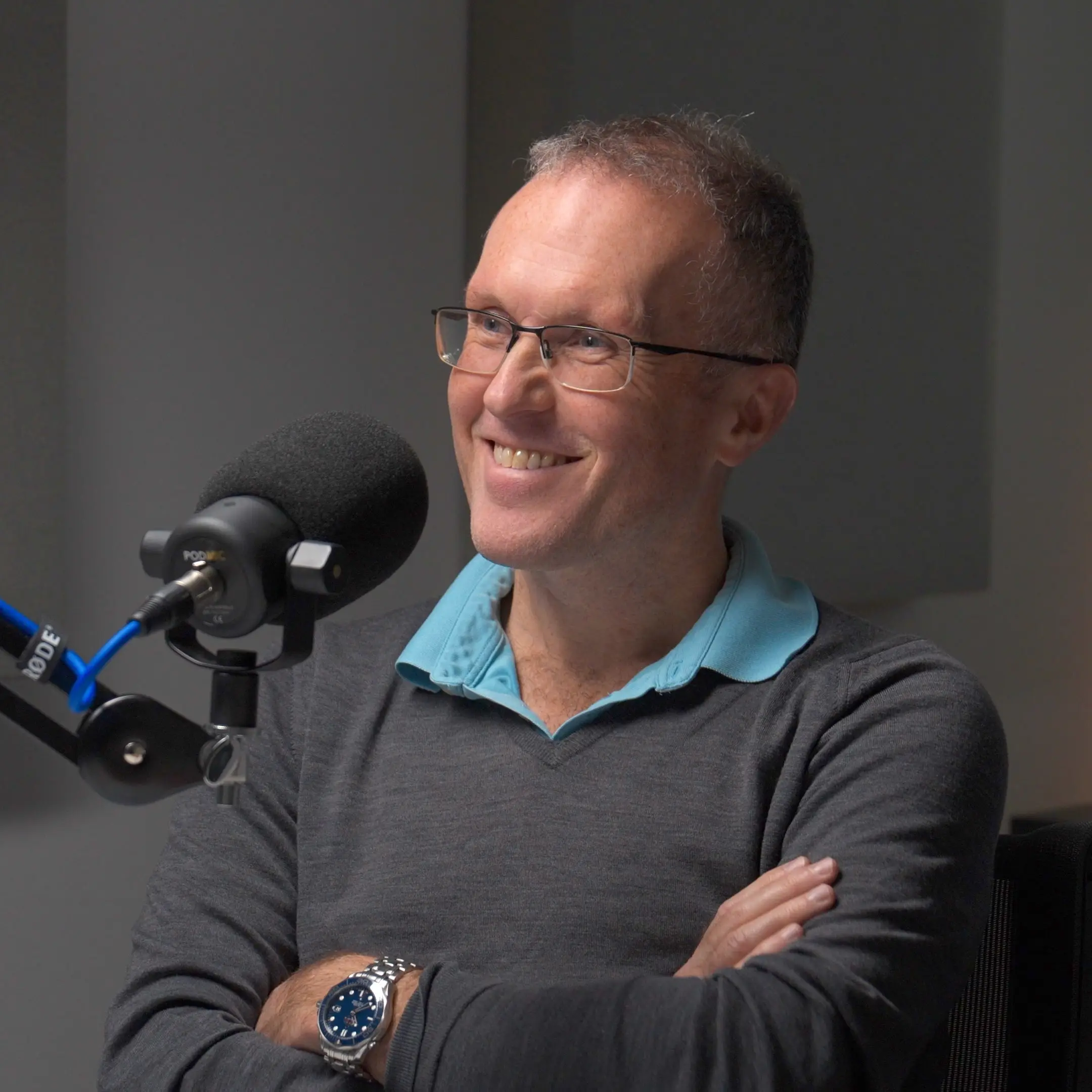
Lord William Hague on Talent, Technology, and Capital


.png)
.png)

How does the UK turn world-class ideas into world-class companies, without selling the best outcomes abroad?
In this episode of Oxford+, host Susannah de Jager speaks with Lord William Hague, Chancellor of the University of Oxford and former UK Foreign Secretary, about the UK’s scale-up gap and what it will take to build an innovation economy that keeps more value at home. They discuss why universities sit at the centre of growth, how pension capital and other long-term investors can help close the funding gap, and why procurement and slow decision-making can quietly kill promising companies before they reach commercial scale.
The conversation lands in the reality of the Oxford-Cambridge Growth Corridor, which government has positioned as a long-term national growth project. Recent reporting on the corridor highlights the scale of the ambition and the industries driving it, alongside the claim it could add £78bn to the economy by 2035. From foreign takeovers of UK spinouts to the need for faster infrastructure delivery, this episode offers a clear, systems-level view of what Oxford’s ecosystem reveals about the UK’s economic future.
Lord William Hague: We had in the last year, two unicorn spinouts out of Oxford. Which has been sold for more than a billion dollars. Now that's great, that's a great tribute to Oxford and to the people who've created those companies. But of course the reason we know there were unicorns is they were bought for more than a billion dollars by foreign companies.
We've been through a period in the world where, in the UK in particular, we thought owning things didn't really matter and now most of the technology being invented in North America and in China, and guess what that means? It means they will be colonising us. If you understand that point that then you get the urgency of it you don't actually need to stick to all the same rules as before. What is necessary for a country to succeed in this century is to bring together talent, with technology, with capital.
Susannah de Jager: Welcome to Oxford Plus the podcast focused on innovation around Oxford. We look at everything across the ecosystem, the institutions, the people, the technology. If you need to learn anything about Oxford, whether it's how to take a first step in through the door, or as an experienced investor wanting to go deeper, this is the podcast for you.
We keep hearing government talk about innovation and growth, but what does it mean today? Universities like Oxford sit at the centre of some of the biggest questions facing the UK. How do we turn world class ideas into real world impact? How do we unlock long-term investment for innovation? Our guest today occupies a unique position at that crossroads.
Lord William Hague is the chancellor of the University of Oxford, a role rooted in stewardship, continuity, and public trust and a former leader of the Conservative Party. But he's also one of the UK's most thoughtful commentators on growth, investment and national renewal. Writing extensively in The Times and co-authoring influential work with the Tony Blair Institute on Pension Capital, innovation, and the need for long-term thinking in British economic policy.
In this conversation, we explore how those two worlds collide, what it means to guide one of the world's great universities at a moment of profound change, why the UK has struggled to translate excellence into scale, and how the university's innovation ecosystem can, and needs to, help shape a more confident investible future for the UK.
Lord Hague, thank you very much for joining today. For anyone listening that isn't familiar, I'd love you just to briefly outline what the role of the Chancellor of Oxford really means and does.
Lord William Hague: Well, yes, a lot of people may not be familiar with that. It's quite hard to define. The job is not to run the university. When Howard McMillan, who was my predecessor but three. He was a Chancellor in the 1960s and 70s, and he started out as Prime Minister. When he was the Chancellor at the same time. So that tells you something about the job that wouldn't be allowed now. You're not allowed to be an elected representative at the same time. But he was Prime Minister when they asked, when somebody asked him, what does the Chancellor do? He defined it this way. He said, well, the Vice Chancellor runs the university. But when you think about it, you couldn't have a Vice Chancellor if you didn't have a Chancellor and that was his entire explanation of what the Chancellor does. It facilitates the existence of the Vice Chancellor.
Now of course there is a bit more to it than that. But the Vice Chancellor is the person who could hour by hour, day by day, runs the administration of the university and takes the executive and financial decisions and so on and we've got a great Vice Chancellor, Irene Tracy, who I'm immensely enjoying working with. So the Chancellor is something differentfrom that. The Chancellor has an important role every so many years in leading the selection of a new Vice Chancellor. It's a very important responsibility. But hopefully that doesn't come around very often and certainly there's some years to go before that happens. So that's an important responsibility.
But the Chancellor is the Head of the University and therefore has some role in expressing its values. That's something I've tried to do in standing for Chancellor and since I've been in office as Chancellor over the last year and we could talk about those in more detail. But what I've emphasised is standards of excellence, irrespective of background, and getting into Oxford and the work of Oxford cherishing all disciplines. Freedom of speech and freedom of academic thought and inquiry and being essentially humor, an exuberantly human place in a world of anxiety and loneliness. These are all, to me, very important.
So the Chancellor has a role in that and in advocating to the outside world the role of university are very relevant to some of the things I think you want to discuss today. Particularly the economic importance in the modern world are importance in any national strategy and any international progress on a whole range of particularly economic, scientific, security issues. Universities are very important in that.
So the Chancellor is a connection to the rest of the world and a communication channel to the rest of the world. That's why I'm talking to you now. That's what I'm doing. I'm communicating to the rest of the world about Oxford if I can and finally the Chancellor celebrates and supports and takes part in the life of the university. To connect the legal entity, the historic entity of the 800 years of Oxford, and I'm the person who wears the big gown and the cap and leads a parades
Susannah de Jager: You look great in a gown.
Lord William Hague: Thank you so much. But that has to be connected to today's student and today's researcher or professor. One of the things I'm immensely enjoying and I think it's very important to do, is meeting a lot of people around Oxford, I visit the faculties, I go to student events. I went to Freshers Fair in October for the first time in 43 years and met hundreds of the new undergraduates, and that's not essential for the Chancellor to do that, technically speaking. But itshows people in the university, the Chancellor is actually a living, breathing human who is interested in what they're doing. So actually when you add it all up, there's quite a lot to do as the Chancellor.
Susannah de Jager: You are sort of taking the temperature in all places, you are cheerleading for everything the university stands for, and then very importantly, in speaking to your background, and as a politician andforeign policy expert, you're able to position a lot of that in this communication.
How do you see Oxford's place in the world and how are you trying to amplify that through your work?
Lord William Hague: Well, it's got a big place in the world. More so really than it's ever had because of course, originally it was a very and purely British place, and it's still 80% of the undergraduates are from the United Kingdom. But Oxford now has more postgraduate students than undergraduate students. They are very international. So you can glimpse Oxford's place in the world from the fact that 117 nations and territories of the world have students at Oxford. You can walk down Broad Street in Oxford and bump into somebody from virtually anywhere in the world. So it is a global university and its place in the world is further emphasised by the fact that in any of the global rankings of universities, which are done in various different ways of different things being weighted and so on, Oxford is either the top university in the world or close to the top. So clearly it's important to the whole world community of thinking, of scientific endeavor. That means it's very important to Britain because it is located in the United Kingdom, even though it has that global role, and the potential for Oxford and other universities to add to the British economy is enormous and has not always been widely appreciated by political leaders.
Susannah de Jager: And why do you think that is?
Lord William Hague: Political leaders love to get hold of tangible things. The economy will grow if we build more houses. It will grow if we build more railways. Things like that. The current government in particular really emphasises infrastructure, and infrastructure is very, very important tothe future of the economy. It's much harder for politicians to get hold of ideas. How do you tell whether an idea is a good one or a bad one? How do you know whether it's going to reach a dead end or in 10 years time by the invention that changes the whole planet?
Susannah de Jager: And you've written about this a lot, less, build, build, build more think, think, think, and also highlighting things like Nova Nordisk and the impact on Danish GDP. How are you helping articulate that vision to the current Labour government?
I feel like they get it a bit, but you are right in the heart of it.
Lord William Hague: They do get it a bit and the main way to articulate it is to, and here we are pushing it, an open door, I'm pleased to say with the government. in that they have adopted the idea of an Oxford Cambridge Growth Corridor, which people have talked about for a long time and of course it is the common sense best way if you believe the future of our economy is to be thriving with new technology and investing in that, and to have a whole ecosystem that overused word, but for want of a better word, a whole ecosystem across a whole region. The sort of thing, again, overused phrase Silicon Valley, but you know, we all know what we mean. If that's going to happen, in Britain, it is going to happen in that area across north of London. The Oxford and Cambridge area, a lot of it is happening already there and the Labour government, to their credit, have seen that. They support that. They've set up task forces and given ministerial responsibilities to support that. They've already taken some important decisions about flood defenses and things like that, which are necessary and about and Oxford Cambridge railway line. So here, I don't feel we have to persuade them of that afresh. But now we have to say, well, if we're going to do that, we do have to get on with it. Because of course these ministers have found, just like many previous ministers under the conservative party in recent years, it's really hard to do things in Britain. It's not always the minister's fault. It's that we consult on so many things and we change our specifications and another government comes in and changes its mind, and then almost everybody in the country has the right to object almost everything. Slight exaggeration, but you know what I mean and it takes a very long time to do it. And we end up with something like HS2, which is now the most expensive railway ever built in the history of the planet and still won't reach a lot of the places it was originally intended for.
So when we talk about an Oxford Cambridge railway line and things like that, these things can get really bogged down. So I think part of what we have to communicate and persuade people of now is you do have to really get on with things because the world is not sitting still. People are not sitting in China saying, oh, let's have a five year planning delay about something or let's have another consultation about which region or what sector of the economy we're going to concentrate on, and we have to keep up with that. There's an urgency to things now. We have to keep persuading them of that and the other thing we have to keep persuading them of is, okay now they've accepted Oxford Cambridge, really good idea. The universities in general in the UK are a prime potential engine of economic growth. But in the Rachel Reeves first budget, there was no mention of universities. This was a budget about how the Labour government, the new government would grow the economy, universities did not feature. Apart from one there was an announcement of 20 million pounds to support spin outs, which was good. Which wasthe result of the review led by our Vice Chancellor, Irene Tracy, and so that was in that. But otherwise you would not have thought the Chancellor of the Exchequer's first major speech that universities featured it all in a plan to grow the British economy.
Now I think things have improved a bit since then. But this is a really important point in the modern world. When universities were religious seminaries in effect, hundreds of years ago, they didn't grow the economy. Now they do. We are in an age of such technological change, and universities are such a focal point for the attraction of talent from all over the world, as I've mentioned, that they really are the most readily available and most effective engines of economic growth, and not just Oxford and Cambridge. But the the UK is fortunate to have many of the top universities of the world.
Susannah de Jager: And you've spoken there about some of these kind of infrastructure projects, which are obviously incredibly important. But equally important and pretty well documented again, I would say understood by this government, are the capital constraints within the UK at the moment. So it's pretty well acknowledged that startup capital's available enough and then sort of series A is pretty good and then you've got what's referred to as the scale up capital gap, the kind of the valley of death, these are all wonderful names. And you mentioned that you're about to go to Mansion House and there's obviously the Mansion House Accord which is looking to plug some of that. But again, and I started working on this in 2021 when, Sir Nicholas Lyons was Lord Mayor and bought in the Mansion House Compact, initially. It has moved slowly and it has been quite hamstrung, not by unreasonable constraints. What do you see as the opportunity here and with your hat on,are you working with government on those issues as well at the moment?
Lord William Hague: Yes, and with business, I'm also trying to open the eyes of many investors and financial institutions to that they might be missing something here.
Oxford has, obviously Oxford's the university I keep going on about but I've made the point that other universities have similar strength. But the most spin outs in the country come out of Oxford. From all universities. Oxford University Innovation, our organisation that helps that process has so far supported 300 companies to come out of the university. Raising nearly 8 billion pounds of capital. But the potential is much, much greater than that and you are absolutely right the problem comes for the scaling up. So we had in the last year, two unicorn spinouts out of Oxford. Which has been sold for more than a billion dollars. Some people in the business world are still surprised to hear that. Now that's great, that's a great tribute to Oxford and to the people who've created those companies. But of course the reason we know there were unicorns is they were bought for more than a billion dollars by foreign companies. One case by the US another case by a Japanese company.
Now that, again, all credit to them and we do not want a world where our entrepreneurs cannot bring in the capital of foreign companies. But it's quite rare for those things to be grown to the next stage with UK or even European capital. So the wealth created by them in the future will not be accruing to the UK.
Susannah de Jager: And this was really the kind of the sum of the problem. We are excellent, our universities are excellent, we've got all these extraordinary companies coming up, and then so often as you state being bought and the value accruing elsewhere. I suppose if one takes a more positive view, which,I'm hopeful might be the case. But I'd love to get your thoughts and I, great friends with Jack Edmondson, who's the CIO at Oxford Science Enterprises, and certainly we've discussed this. Those sales prove the thesis. So do you think that it makes the convincing you are trying to do to pension capital in the UK that much easier when there are a few exits like this?
Lord William Hague: Yes. Oh, I think it does. Definitely andI can see the scales falling from some people's eyes as it were and so I hope many more people, it is not just a government issue as we're discussing, many more people in the private sector will go to Oxford or Cambridge or Imperial and see what is there. We ought to have an office that specialises.
Susannah de Jager: I was at a launch last night of HSBC Innovation Bank. So you can feel the temperature change.
Lord William Hague: And this because they stated simplistically what is necessary for a country to succeed in them, in this century, it is to bring together talent with technology, with capital. And here we are in the UK with the most extraordinary talent. Our students are, I can tell anybody, having spent all that time with them in Oxford the last year, are as brilliant as ever, as talented as any in the world, and indeed we continue to attract people from all over the world. So we have the talent, we invent a lot of the technology. You can go around the science faculties, as I have in the last year, and you see the most extraordinary things going on. You see quantum teleportation taking place for the first time. You see a chemistry faculty that has worked out how to make recyclable plastics out of the air, out of carbon dioxide. You see a medical sciences division that has invented vaccines against malaria, having been of course right at the forefront of inventing a vaccine against COVID in a complete crisis a few years ago. Extraordinary developments and capabilities. So we invent a lot of the technology. We need the capital. The capital for more of that to be then developed and grown into major companies in the UK. This is one of the problems with this is thatwe've been through a period in the world where, in the UK in particular, we thought owning things didn't really matter. Because of course the whole world was going to be completely globalised and it didn't really matter who owned what and you could buy anything you needed from anywhere else. Well now it turns out it does matter. President Trump thinks it really matters if you own some, and he uses it as leverage and China owns the main sources of rare earth and critical minerals or processing of them in the world, and they make it matter and who owns the artificial intelligence that is taking over so many things really matters. Now we have to get back into the way of thinking that owning things, some things, is pretty important and of course that also creates the wealth for this to become a virtuous circle in the future.
But I think the private sector can do a lot more, but government can continue to do more.Particularly in public procurement, in tax reliefs for venture capital, in advanced market commitments to companies, which is an aspect of procurement. Really there could be a lot more, there could be a much more go ahead, coherent strategy in government to support people who are taking some risks and are developing really groundbreaking new ideas.
Susannah de Jager: Yeah, and there have been some interesting call outs on this, around the NHS is wonderful and quite correctly they have great procurement that's good at keeping costs down. But the flip side is we don't have as large a domestic market for life sciences companies, and we don't really have a natural first adopter because of how difficult it is to go through.
So people are often forced to go and make their main client the US where it's private and larger, as a percentage of their GDP, and then we lose them because that becomes their primary market. And so I think the point around procurement is well made and needs to be dealt with and the point around sovereignty as well. I spoke to somebody the other day in defense and she said that there are two drone companies she knows of who do not have parts from China. Two. When you think about how many there.
So it's not just the capital, it's the first purchaser, and do you see change happening there that's going to help innovative companies coming out of Oxford?
Lord William Hague: Well, I don't see enough change yet. I think this is a major area for further change that people who think like I do, and clearly you do, really have to press for this. Procurement sounds like one of those really boring things.
Susannah de Jager: Like pension capital?
Lord William Hague: and obscure things, and does it really matter? But of course if you think of government procurement and the government accounts for 40%, more than 40%, of the economy in the UK. That's a vast amount of spending power and this is particularly true in healthcare, as you say.Without putting anybody in a difficult position with specific examples. I've seen more than one example where there are brilliant spin out companies with extraordinary new innovations in healthcare who the health service say, oh yeah, fascinating. This is exactly what we need. Love to work with you on this. But then when it gets to the stage, okay, are you going to buy? Oh no, now we have to go through a long tender process where there's all the bureaucracy and that's all the...
Susannah de Jager: During which time the company goes bust.
Lord William Hague: Ask everybody else in Europe whether they want to bid even though they haven't got anything similar and yes, that growing companyit needs to know it's got a business. This is particularly true in the defense sector at the moment where there's bottleneck in the Ministry of Defense budget just at the time when everybody knows that technology of security is changing rapidly, and we've got lots of potential good companies in the UK. But they're starved all resources so they will end up working with the German army or the Pentagon, instead of with our Ministry of Defense. So it's not just a university problem, it is a national problem, and I don't think for some reason ministers have either not understood the extent of this or they just can't work out how to break through problems like that.
Susannah de Jager: When you talk about that, how to break through, and we keep coming back to this point around speed and how crucial speed is for innovation in particular, which, as you say, the government is really hanging its hat on for or future growth.
We did it during COVID. We had a task force. We expedited things. It feels like people are sort of aware that this is urgent, but they're not really finding a way to expedite it. as a lay person and as a non politician, I don't understand why.
Lord William Hague: Yes, this is a very good question. It is a mixture of things. I think partly political leaders haven't generally operated in this world that we're talking about. I only have now after leaving government got familiar with these sorts of issues. So, most people who become the Secretary of State for well, Science and Technology, or the Secretary of State for Tiddlywinks or whatever it may be. Haven't had direct experience of these problems. Secondly, I think it's because the people have to realise how bad this, how urgent the situation is in the world, and how great the danger is of slipping behind the rest of the world to be really motivated, to be bold enough to do something.
I'm not sure the public, in Britain, which is not their fault, I'm not sure anybody has successfully communicated to them. We are actually, across Europe, not just in Britain, getting into a very dangerous situation here. 200 years ago, we colonised the rest of the world,most of it. Because we invented technology more quickly than other people. It wasn't for any other reason. And now most of the technology being invented in North America and in China, and guess what that means? It means they will be colonising us. Not necessarily by occupying it, but by forcing us to use their products and by making sure the future wealth accrues in an imperial way. Just like we did to the rest of the world.
This is about to be done to us. If you understand that point that then you get the urgency of it, and then you say, well, of course that is a sufficient emergency, just as you're saying about COVID, that you don't actually need to stick to all the same rules as before. You do need rules against corruption and there's been a lot of criticism of what happened in COVID because some things were done too, hastily. But nevertheless, you do need a far faster process and much more expertise in government on technology. Tony Blair and I, and some of the reports we've done together and the last two years have advocated a serious upgrading of technological expertise in government. Break the civil service pay scales because it is an emergency, to get the right scientific and technological expertise in government departments. Have ministers who are not members of Parliament, but you bring them in, you can still put them in front of parliamentary committees, and let them be running key departments. Bring them in for a few years, break the current rules on who can be a minister, because otherwise you have to work from a pool of members of parliament who were not elected for that reason. They're not elected on that basis that they have scientific or technological expertise.
So there are things that we could do if we had leaders who were sufficiently seized of the urgency of the problem and then, and part of this, so we're going way beyond universities now. But part of that is then ensuring a very strong role, a prominent role for universities. Because they are the main source of entirely new ideas in science and technology.
Susannah de Jager: Amazing. I agree.
Lord William Hague: We agree. There we are. All we need now
Susannah de Jager: It's done.
Lord William Hague: I need to go back and try run the country and I gave up doing
Susannah de Jager: Yeah, the leader that we never had. Taking a slight kind of swerve, we've spoken quite a lot about availability of capital and one place that we have a big influx of capital in Oxford is the Ellison Institute of Technology, where Larry Ellison is going to be investing in it in now a 2.5 million square foot campus and investing, I think it's around $10 billion.
I'd love to get your thought on how that's going to change the face of Oxford and the opportunity therein because it's vast and actually in a sort of capital starved environment, not at all levels, it's a big move.
Lord William Hague: That is a huge sign of confidence, of what we were talking about earlier, the importance of Oxford in the world because somebody who could do that almost anywhere in the world has chosen to do that right next door to Oxford. Now, of course, that sometimes can create some mixed feelings in the universe cause some people can feel a bit threatened by that and will it suck some things out of the university? On the other hand, there's clearly tremendous scope for cooperation and already several important strands of cooperation have been announced for instance on using AI in vaccine development and in joint working between the Ellison Institute and the University. So fantastic potential. Overall, I think we should very much be welcoming of this because if we want that Oxford Cambridge growth corridor. If we want part of the UK to be really at the forefront of what is going on in the world, well then you need things like this to be put into that area. Let's have several more of them. Oxford and that part of England becomes the place where you need to go and live and work to develop your career in many respects. So, I think it's a positive thing. I'm looking forward to it. I'm actually going to, in the next few days, spend some time with the executive leadership team at the Ellison Institute to get to know more about it. But we should be welcoming of such confidence in the United Kingdom and in Oxford.
Susannah de Jager: So we'd spoken there obviously about sort of semi philanthropic venture capital from the EIT, very mission focused and we've spoken about pension capital. Another area that people talk about quite a lot is family offices and whether they could help with the continuum of capital available, often quite impact driven themselves. Is it a cohort of people that you are engaging, or do you think there's more that could be done by the university?
Lord William Hague: I mean more can be done on all of these things, a lot of people in the university, and Oxford Science Enterprises and Oxford University Innovation, are working very hard on all of these things. But there's always more that we can do. Certainly wherever I go around the city and internationallyI try to get this message across not only to institutions, but also to people atprivate bank events and that sort of thing. So that, that will certainly include a lot of those family offices. Again, people need to have the knowledge of what is going on. They need to know that there's sufficient critical mass going on in the UK and really you would start in that triangle of Oxford, Cambridge, and London. That there are always going to be some very good things to invest in that justifies taking the trouble, stationing somebody here, setting up an office here. So I think yes, those family offices need to have a look at this as well.
Susannah de Jager: In a more broad international setting, there is a lot going on geopolitically at the moment. One area in particular is Trump's impact on academic institutions in the US. Are you or is the university seeing a big shift in sort of applications and is there an opportunity therein for even more talent? You spoke about 80 to 20 in undergrad,UK to other nationalities. Do you think we're going to attract more international talent in that environment?
Lord William Hague: Well, certainly we're doing very well on attracting international talent and anecdotally I think there has been an increase in applications from the United States to come to Oxford. Certainly there is an increase and of course the effect of what's happening in the United States is not just that more Americans might want to be in Oxford, but that there are people from India or Japan or Germany or Brazil or wherever, who would've gone to the United States who are now more inclined, that their next port of call after that would be the United Kingdom.
So that definitely we are seeing some effect of that. Good things the government has done on this is theyhave been on the global talent visa and a global talent fund, with the Royal Society, to help teams of researchers come to the UK. Not entirely direct to the United States, but of course that could include, the US. Although they've done some, the things not so clever that they've done like a leve on international students, that did not turn out as bad as had first been mooted. But is a policy that's gone in the wrong direction.
Susannah de Jager: And entrepreneurship relief, also, quite a strange call.
Lord William Hague: Yes, absolutely there are other government policies that certainly drive wealth out of the country and of course that overlaps with talent because that is driving out some people whohave built their wealth through their talents and other people who would be great investors. But if wealthy people are moving to Dubai or Milan, well then it is just not as front of mind what the investment opportunities are in the UK. So they're very contradictory government policies on this and I've written about that in one of my columns in The Times that the government should decide, does it want talented people in the UK or not? And then have a coherent approach rather than trying to pull some in while pushing others out. Which is what is happening.
Susannah de Jager: It sort of feels like populism riding rough shod over the economic vision.
Lord William Hague: It does. Absolutely. Yes or some outdated ideas about taxation before people became so mobile that they're now coming up against the new realities of you need the movers and shakers. You need people to come to Britain who have ideas, who will invest, who just go around discussing everything and initiating things. There are certain types of people who just really get things going and we're losing some of those from the country. But we are doing well in Oxford at attracting talent and I continue to meet the most extraordinary, inspiring array of people from literally all over the world in laboratories and faculties in Oxford.
So we will keep doing our best to expand our global talent.
Susannah de Jager: What would be the best possible outcome from your Chancellorship in nine years?
Lord William Hague: That Oxford is still at the top in the world as a university for the next generation of UK students and others to benefit from. That the boy from the comprehensive school in Rotherham still has the best university in the world to go to. That's always in my mind. But I think it's really the things that we've just been talking about. If in a decade's time we could really say, well, now everybody understands how critical universities are to the future of the country more than ever before and what is happening around Oxford and Oxfordshire and with Cambridge, with others like Imperial College, is one of the most remarkable centers of innovation and entrepreneurship and investment in the world. this is what I would love to see 10 years from now.
Susannah de Jager: Do you think that there's a place for a grassroots pension holder campaign? Because often when I hear these things, pension capital is spoken about as if it belongs to the government or the trustees, and I feel often that if you were to say what we've just discussed to pension holders themselves, do you want your money to make an impact in a diversified portfolio? Clearly, everyone would say yes. But I think that the UK doesn't think of themselves as investors at large in the way that other countries do.
Lord William Hague: Well, they don't, but that's not necessarily because the pension funds are run in a some irrational way. We don't have that many in this country that have the scale indeed, to do this because of the structure of pension funds. Now Canada and Australia, were more farsighted some time ago about bringing them together into some really vast funds and so you see the result of this now. In fact, you and I were at the launch I opened the Oxford North Development,a few months ago at the end of September, which is abig new development. There are going to be hundreds of houses and there's going to be a million square feet of laboratory and other space there. And I think we will find hundreds of years in the future that Oxford North is doing well cause there's an 800 year track record of the university as a whole. It's a pretty good long term bet.
But as you will recall, one of the Oxford colleges half owned that whole exercise. Ontario Teachers Pension Fund was the other half. Ontario, and so the benefit, the future rentals, the future prosperity, that comes from having invested at the beginning in a place like Oxford North that will go to Canadian Pensions because they've got the scale and it will not go to British pensions.
So, that needs putting right. But it is partly about scale and then partly about, of course, 17 major companies promised in the Mansion House Compact, that you referred to earlier, to invest more in unlisted equities in the UK on the latest figures I've seen, it's only gone up fractionally since then. From something like N 0.36% to n 0.6% of their capital.
So I think that it's good that since then the new government has continue to support that Compact. I think we might find that among those 17 companies, there's quite a wide variation in how much they're doing in this respect. I think you might be optimistic to get a kind of pensioners revolt about these things. But, if I was the Chancellor of the Exchequer rather than the Chancellor of the university, I would call up those 17 and ask them how they're each doing individually and whether they are doing enough to provide more risk capital into the UK economy.
Susannah de Jager: And finally, thank you for your candor today. I really appreciated and enjoyed the conversation. What do you think will have changed by the time you hand over? What do you think of as the sort of most underappreciated aspect of what's going to shift in the next 10 years or the appreciated one, perhaps?
Lord William Hague: Well, I think Artificial Intelligence is the biggest thing to hit education in a very long time and education will change fundamentally as a result in ways that we can't wholly predict within the next decade. And it's already changed, it's changing the way students work. It's changing the way faculties research and think. This could go very well or very badly, like everything in Artificial Intelligence. But we have to make sure it goes in the right direction. That this is leveraging the human mind, not diminishing the human mind. To the extent that AI really boosts the discovery of many new things in science such as things we've been talking about. That universities like Oxford are at the forefront of that, that they couldn't really use it, and that's why Oxford is the first university in the UK to have a partnership with OpenAI where ChatGPT EDU is provided free of charge to every student and member of staff. I did the training course in it myself, last week. So we've got to be at the forefront of these things. But avoiding that important new phrase from the Oxford English Dictionary brain rot which if we subcontracted our thinking to machines, we would go in that direction. So this is a massive opportunity and challenge.
Susannah de Jager: And as a parent, it's something that occupies my mind quite a lot. I've got an 11-year-old and an 8-year-old. Do you think that we should be following in Australia's footsteps and perhaps restricting social media for those?
Lord William Hague: Yes, I absolutely do think that. Yes, because I think the world has been conducting a vast experiment with the brains of young people in the last 15 years without anybody, without any democratic decision or any real discussion about the merits of that. And the evidence is very strong from the work of people like Professor John Haidt in his book, the Anxious Generation, that this is a contributory factor. Maybe not the entire explanation, but it is a major contribution to this age of anxiety and loneliness that has come into the lives of young people at a time where the connections in your brain are actually formed and are hardwired. It's not something you can change later. So I do think that the evidence on this is sufficiently strong, that while enforcement is problematic, Australia is going the right direction. France is going the same way. In Britain, there's more and more political pressure to go that way, and I am part of that pressure. I completely agree with that.
But I also think though that we have to be at the forefront of using technology. And we're perfectly used to the idea that you have to protect young people from some things and then make sensible use of them in later life. After all we do that with driving a car, and so many other things. So we are capable of developing the right rules for both social media and more broadly for Artificial Intelligence.
Susannah de Jager: Thank you. I've really enjoyed this.
Lord William Hague: Thank you.
Susannah de Jager: Thanks for listening to this episode of Oxford+, presented by me, Susannah de Jager. If you want to stay up to date with all things Oxford+, please visit our website, oxfordplus.co.uk and sign up for our newsletter so you never miss an update. Oxford+ was made in partnership with Mishcon de Reya and is produced and edited by Story Ninety-Four.

More episodes+
Ethics & Innovation: Inside Microsoft's AI for Good Lab
Ethics & Innovation: Oxfordshire's Divide Between Opportunity and Access
Ethics & Innovation: Serving, not Harming and Connection, not Convenience
Ethics & Innovation: Can Trust Keep Up With AI?
Ethics & Innovation: Building an Innovation Ecosystem That Includes Everyone

Ethics & Innovation: Can AI Close the Justice Gap?

Ethics & Innovation: What Makes Us Human in the Age of AI?
Ethics & Innovation: Civic AI, Data Soil and Digital Democracy

Ethics & Innovation: Does AI Actually Understand Our World?

Ethics & Innovation: The Social Media Ban, Sovereign AI, and the Race We Can't Stop

Recycling Capital and Talent in Oxford's Innovation Economy

Unconscious Bias, Responsible AI, and the Future of Workforce Decisions

Bridging the Gap between Scientific Research and Industrial Impact
OX Tech Week: From Pub Meetups to a City-Wide Tech Festival
Healthcare Innovation When Lives Are at Stake
Building a More Inclusive Innovation Ecosystem in Oxfordshire

Building a World-Leading Climate Tech Ecosystem in Oxfordshire
Defence Innovation in the UK: How Startups Win Government Contracts

Building a £10 Billion Vision: Inside the Ellison Institute of Technology with Lisa Flashner

The Multiplier Effect: Funding Companies, Ecosystems, and the Future of the UK
Oxford North: The New Innovation District in Oxford

The Cluster Effect: How Bicester Motion is Driving the Future of Mobility
The Psychology of Scaling Companies and Teams with Professor Robin Dunbar: Part 3
The Psychology of Scaling Companies and Teams with Professor Robin Dunbar: Part 2
The Psychology of Scaling Companies and Teams with Professor Robin Dunbar: Part 1

The Future of Genetic Medicine with Zandy Forbes, CEO of MeiraGTx
How Founders Pledge Uses Data to Maximise Philanthropic Impact

The Oxford Trust at 40: How Innovation and Education Power Oxford's Future

Can Sirona Rival Ozempic? A New Chapter in Obesity Treatment with Camilla Easter

Aligning Founders and Investors with David Mott

Building Billion-Pound Outcomes with Jack Edmondson

How Machine Learning in Oxford Is Transforming Medicine Worldwide with Lionel Tarassenko

Bringing Science to Society with Molly Stevens

How Oxford University Innovation Bridges Science and Business with Mairi Gibbs
What Formula One Teaches Us About Startups and Success with Adam Parr

Risk and Reward in Early-Stage Tech Investments with George Robinson

Charting Fresh Career Paths with Sue Douglas

From Oxford MBA to Startup CEO with Lily Elsner

Navigating Market Dynamics with Marcus Stuttard

Harnessing Local and Global Talent with Sarah Haywood

Navigating Capital Markets with John Derrick
Building Oxford’s Future with Anna Strongman

Breaking the Myths Around University Spin Outs with Irene Tracey

Navigating the Future of Oxford Sciences Enterprises with Ed Bussey

Oxford's Role in the Next Industrial Revolution with Dave Norwood

Diversifying the Investment Ecosystem with Rowan Gardner

Pension Investment and the Mansion House Compact with Nicholas Lyons

Lessons from the Motorsports Cluster with Mark Preston

From Research to Reality with Cici Muldoon

Nurturing Founder-Driven Ventures in Oxford with Peter Crane