Building a More Inclusive Innovation Ecosystem in Oxfordshire


.png)
.png)

How do you turn a brilliant but messy innovation ecosystem into something easier to navigate, stronger on the world stage, and fairer for local communities?
In this episode of Oxford+, host Susannah de Jager speaks with Olga Kozlova, one of the driving forces behind Equinox (Equitable Innovation Oxford), a new partnership convened by the University of Oxford to align universities, investors, corporates, developers and communities behind a shared ambition for Oxfordshire.
Olga explains why Equinox formed, why a united voice matters if Oxford wants to compete with global clusters, and how the initiative aims to make the ecosystem more accessible for founders, investors and companies looking to locate in the region. The conversation also explores why equitable growth cannot be an afterthought in a county with stark inequalities, and how skills, narratives and practical delivery can help more people feel the benefits of innovation.
Equinox launched in November 2025 with over 40 regional partners and a new NatWest Accelerator to support Oxfordshire start-ups.
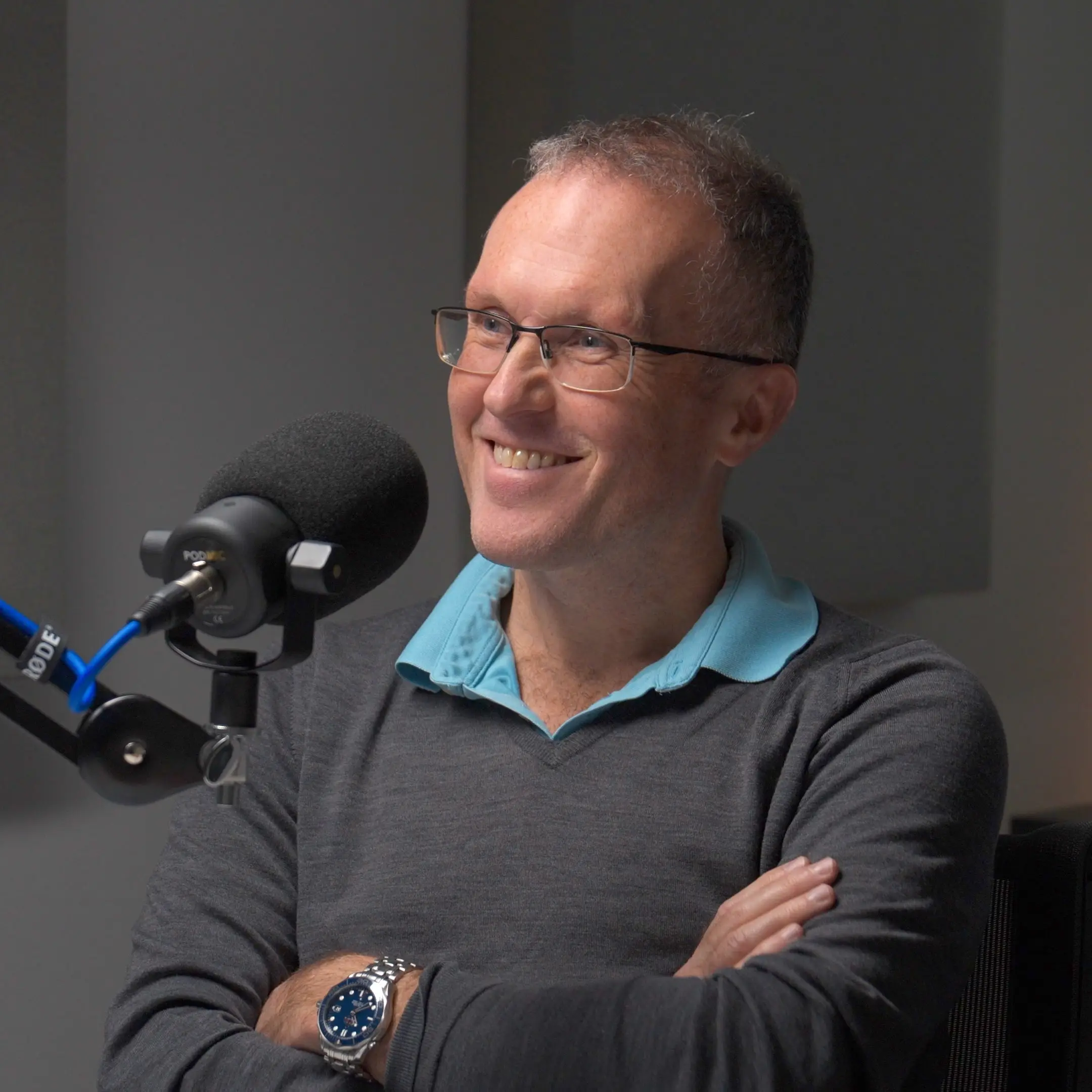
Olga Kozlova: Olga Kozlova is Director of Innovation and Engagement at the University of Oxford and a leader in innovation ecosystems, technology commercialisation, entrepreneurship, and inclusive growth. She previously established and led the Innovation and Industry Engagement directorate at the University of Strathclyde and founded Converge, Scotland’s national company creation and entrepreneurship development programme.
Susannah de Jager: Welcome to Oxford Plus the podcast focused on innovation around Oxford. We look at everything across the ecosystem, the institutions, the people, the technology. If you need to learn anything about Oxford, whether it's how to take a first step in through the door, or as an experienced investor wanting to go deeper, this is the podcast for you. Innovation drives growth, but too often access to opportunity is uneven leaving talent, ideas, and communities underrepresented in the ecosystems that shape our future. Enter Equinox. Equitable Innovation Oxford. A new initiative designed to ensure that innovation in Oxfordshire is inclusive, accessible, and opportunity rich for all. By connecting diverse founders, researchers, and stakeholders, Equinox aims to strengthen the local innovation ecosystem and amplify the impact of Oxfordshire world-class research and enterprise.
Our guest today is Olga Kozlova. One of the driving forces behind Equinox. Olga brings deep experience in innovation strategy, ecosystem building, and stakeholder engagement having worked across universities, startups, and research intensive organisations to connect people, ideas and resources. In this conversation we'll explore why Equinox was formed, how it will operate, and the ways it is expected to benefit both innovators and the broader Oxford chair ecosystem. We'll also dig into Olga's own journey, her perspective on inclusive innovation and how carefully designed networks can transform both opportunity and impact. This is a discussion about equity collaboration and how making innovation accessible to more people can strengthen Oxfordshire and the UK's role in driving the next generation of breakthrough ideas.
Olga, thank you so much for joining today. Equinox. Equitable Innovation Oxford. Why was it formed? What was the gap?
Olga Kozlova: When I arrived to Oxford, which is three years ago, and got acquainted with innovation ecosystem here, I realised that it's the most messy, decentralised, brilliant place, which I think ecosystems should be messy. I think I completely agree with this. But when you want to make a real impact, when you want to compete with places like Kendall Square, Silicon Valley, Singapore and in China. You really need to speak as a united voice, and that's one of the reasons that Equinox was formed. What we needed was to bring together the quadruple helix, the industry partners, the universities, the local authorities, the communities behind one vision. What Oxfordshire innovation ecosystem could be. To make sure that we remain competitive, to make sure that we bring talent, we bring investment, but also to make sure that the communities around Oxfordshire sees a benefit of this beautiful research and innovation activity.
So that's the reason behind Equinox coming together and it was led by Vice Chancellor of Oxford Irene Tracy. She really wanted and she put her name and time towards helping create this and we worked really hard to bring all the stakeholders together.
Susannah de Jager: So you spoke there about a unified voice, which makes a lot of sense, and that's the sort of outbound. Is Equinox also going to serve as helping clean up what you described quite correctly and fairly, I think is kind of quite messy, quite hard to navigate. Is it going to help people on the inbound too?
Olga Kozlova: Absolutely and I think again, when you are looking for entry to the ecosystem from the perspective of the user, which could be a founder or somebody really interested in innovation or a company wanted to come in. You want to make it easy in a sense. You don't want it to be a test. If you can find help, you deserve to start the business. If you can't find help, well, tough. In my view, if you imagine ecosystem as this network, I mean, I did a PhD in fungal cell biology. So I always remember all this mycelia growing together. So if that is an innovation ecosystem, you want to have a series of nodes that if you reach it, then you will be put in the right place and you'll get the right support and this is what in my head, Equinox can be that series of nodes with this umbrella that speaks with the united voice.
But also for those who are coming in, making it very easy. If I'm an investor and I want to invest in Oxford and find the right company, this is events I should go to. If I'm a founder that these are the key supports at various stages. If I'm a company considering locating in Oxfordshire, this is a support I can get in terms of finding the right space or finding the connections in the university or helping with recruitment. So that's for me what Equinox is. It's a series of nodes and a really bright umbrella at the top.
Susannah de Jager: And I know that you did a lot of workshops with many, many stakeholders to come to this kind of vision and to come to this branding. You touched upon there the fact that there can be quite a lot of, inequality and bringing together the quadruple helix. The fourth one of citizenship and community has been perhaps not considered to the optimal degree that it might have been. What does Equinox mean and define as Equitable Innovation?
Olga Kozlova: I think that was completely deliberate because particularly recently there was real focus oneconomic growth. We need the jobs. We need the taxable revenues, essentially. But at the same time, we also need to make sure that Oxfordshire is an attractive place to live and that we retain people and we attract people to come in into the ecosystem.
We also need to understand that it's not about all about PhD level jobs. A lot of these companies, they need administrators, they need technicians, they need security stuff, they need catering. There is a lot of these jobs that are associated and supporting it and make this actually a nice place to live. Is good for working, good for living, and good for playing. That is an ecosystem. So that's why we are leading with an equitable part because to be fair, I think there are many models of how to do the triple helix, which is industry, academia, government well. Many universities have done it. Many countries have done it. But to bring the fourth dimension of citizens of communities is actually, there's not that many examples, if any, across the globe of doing it well. Therefore, as Oxford, we should be developing that model. I think it's close to our hearts because we all know about the inequalities across Oxfordshire, and this needs to be addressed because otherwise people won't come with you.
There are lots of infrastructural issues. You know, the cost of housing, the transportation. We're not saying that Equinox will solve it all because for infrastructure challenges there is Oxfordshire Growth Commission. There is many other place. But what we want to do is to provide, first of all, advocacy for this being done in a right way. And second of all, find out, well, what could make a difference? Is it potentially skills development that when peoplemaybe never even walked through a university building?
Susannah de Jager: Which is an amazing number of people.
Olga Kozlova: Which is an amazing number of people can actually remove that barriers and be exposed to say, look, I don't need a degree, or I don't need a PhD, but I can be involved with it. I can be part of it. You know, Recently we've been lucky we had two unicorn exit and one nearly unicorn in a space of just few months. But we talk about the big exit number one and a half billion was OrganOx. We talk about the jobs, but what we forget to say that OrganOx help save over 7,000 lives of people from across the spectrum. So that narrative needs to be there. And then I think there are things, and I won't pretend that we have at this stage, we just launched in November, all the answers. But there will be other things that we can help deliver that can potentially bring real benefits into communities.
Susannah de Jager: Thank you, that was really clear, and I think that if I play it back to you, because I think it's very important actually. I think that what you just articulated is that part of this naming and the choice around the use of the word equitable is around signposting the wider benefit to a broader church than perhaps either feel they benefit or that have historically benefited.
The danger, and I've heard a couple of people say this, so I want to give you the opportunity to answer this with the word equitable, is it has quite a wide set of connotations potentially. I certainly have thought, oh, I wonder if that might spook investors who, one hopes everyone wants to raise all boats, but that's not their main investing thesis, right? They're not a kind of socially focused fund. Have you had any feedback to that degree and what it means to Equinox?
Olga Kozlova: I think certainly I would agree that organisations come around Equinox, I would say for various reasons. For some of them it would be very much commercial. They're looking potentially to raise profile of Oxfordshire so we can maybe attract more large companies. But purely commercial reasons.
I would say the majority of companies that signed up to Equinox, and I think we're sitting at about 68 who have signed the charter organisations, I think they understand that in order to be successful long term, you need to bring the communities with you because this is your future employees. This is your current employees. This is environment in which you operate. So there are many reasons. I think companies now are a lot more aware of the importance of that environment.
Susannah de Jager: Which I agree with, and I think that that's really, so well articulated. I think that my point is slightly different, which is I completely agree that companies are focused on that and it's as important to their rise. Do you worry that an international investor looking for the front door to Oxford might think that's not the right front door for me if they're not a socially focused fund?
Olga Kozlova: It could be. I think I wouldn't argue that nobody ever will think that. But I think if you're international investor coming in, you want to make access to talent is an absolute top priority for all of them. Whether you speak to a major corporate or you speaking to a major investment fund, all they talk about is, well, what's your access to talent?
Susannah de Jager: Yeah.
Olga Kozlova: And you can't solve that without making Oxford a good place to live. On the opposite when you talk about that we are Equitable Innovation Oxford and we are looking to making inward investment easier and more attractive into Oxford and you talk about the equitableness. They're all are really, really interested.
Susannah de Jager: Good. I know that you're at the early stages, so I won't hold you to this, but you've touched upon quite lightly some of the ways that you think Equinox is going to work day to day. You spoke about the 68 members. I'd love to understand a little bit more about the type of people that have joined so far, and then I'd love to understand, how you see, in the next few months, what you can offer those signatories to the charter as you evolve.
Olga Kozlova: That's a brilliant question because we've been thinking about while we are developing, and like you said, we spoke to a lot of people why we were trying to definitely co-create what Equinox is. I will talk you through, so we have Four work streams. They are around investors, and by that I mean people who will invest into our spin out startup companies and companies across. We have a work stream on corporates, which is all about companies. We have a work stream on developers, which wants to make sure that there are right spaces across Oxfordshire for companies to start and grow, and we have communities.
Each of this work stream have a group of leads who basically helped make Equinox life and who are our operational boards. So the investor work stream is led by Ed Bussey from Oxford Science Enterprise. Mauri Gibbs from Oxford University Innovation, and Tim Haines from Abingworth Capital. We have Sarah Haywood from Advanced Oxford and representative of Harwell, Seb Johnson, who are leading our corporate work stream and Anna Stongman from OUD and Artem Korolev from Mission Street. We also have EIT, which is Ellison Institute of Technology. We have BMW signed up. We have Moderna. We have Oxford Brooks University. We have smaller companies who have signed up for it. So there is a real broad church, I think there is a lot of buy-in into the idea of Equinox and people talk about it. Which is one of the better things.
So in terms of what we are planning. So during the consultations we have several priorities that have emerged. One of them, for example, is the creation of Inward Investment Unit for Oxfordshire. An honest broker with a central oxford presence, a physical presence, which could help companies if they want to come in. But could also proactively maybe target some of the companies would like to see in the county and in the city. So that's one and this is a really big ticket item. It'll require further the funding and at the moment we're trying to figure out how could we fund it? What funding pots we could apply for it? It's a long term per piece of work.
There are smaller pieces of work, like we would like to create a calendar of events that is publicly open and that people can come in and to have a joint narrative essentially that anybody who is internationally can have a set of slides and figures and basically say, well, if you talk about Oxfordshire that's what we're about. So materials and collateral that people can easily use. We obviously have announced a partnership with NatWest to do Regional Accelerator and this is what we really keen because we are very much aware that there is a lot of support for spinouts and startups of the universities. But if you're not connected to the universities, there isn't the same support for founders. So NatWest Accelerator is open to everybody and the whole point is that we can support and create environment for these founders to flourish.
So these are the, I would say, the top priorities. On the community side, the things I've mentioned, the narratives, the skills agenda, this is what we're currently developing because as I said, there isn't an existing model and we want to get it right. So what we didn't want is to announce something that maybe isn't really what is needed or something that we have no chance to deliver because the whole ethos of Equinox is delivery. We want to deliver the practical things that will make a difference. So that is piece of work, and I said, I've mentioned some of the areas is in process.
Susannah de Jager: And I love hearing that. That it's going to be the sort of practical and the action base because it can be very valuable to have a paper produced that sort of substantiates what's needed. But often I think there's a lot of replication of that work and not enough of the action. So I'm really pleased to hear that and excited to see it.
Who would you like more of in the community? You said there are 68. There's obviously been amazing take up. You spoke about some of the people there. Are there people, not necessarily by name, but types that you think, oh, we'd like more of those. It's obviously meant to be outside of just the university, but probably the people within the community have known about it first. Who's missing?
Olga Kozlova: I think, we certainly have, been working with membership organisations like Advanced Oxford. We're working, for example, with B4 Well, what we want is to make sure that smaller businesses are also represented and we understand what their difficulties are because I mean, ultimately the SMEs as a backbone of the UK economy, we need to be realistic of it. A few more, I suppose, innovative growth and scalable companies, we'd like to see a couple of them. But, we're also working proactively to make sure that NHS is a partner for us. So that is currently work in progress. But ultimately what I will say is Equinox is a coalition of the willing. We're not looking to kind of tick everybody on the map. We want people who come here with open hearts wanting to do something.
Susannah de Jager: On a more sort of granular level and thinking about the audience for Oxford+, and it's kind of interesting because I started Oxford Plus very much in response to some of the lack of transparency that you've touched upon. Obviously not going anywhere near as deep as what you're about to go into. But I really share your view on transparency, people understanding how to come in. It's good for the ecosystem. What benefits specifically do you hope that Equinox is going to bring to founders and startups, if they were listening, what do you hope to be able to offer them?
Olga Kozlova: What Equinox really wants to offer, I suppose, is I would say three things. First is that way of finding the right support in an efficient way. So in a sense, whether you are looking for premises or you are looking for seed round of investment or whether you want to access just maybe some advice through mentorship or a peer group. That through the offering of Regional Accelerator being highly visible, you can get to the right people. So that's one. So I think thatnavigation is my number one.
My number two is we need more investors on the ground. I think Oxford Science Enterprise is brilliant to have them, and they're an important player. But we need a much stronger business angel Community. OION is part of the offering, but we just need a lot more because not everybody's going to build a unicorn. Which is more for the VC model. But there could be some really, really good, scalable companies out there and they need that business angel capital. So Oxford Venture Angels, the initiative that David Ford is leading, is really brilliant for companies that need that kind of business angel Capital. So access to capital is a second one.
And I suppose the third one is a network. Essentially, that's where Equinox can come in.I've been an entrepreneur. I've been a founder. It's a lonely place to be and I think having that peer groups that is easily accessible, people who maybe haven't created a unicorn yet, but maybe a couple of years ahead of your journey so you can really relate to what they've been through.
I think that's probably three things that Equinox can quite easily offer.
Susannah de Jager: I like what you say about the peer group and interestingly, it's come up in other conversations recently. I too have really benefited from that and so I think that point around cohorting, people that are a little bit ahead and can give you guidance, but also people that are at exactly the same stage, it's just so valuable and I think people bring in mentors, but actually a peer group can be really just as useful. I don't think it's an either or necessarily.
You've touched upon the fact that people have done the triple helix. But that you guys are breaking new ground with this fourth. How do you hope that's going to impact the way other ecosystems around the UK evolve?
Olga Kozlova: I think a lot of people are trying to do this. I worked in Glasgow and they really were keen because again, the innovation district, I was working there on was in between the university, very affluent area on one side and very, very deprived area on the other side. I think they were trying kind of to think, well, how do you create this more equal society, essentially?
I think many people are trying to do it, but as I said, I don't think there is a model and I think Oxford is brilliant in developing these new things. I mean, we are obviously the best university in the world and I think we also have the breadth of expertise because our humanities and social sciences are just as strong as our medical sciences and physical sciences. So I think, we as a university can really support it and help develop it bringing our expertise together. What I would like to do, and I'm quite ambitious, like to create a model that will be replicated across the world. That's where I think my aim is. But I also want a practical benefit to the communities around here. We work very closely with BMW and the majority of their staff lives in Blackbird Leys. Which is one of the more deprived areas, and a lot of them never went to universities. But this is really important for them. It's an incredibly important group, and we are actually talking with them quite closely of, well, what would benefit their workforce?
We're also looking at Oxford's impact beyond just the Southeast of England. Obviously we have global aspirations, but also we have collaborations with Birmingham. We're working on collaboration with Liverpool to make sure that there is a benefit across the UK. We've done an economic assessment, I think, but last year we found that 37% of the university's economic impact is actually outside the South East of England.
Susannah de Jager: Oh, that's fantastic.
Olga Kozlova: So that's already, because it's already happening, but I think what we want to do is to create much more, kind of visible and much more again productive relationships with other kind of regions within the UK and then you know, there is a global impact, as I said. I want it to be copied across the world.
Susannah de Jager: And I think to the point that we were touching up on earlier of signposting to a broader church that they are going to be beneficiaries and hopefully making that more. I like that you looked up that number or that you researched that number because when I was working on the pension capital reforms, there was a sense that the Golden Triangle was very kind of reductive in its benefit to the UK and actually when we did the numbers that was not the case at all. There was huge benefit to the wider UK. But the perception can be very, oh, the South benefit and other places don't and I think the more that that can both not be the case through initiatives such as this, but also that we can break some of that perception where it's already not quite a fair reflection it's really important to do both.
You've spoken a bit there about your ambition, so you've partially kind of touched upon this, but how would you measure success more locally? We are talking about the ambition to scale it elsewhere, but in five or 10 years, what do you hope's going to have come from Equinox?
Olga Kozlova: I think what I'd like, and I'll be honest with you, a few things. One is that we do land three, four, five, whatever corporates within Oxfordshire and what I also would like is to see a diversity of sectors because we are quite dominant by life science and I think that can continue. But having companies in other areas being their tech or I think that'd be good to have that diversity of presence. So that's one.
Susannah de Jager: And I think there's quite a good opportunity there with the government's industrial strategy.
Olga Kozlova: Absolutely.
Susannah de Jager: What's going in defence.
Olga Kozlova: I think defence, quantum, for example, is one of the biggest. AI is another one, and Oxford is a world leader. It's achievable and I think the also Ox-Cam Corridor and the light that shows will definitely help in that ambition. So that's one. I think what I would like to do is to see a lot more diverse church of investors having boots on the ground in Oxford and a very strong business angel community and more personally I've been working with a couple of people from the ecosystem to see more female investors.
Susannah de Jager: Yeah, it's still so underrepresented
Olga Kozlova: It's so low, and I think there are so many women out there with very successful corporate careers or women who could bring so much to this table, both in terms of funding, but also in terms of their expertise. So that'd be brilliant to see. And I think what I also would like to see as part of this success is that the inequality in Oxford shrinks. I think like this, it's 13 years each difference you know?
Susannah de Jager: Yeah, I think I quoted 12 this morning. Just so that everybody at home knows what we're talking about. We're talking about 12 years difference in average life expectancy from one side of Oxford to the other. Which is just shockingly wide compared to any other region.
Olga Kozlova: Yeah, if we can bring it down by five years, that'd be brilliant.
Susannah de Jager: Ooh, that's so ambitious, Olga.
Olga Kozlova: I think, look, I might burn it, but think we need...
Susannah de Jager: It's so measurable.
Olga Kozlova: We need to aim high. I mean, I think I've learned very early in my career, you need to be ambitious because then you might not quite get there, but you still will get but quite high. If you just aim for something mediocre, you're going to get mediocre. So I think that that's what we want to achieve.
Susannah de Jager: Absolutely, and Olga, I'd love to just understand you touched upon your experience as an entrepreneur, you've been an academic, you've worked in networks. You are now taking on this role as a civil servant. We were talking about before the recording started. I'd love to understand a little bit about what's motivating you and how your experience in your career to date has brought you to this point.
It's a long story and a short story, so I came to the UK in 1999 and did a PhD in University of Edinburgh. And what I discovered during my PhD years is that I loved my science, but what I really liked is application of science. And I was really lucky to do some projects with industry and I thought all that's really where I want to be.
Olga Kozlova: So then I started the business after the PhD, biotech, raised money, a lot of these things don't come, become successful. So I closed the business and then looked for a role which was connecting this business and academia with some government support. Then ended up advising spin out companies from one of the Scottish universities and then I suppose my next trip into entrepreneurship was to create a company creation programme for all 18 Scottish universities called Converge. And it basically helped staff and student explore commercial potential of their ideas and start businesses. So I founded it, I run it for eight years. It's still running. You know now 14 years down the run and it has trained 500 founders and created 300 companies.
Susannah de Jager: Wow.
Olga Kozlova: And then went to Glasgow, worked in the economic development and run a tech transfer office essentially in investment functions for the University of Strathclyde, and then got approached by Oxford to come and join them as Director of Innovation and Engagement within Oxford University.
So that's what brought me here. I suppose what brought me to Equinox is I kind of have a broad range of kind of expertise in that innovation knowledge exchange.
Susannah de Jager: You really do. I mean, it's hard to almost imagine a better CV for what you're doing now actually.
Olga Kozlova: Yes.
Susannah de Jager: May maybe some government procurement work. Maybe that's the only, but now you're training.
Olga Kozlova: I'm ticking that now!
Susannah de Jager: You're ticking that box, so you know you're reverse engineering it. It's excellent!
Olga Kozlova: But I think my biggest thing, I believe universities are force for good.
Susannah de Jager: Yeah.
Olga Kozlova: And I believe that they are no longer ivory towers. I believe that they are absolute catalysts for regional growth, but they're also inclusive growth. And that's why I am very passionate about Equinox. I put my heart and soul and I think Irene has been an amazing champion for it and it's been just a joy and pleasure to work with her on this one, and I just want to see it succeed.
Susannah de Jager: And it's really interesting to hear you talk about that phrase, ivory towers, the dreaming, spires, all these things that are deeply inspiring because of the excellence here can almost in the same breath, be terribly intimidating and can make it feel like it's not for everyone. And I think that in so many ways, the university, the intellectual elites more broadly, are breaking down some of those barriers.
In physical space, we've now got public spaces being designed so that physically new buildings being built, both by the university but also science parks, have that sense of being more accessible, more for use by the broader community, which I love. But I think that this is such an important initiative because there is still a sense, and we spoke about it earlier, but you'll speak to people in Blackbird Leys that have never been into the centre of Oxford. It's hard to fathom for anyone listening that's not in Oxford, we're talking about a physical space of about four miles and I think that all of this idea that it's not for us, it's for them, town versus gown. I'm really excited that you are going to be demonstrating the way in which it is for everyone, even if everyone might not end up with a degree from Oxford.
Olga Kozlova: You know, and I think your perception also changes, certainly when I had my children, and what you want is for them to have opportunity and that opportunity being easily accessible. Now part of me thinks, well, I, when I started my business, I literally knew nothing. My parents don't come from a business background. I never studied it and I was very, very fortunate to get like a scholarship of the University of Edinburgh, which came with training on business and I started thinking, well, if at our schools I would have been exposed to some very simple things on entrepreneurship. That would make, could have made, a real difference. You know, could really have accelerated and that's what I think we need.
I think we're entering times which will be hard. You can talk about geopolitical challenges, climate, you name it. There's many challenges. AI is going to disrupt the world as we know it. We need to prepare our children from across the spectrum to be resilient, to spot an opportunity, to not be scared of failure, to learn, to work as a team, to learn to talk to people, to form the networks, because that's what they would need going forward. And to be honest, entrepreneurship is one of these things that teaches you all.
I mean, I honestly tell people my business was not successful. But it was the best learning experience I could have had and it absolutely catapulted my career. Everything I did afterwards was based on that and I just want more people from all backgrounds, particularly our children, to have access to something like this.
Susannah de Jager: And I think about this all the time with what is it we need to equip our children with, I think most parents do, to your point, and that adaptability feels like the core pillar because so many areas of depth that have been a skill in themselves are going to become commoditized by AI and therefore it is just how do you move across, how do you think, how do you pull threads together and I think that's really exceptionally well put, and if you ever work out the answer for that, let me know because I'm terrified about how we prepare our children for the world. Olga, thank you. I've really enjoyed this conversation and learning more. Certainly I feel that you've really clarified certain things for me and I hope for anyone listening that they've really learned a lot too.
Olga Kozlova: Thank you very much, Susannah. It's been a real pleasure.
Susannah de Jager: Thanks for listening to this episode of Oxford+, presented by me, Susannah de Jager. If you want to stay up to date with all things Oxford+, please visit our website, oxfordplus.co.uk and sign up for our newsletter so you never miss an update. Oxford+ was made in partnership with Mishcon de Reya and is produced and edited by Story Ninety-Four.

More episodes+
Can the UK Create Its First Trillion-Dollar Company?
Ethics & Innovation: Inside Microsoft's AI for Good Lab
Ethics & Innovation: Oxfordshire's Divide Between Opportunity and Access
Ethics & Innovation: Serving, not Harming and Connection, not Convenience
Ethics & Innovation: Can Trust Keep Up With AI?
Ethics & Innovation: Building an Innovation Ecosystem That Includes Everyone

Ethics & Innovation: Can AI Close the Justice Gap?

Ethics & Innovation: What Makes Us Human in the Age of AI?
Ethics & Innovation: Civic AI, Data Soil and Digital Democracy

Ethics & Innovation: Does AI Actually Understand Our World?

Ethics & Innovation: The Social Media Ban, Sovereign AI, and the Race We Can't Stop
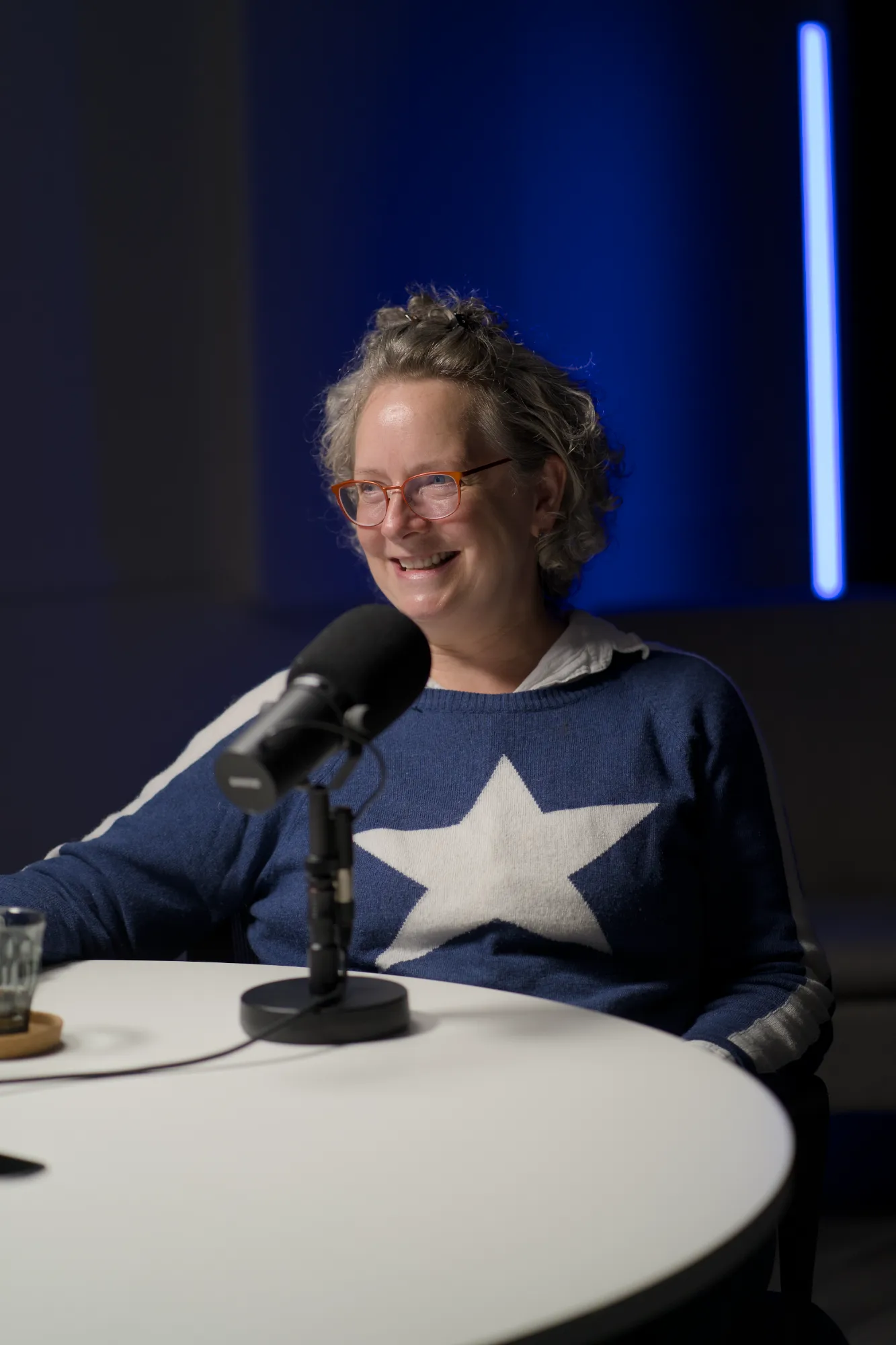
Recycling Capital and Talent in Oxford's Innovation Economy
Unconscious Bias, Responsible AI, and the Future of Workforce Decisions

Bridging the Gap between Scientific Research and Industrial Impact
OX Tech Week: From Pub Meetups to a City-Wide Tech Festival
Healthcare Innovation When Lives Are at Stake
Lord William Hague on Talent, Technology, and Capital
Building a World-Leading Climate Tech Ecosystem in Oxfordshire
Defence Innovation in the UK: How Startups Win Government Contracts
Building a £10 Billion Vision: Inside the Ellison Institute of Technology with Lisa Flashner

The Multiplier Effect: Funding Companies, Ecosystems, and the Future of the UK
Oxford North: The New Innovation District in Oxford
The Cluster Effect: How Bicester Motion is Driving the Future of Mobility
The Psychology of Scaling Companies and Teams with Professor Robin Dunbar: Part 3
The Psychology of Scaling Companies and Teams with Professor Robin Dunbar: Part 2
The Psychology of Scaling Companies and Teams with Professor Robin Dunbar: Part 1

The Future of Genetic Medicine with Zandy Forbes, CEO of MeiraGTx
How Founders Pledge Uses Data to Maximise Philanthropic Impact

The Oxford Trust at 40: How Innovation and Education Power Oxford's Future

Can Sirona Rival Ozempic? A New Chapter in Obesity Treatment with Camilla Easter

Aligning Founders and Investors with David Mott

Building Billion-Pound Outcomes with Jack Edmondson

How Machine Learning in Oxford Is Transforming Medicine Worldwide with Lionel Tarassenko

Bringing Science to Society with Molly Stevens

How Oxford University Innovation Bridges Science and Business with Mairi Gibbs
What Formula One Teaches Us About Startups and Success with Adam Parr

Risk and Reward in Early-Stage Tech Investments with George Robinson

Charting Fresh Career Paths with Sue Douglas

From Oxford MBA to Startup CEO with Lily Elsner

Navigating Market Dynamics with Marcus Stuttard

Harnessing Local and Global Talent with Sarah Haywood

Navigating Capital Markets with John Derrick
Building Oxford’s Future with Anna Strongman

Breaking the Myths Around University Spin Outs with Irene Tracey

Navigating the Future of Oxford Sciences Enterprises with Ed Bussey

Oxford's Role in the Next Industrial Revolution with Dave Norwood

Diversifying the Investment Ecosystem with Rowan Gardner

Pension Investment and the Mansion House Compact with Nicholas Lyons

Lessons from the Motorsports Cluster with Mark Preston

From Research to Reality with Cici Muldoon

Nurturing Founder-Driven Ventures in Oxford with Peter Crane