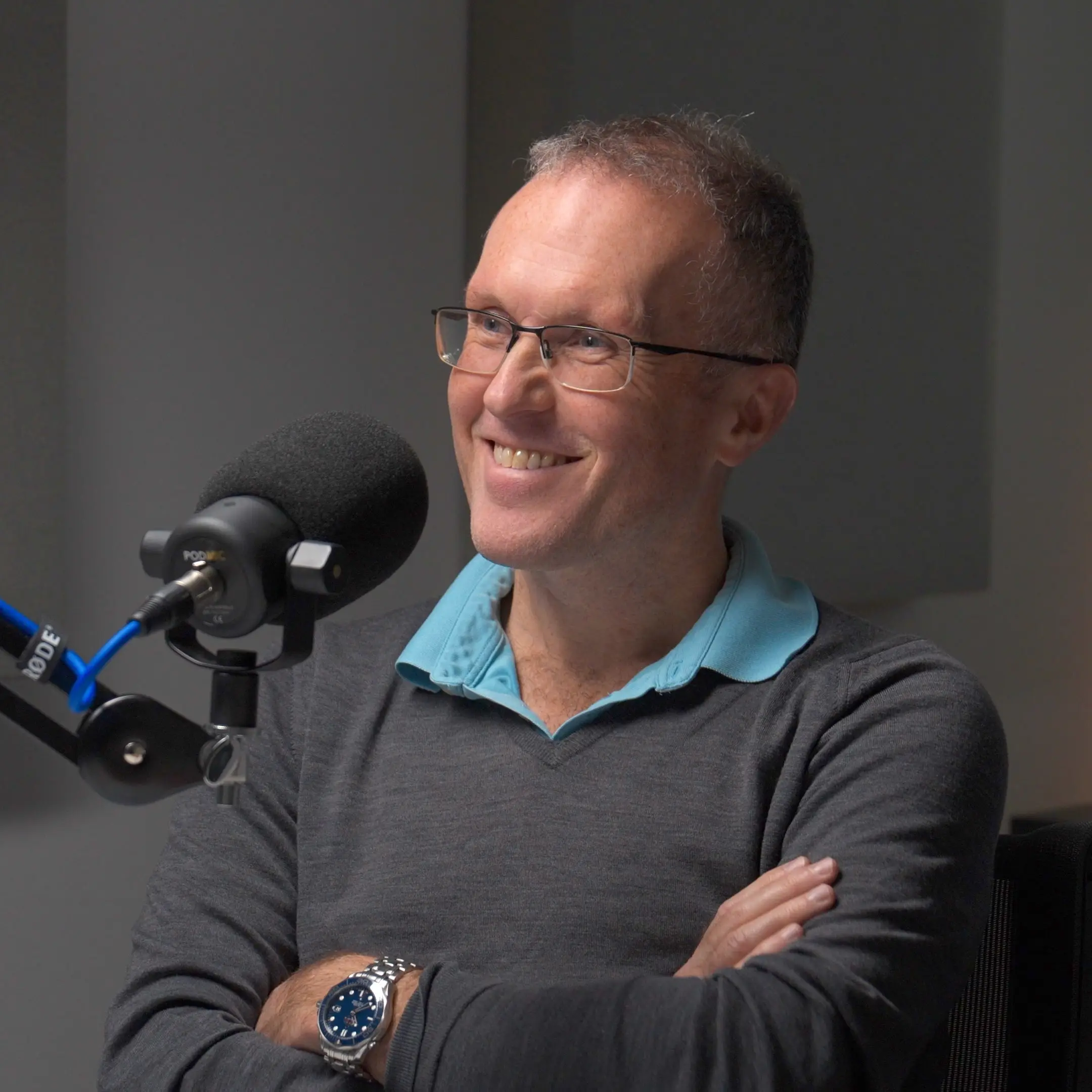
Building a World-Leading Climate Tech Ecosystem in Oxfordshire


.png)
.png)

How do you turn a county into a world-leading climate tech ecosystem, and why does collaboration matter more than competition when tackling the climate crisis?
In this episode of Oxford Plus, host Susannah de Jager speaks with Hannah Scott, CEO of Oxfordshire Greentech and Co-Founder of the Climate Tech SuperCluster, about building networks that connect climate innovators with the funding, expertise and corporate partnerships they need to scale. They explore how Oxfordshire has quietly become one of the UK's most important regions for climate innovation, with emerging specialisms in energy tech at Harwell, fusion at Culham and sustainable chemistry at Begbroke.
With the UK climate tech sector now valued at $75.3 billion but investment falling 67% since 2023, Hannah explains how business networks like Oxfordshire Greentech help startups leapfrog challenges, access visibility and navigate the valley of death. From the recent launch of a green ammonia demonstrator at Harwell to the formation of a cross-European climate tech supercluster spanning Amsterdam, London and Paris, this conversation reveals how local action can drive global climate impact.
Whether you're an entrepreneur looking for support, an investor seeking deal flow, or a corporate wanting to engage with cutting-edge climate solutions, this episode offers a practical roadmap for plugging into one of the UK's most dynamic innovation ecosystems.
Hannah Scott: Hannah Scott is the CEO of Oxfordshire Greentech, a not-for-profit business network building a world-leading climate tech innovation ecosystem in Oxfordshire with impact beyond. She leads the organisation in managing and engaging members, connecting them with funding, customers, and business expertise whilst facilitating scale-up innovation through events, programmes and projects. Hannah is also Co-Founder of the Climate Tech SuperCluster, which showcases, develops and scales climate-critical technologies across the UK and Europe. She sits on the Oxford Economic Growth Steering Board and was named to edie's 30 Under 30 Class of 2023. Having helped launch Oxfordshire Greentech in 2019 whilst working for sustainability consultancy Bioregional, Hannah has now stepped into full-time leadership of the network and continues to deliver successful events, commercial opportunities and projects with climate and social impact.
[00:00:00] Hannah Scott: We've mentioned it before, the mission, the vision, the impact, we're a not-for-profit organisation. If someone comes to us and needs help, 9.99 times out of 10 we'll help.
[00:00:10] Susannah de Jager: Welcome to Oxford Plus the podcast focused on innovation around Oxford. We look at everything across the ecosystem, the institutions, the people, the technology. If you need to learn anything about Oxford, whether it's how to take a first step in through the door, or as an experienced investor wanting to go deeper, this is the podcast for you.
Oxfordshire has quietly become one of the UK's most important regions for climate innovation, bringing together science, startups, investors, and local institutions to tackle some of the hardest challenges of the Net Zero transition.
Our guest today is Hannah Scott, CEO of Oxfordshire Greentech.
In this conversation, we'll talk about the Greentech Network itself, why it was created, how it supports innovation and growth in the region, and what makes Oxfordshire such fertile ground for climate focused businesses. We will also focus on how to engage as an entrepreneur, investor, or corporate. This is a discussion about networks, leadership and how local action can drive global impact.
Hannah, thank you so much for joining today.
[00:01:19] Hannah Scott: Thank you for having me.
[00:01:20] Susannah de Jager: I'd love to just get a bit of history on Oxfordshire Greentech.
[00:01:25] Hannah Scott: All that good stuff. Yeah, absolutely. We started it back in 2019 actually, the best time to start a business network, of course, right before a global pandemic. Sure, I mean, we couldn't have known what we now know back then. But, it was actually started as part of an ERDF funded program called OxFutures, which was all about helping to grow the low carbon economy in Oxford specifically.
It had lots of different streams, if you like. There was a focus on university spin outs, there was a focus on energy efficiency audits for SMEs locally, but Greentech was established as a business network to carry on the legacy of that program. We initially started out as quite a broad church, lots of different organisations, we were co-founded in partnership with Cambridge Cleantech, who is a very similar organisation to ourselves and so they helped us build up our following in Oxfordshire, if you like, and now we are very much more focused on climate tech innovation in particular because we have seen that there's this real gap of support needed for this sector and also a ton of opportunity for this space. And we just see the climate tech ecosystem building and building over time and we exist, therefore, to support that and to turn that into a world-leading ecosystem that produces world-leading solutions to the climate crisis.
[00:02:40] Susannah de Jager: And so the other sides of your original remit no longer happening?
[00:02:43] Hannah Scott: Happening, but not under the sort of you know OxFutures banner. Exactly, lots of other stuff happening that's spun out as legacy from that.
[00:02:50] Susannah de Jager: Fine, very clear. Give us a bit of colour on the kind of things that are coming through in Oxfordshire Greentech innovation that you are helping put together.
[00:03:01] Hannah Scott: I mean, where to start, frankly and I think we also have to start with the term climate tech as well just because it is so broad. In my mind it's any technology that as a primary focus tackles the climate and ecological crisis and that can look like so many different sub-sectors. It can look like energy tech, mobility tech, circular economy, digital and AI, waste, all sorts essentially. So we are really looking, at technologies that are going to disrupt business as usual, and take us away from a fossil fueled economy into a smarter, greener future.
So that means that there's a huge range of technologies that we're interested in and we're starting to see some of those clustering around key geographic areas across the county. So, for example, Harwell has an energy tech cluster specifically. They have lots of different sort of clean energy programs going on. They have a green ammonia demonstrator, for example. Obviously they've got the diamond light source. And all of the research around that space as well. In Cullum you've got a very powerful fusion cluster. Up in Begbrook there's some interesting sustainable chemistry stuff that's happening. So we are seeing that there's all of these different points around the county that are developing their own sort of specialisms that still sit within that broader umbrella of climate tech and lots of those organisations, especially the smaller ones, the startups are those that we help support as an organisation.
[00:04:26] Susannah de Jager: Thank you.
Can you explain a little bit more what Green Ammonium Demonstrator Plant is? I've never heard of that.
[00:04:34] Hannah Scott: Yeah, I mean there are definitely people who are much more wise than I and more studied in this space. Green ammonia is seen as a potential alternative shipping fuel, not just for shipping, but for basically anything else that requires I think diesel.
So I think the Demonstrator Plant that's happening on the Harwell site is basically saying, can we produce green ammonia using renewable sources to produce it at scale so that this can become a sort of mainstream fuel, especially for the shipping industry. But it has applicability across other industries as well.
[00:05:05] Susannah de Jager: So interesting. Thank you, sorry for putting you on the spot. But I was just like, I don't really feel like I understand that. I'd like to. So you, like this podcast, have Oxford in the name. But your reach is actually quite a lot broader. So what's your geographic area?
[00:05:21] Hannah Scott: Sure. So, we are called Oxfordshire Greentech. We intentionally originally started for the Oxfordshire ecosystem. But since we've developed, since we've added moreof a value proposition to lots of startups, we are starting to see more organisations coming in from the surrounding counties, from London, and from further afield. Likely because there isn't a Berkshire Greentech or a Buckinghamshire Greentech or anything. We'd love to see that and we'd love to work with partners who would be interested in sort of learning the lessons that we've developed here. But for now, it seems that we have a pull that is wider than just this region, which we welcome.
So we say that we have a density in Oxfordshire, but we have a footprint in the southeast of England and we also are very involved in other partnership working. So I mentioned Cambridge Cleantech before, our sister network.They obviously have an established base up in Cambridgeshire and we've been working together across a lot of different sort of strategic regional development programs. One of the things that we've done, for example, lots of people like to talk about these sort of Oxford to Cambridge super cluster region. We've done lots of work across that region, back when it used to be called the Pan Regional Partnership. Oxford Greentech and Cambridge Cleantech established an innovation network of networks, which was to bring together leaders of networks across this super cluster region to collaborate, to find shared challenges, but also possible collaborative opportunities, funding bids that we could do as a consortia, et cetera. So that's a really nice example of Oxfordshire sort of playing outside of its county boundaries, if you like. And then another thing that we're involved in is we are one of the co-founders of the Climate Tech SuperCluster. This is a cluster development organisation that we've co-founded with Cambridge Cleantech and an organisation called Liminal,and it basically speaks to a lot of the work that we're doing at that regional level, but on an aggregated scale. It was back in 2022, I think, that we looked at this report done by Dealroom, which identified that within a four hour train journey of London is a Science and Technology Super Cluster, and we basically just overlaid that research with a climate tech lens and asked ourselves the same question. Is there a climate tech super cluster here? And the answer is yes, there are many thriving hubs and hotspots of climate technologies around this space. This sort of New Palo Alto region, if you like, is where over 50% of all of Europe's innovation output comes from. London, obviously being a massive financial hub as well, to support that development of technology. So we've basically been developing and helping form those sort of cross country connections as a way of telling a bigger story. And I guess it also speaks to the thing that I was mentioning earlier when I said that climate tech was broad, and that's true. There are things that we're developing inOxfordshire that people are not developing in, for example, Durham or Brussels. There are things that are developing in Brussels and Durham that aren't developing here or in Cambridge or in London. So in that sense, telling this bigger story helps aggregate all of the very disparate pieces and tells this much larger story to potential corporate buyers of this is what all of the climate solutions look like.
So if you're looking at energy, if you're looking at your waste, if you're looking at your transport and you've got stringent Net Zero targets, there's much more solution out there than you think.
[00:08:39] Susannah de Jager: It makes a lot of sense. It gives an opportunity for those individual companies that are forming to actually plug into the network of the broader whole. For, as you say, corporate buyers or supporters or investors for those innovations. When you and I spoke before this interview, you were talking about the sort of different levels of granularity that are possible and quite frankly preferable at those respective layers.
So you've got the sort of super cluster European wide. I'd love to know a bit about on the day to day, what some pieces of work you've done at those different layers are, because I think it's really helpful to get a sense and so maybe if we start at the top layer and go down.
[00:09:23] Hannah Scott: So part of our program that we've developed is this acknowledgement that even though London is this hub it shouldn't be where we concentrate all of the activity. So, we have three major super cluster events per year, and those happen in Amsterdam, London, and in Paris. So we are trying to bring together different collections of people across this space that we're interested in at each of those events. And at each of those events there will be your normal pitching opportunities and reverse pitching from corporates, Keynote speeches about the state of climate tech and climate tech investments.
At the most recent one that we had back in November in Paris. We were at Capgemini's offices and we did much more of a sort of hands-onalmost like a hackathon of different challenge statements. Thinking about project finance for example and the Valley of Death and sort of other things that plague the sort of innovation ecosystem. But working together intensely in small groups, which you don't often find at conferences. It's often very top down and sort of you will be spoken at and you will absorb, but you will not participate. So that was really interesting and we also ran an accelerator program for startups who are in the industrial decarbonisation space and that was for about 13 organisations. Again, pulled from all over North Europe. Had an intense immersion course at the beginning in Cambridge where I think CL and other sort of key institutions in the Cambridge ecosystem lent their support and then it was a hybrid from then on. But we're hoping to do that again and also build out more of the different activities that we can across this space.
So that'ssuper cluster level. More to come. Can't talk about it right now. Wish I could. But more to come on that front.
[00:11:06] Susannah de Jager: And then the next layer? So you know, what are you doing at the sort of cross-regional? You've spoken a lot already about working closely with Cambridge Greentech. How does that work on a day-to-day level? What's the things that you're focused on together and how might somebody that's considering membership with you think about thatfunctionality and what they're going to access?
[00:11:26] Hannah Scott: Absolutely. So, at the moment a lot of our focus together is on that sort of super cluster piece because that's the big goal if you like. But it's certainly something that requires a lot of strategic thinking, shall we say. But, if you're a member of Oxford Greentech, you're also by proxy, a member of Cambridge Cleantech. So we're trying to make sure that our two communities mix and match better and that is something that we're planning on doing, especially this year. We are hoping to develop something that we are calling Greentech Masterclass and that's going to be about bringing in those founders who have traversed that horrifying valley of death.
They've won, they've overcome that really tricky initial challenge and they're flying. They're commercialised, they've got customers, paying customers, et cetera the dream and they have lots of lessons to share and they have lots of stories and pitfalls that they can help others avoid. It's in all of our interests to bring them back into our community and to quiz them essentially on how they got there and so we're going to set up a series of events where we will be enabling those companies to have a platform. And I can use this platform to call to action. If that is you, as a founder, and you do want to give back to this community in some way. We'd love to have you, speaking at one of our events and we're hoping that that can also be a space where Cambridge Cleantech members can come as well and cross pollinate.
But we're always working on how to better establish a good relationship between our two networks because what we're doing is so similar in many ways. It's identifying those innovative startups. It's connecting them with the right people, the scaling partners, the investors, the supportive ecosystem. It's giving them visibility, it's giving them platform and frankly, when we say, oh, we have a sister network in Cambridge, people are often pleasantly surprised. They'll be like, oh, you're working with Cambridge are you? You're working with them, not against them? You're not competing with them?
[00:13:13] Susannah de Jager: It's very funny. I've just written on my notes, while you said that, "Non-competitive? How unusual."
Because it is a bit of a ridiculous one. But I wonder if that's also partly to do with the fact that what you are doing is so mission focused and therefore obviously commercial success is a huge part of what will make that mission a success. But I imagine that a lot of you know yourself, the employees of this, are motivated by a bigger goal That naturally lends itself towards being more collaborative.
[00:13:44] Hannah Scott: Yes, I think so and I think the word that we use is coopetition. So that sense of we are not running a charity or a social enterprise per se, like there is some sort of commercial drive behind what we are doing and what our members are doing more specifically. But the commercial drive intrinsically linked with that purpose, with that mission, that really does transcend a lot of the otherwise you know, legacy feelings between the two university towns.
[00:14:11] Susannah de Jager: But I think the whole thing is being broken down because we do fit in the pocket of California, there is a sense that all ships will rise, that the super cluster, the connectivity, everyone knows it's good for everyone and so I think a lot of that is, to your point, legacy and increasingly so. But it's amazing how much of it remains.
[00:14:29] Hannah Scott: Absolutely and I think it's a little bit of psychology and I knew that I was going to get to psychology some point because I love psychology. But I think it's that sense of, and especially given that we are now in, I would argue, quite a difficult time economically for being in the innovation space. I think there's that sense of scarcity mindset where there's not that much to go around. So it's a bit of an elbows out time. It's a bit of a, okay, well actually I was going to collaborate with you, but there's not enough for me, so I'm going to shut down that relationship. And what I'd really love is if we stopped trying to focus on taking slices of the same pie and actually
[00:15:06] Susannah de Jager: Pie eaters versus pie makers.
[00:15:08] Hannah Scott: Pie eaters versus pie think makers.
[00:15:10] Susannah de Jager: I think we read the same psychology books.
[00:15:13] Hannah Scott: Yeah, well that's exactly right. So let's kind of seize control of our destiny in some ways. Let's build a bigger pie or bake a bigger pie.
[00:15:20] Susannah de Jager: Well, and the whole point of clustering, and they've done examples of this with shoe shops on the same streets and Indian restaurants on the same streets. But obviously we've got motor sports here, we've got evolving centers of excellence that you touched upon within Harwell and everywhere, and you attract more capital, even if capital is more scarce globally.
Coming on to then that more regional focus in your day-to-day work. What are you doing for your members, week to week, day to day? What can people expect that they might be able to benefit from? I'd get the colour on that.
[00:15:51] Hannah Scott: Yeah, for sure. So in particular, the sort of innovation that we are most interested in or the support that we're offering being most relevant to is startups that are in TRL three to seven, three to eight space and of course like with Technology Readiness Levels, they're sometimes a bit skew if in terms ofwhat they mean and the boundaries are a little bit blurred. But that's kind of what we're looking at. People at the sort of Pre-seed, Seed or Series A stage of funding as well. Those are the people that we can best help. in terms of how we support our members on a day-to-day basis, a lot of it is about convening, it's about that visibility, and it's about connecting them to the right people who know what they need and can help them with that sort of expertise or with additional connections.
So in terms of what that specifically looks like. For example, one of our members, Mistify AI is a company that has a sensor that can be placed on a construction site and the sensor creates sort of a fine mist that helpsde-dust, that's not our word, reduce the amount of dust pollution that comes about from construction work. They have connections in India, and they've said that on construction sites in India, for example, you'll be water cannoning, like blasting the whole site, almost every hour and when they do that, everyone has to down tools. Like that's an unproductive time when they have to just blast water. Whereas their sensor tries to create almost like a map of the site and senses when dust is particularly prevalent and senses when it therefore needs to send out this fine mist rather than massive amounts of water. So it's both water saving and energy saving, but it's also massively helpful for increasing worker productivity because you don't have downtime anymore for dealing with the dust pollution. And of course, it's really important for air pollution for anyone who's around that construction site as well, like that's a massive problem. Air pollution kills millions of people prematurely every year. So they're tackling a really interesting issue. The founder, Rohan actually moved to Oxford in order to found his company because he was so convinced that the ecosystem here would be supportive enough to help him, which was fab, and I think we've proved him right, which is great. I think one of the things they said most recently about having joined Oxfordshire Greentech was that we've helped them leapfrog a number of challenges that they would otherwise have had to have dealt with themselves and it's enabled them to scale quicker than if they've been outside of the network. They've pitched at our Climate Solutions Conference. That was actually one of the first things they did from joining us back in summer of last year. So they pitched at our conference in front of a panel of investors. They got feedback from that pitch. They asked questions. They had connections, after that Conference as well with investors, which is gold dust. We helped them and recommended them for aChinese accelerator program as well. So they had the chance to go over to China, fully funded,and sort of visit major sort of scientific sites and meet people who again might be interested in their technology and interesting in helping it scale.
We also run an annual PR accelerator program, for two of our members each year, and that's in partnership with our PR Agency partner Mixology And they basically every year offer two companies £15,000 worth of free PR support and those companies that have been on that accelerator have had you know 20 plus pieces of media coverage. Sometimes that media coverage has enabled them to be reached out to by a major international corporation then MOUs have been signed as a result. So visibility matters, and that's kind of what a lot of what we do comes down to. It's, you need that support, but you also need visibility. You need a platform for the solution that you're developing, otherwise you'll be lost in the noise. So that's been incredibly useful, I think, not just for Mystify, but for the other people who have participated. We've also introduced them to sort of local government and house builders, people who have that interest in the sort of air pollution space and we're helping them with their first raise at the moment as well connecting them to possible investor partners as part of the Innovate UK Partnership Program.
[00:19:47] Susannah de Jager: As a lay person hearing you describe that, it makes complete sense as great ideas often do and innovations. But I would have had no idea that that was affecting productivity on building sites so much.
[00:19:59] Hannah Scott: Right? Same with tire wear. Did you know that tires wearing down produce a load of carbon emissions? It's crazy.
[00:20:06] Susannah de Jager: It makes sense.
[00:20:07] Hannah Scott: Yeah, yeah, yeah. But there's so many unseen impacts, I think, and I think that the double challenge therefore, of being a climate tech startup in this space is number one, literacy. It's that actually this is a problem in the first place. You didn't even realise it was a problem because it's not being captured or spoken about. It's not been factored into a company's carbon budgets. For example, if they have a fleet of vehicles where their tires are all producing this emissions essentially. So first part is that literacy piece. It's that there is a problem, and then you have to be like, and this is why we're a good solution to said problem, and this is why we're a cost effective solution to said problems. So yeah, it's an uphill battle, but it's a worthy one to fight.
[00:20:47] Susannah de Jager: Absolutely and it's interesting, again, hearing you talk about the kind of the education, the PR, because it's really obvious that any company needs this and needs to put themselves forward. It's very time consuming and potentially completely outside of the experience, expertise, capability, and quite frankly, in some cases, comfort zone of people that are amazing innovators and founders. It's tricky because it's real chicken and egg often, you know, you are, you're too small to hire somebody to do that. But you need it at that nascent stage and so I love that that's part of what you are offering members there.
[00:21:19] Hannah Scott: Absolutely and I would say something as well is that we also have a monthly online meeting just for members called Greentech Connect and at each of those sessions, a startup will get to have a spotlight on them for five minutes or so. People will ask them questions, they'll suggest ways that they can support them, the startup will present three needs, if you like, at the end of that presentation. So there'll be this very interactive sense of the members are trying to help other members. We've got quite a few professional services organisations in the network as well, who have been deeply involved in the innovation ecosystem for a while and therefore know all of the legal challenges, the financial forecasting challenges, the structuring challenges, and one of thosekey members for example for us is Mishcon de Reya. Like they've been with us for a really long time, and they've done fantastic work, especially in that structuring phase. Like how do you scale effectively? What are the sort of legal pitfalls to be aware of?
[00:22:13] Susannah de Jager: And again, it's so expensive to pay for those things, but the long-term investment for those service providers, hopefully in these successful companies coming through is really self evident. The peer group thing is so important. I was part of a think tank board for a long time in my previous industry area, boutique asset managers, and we had so many groups for the COOs, the marketeers, the finance people, and of course the fund managers themselves, and those conversations between peers are so valuable because it's effectively a sort of, here's a problem, what are you guys doing? There's a regulatory change coming up, how have you found out about it? How's it impacting your business? Even more so I should imagine in the area of evolving Greentech.
You've spoken about a lot of what you offer there. You've also mentioned, in passing, some of the key events that you host each year. Please, can you go into a bit more detail of those and what their respective focus is?
[00:23:07] Hannah Scott: Absolutely, so yeah, we have events in multiple different sizes, if you like, and with multiple different aims. I've mentioned the Greentech Connect meetings. Those are the monthly meetings,just for our members. But then we do also have quarterlyin-person meetings. For example, we had a networking meeting fairly recently at the BIPC in the Westgate Library. Amazing space. They lit it all up in green lights, especially sort of aligned with our brand, which I thought was brilliant. So Ryan Johnson, a fantastic person for anyone in the startup community to know. He just convenes a wonderful startup huddle every month. But we were there for our event and wehad a panel discussion about could Oxfordshire rival Silicon Valley, do we even want to, or do we want to set our own path and create our own sense of what an innovative ecosystem looks like? And that was a really interesting discussion.
[00:23:55] Susannah de Jager: Where did you land on that?
[00:23:57] Hannah Scott: Wonderfully, our panelists disagreed, which I think is great because you do need disagreement to make it interesting. The entrepreneur in residence currently at OSE said yes we should absolutely try and then other people on the panel said, no, actually. And this is where the sort of equity question comes into the equation is that people were like, well, yes, Silicon Valley is amazing in loads of ways, it's delivered tech giants and generated a huge amount of prosperity. But for who? Is it for everyone?And I think there's that real sense now that I'm getting, and especially with the launch of Equinox, for example, there's a sense within the innovation community that perhaps at the moment innovation doesn't work for everyone and there are communities that live close by to lab spaces and science parks who maybe don't see the benefit of what happens behind those walls. And I know that lots of people in this space are actively trying to work on that and to try and think about, okay, what does community building look like? What does being a good neighbor look like? And actually this leads me on wonderfully, to talk about an upcoming event that we have which we are running at the Oxford North Innovation District and of course that's Oxford's newest and best connected district. They have a million square foot of lab and office space and that's going to be a real hub for innovationand STEM research. But they're also aware that it is going to be a big site and they want it to be a community square, if you like. They want community facilities, they want shops, they want restaurants, they want people to be able to live nearby and feel that actually there's still a vibrant space that they can come into, you know, sit on the grass and enjoy the space, rather than feeling that it's this sort of shut off scientific endeavor.
[00:25:40] Susannah de Jager: And I think it's a really lovely thing actually in a lot of these developments and earlier this season we had the pleasure of speaking to Lisa Flashner at the Ellison Institute of Technology, and they're very mindful of the same forces, which is that all these new developments are trying to have more public space to be more open to benefit these surrounding communities and indeed so is the university with its new buildings, the Schwartzman Center Humanities the Life and Mind Building. Also, when we spoke to Anna Strongman, who's the CEO of Oxford University Developments, that's a huge passion area for her and speaks to her experience professionally. So I think with all new developments, everyone's mindful of making them feel more open, less intimidating, and to the benefit of everyone. And actually, again, going back to the Ellison Institute, they were saying they're going to create 5,000 jobs, and of course that's going to include non-scientists within that. So I think everyone is mindful of it and the rest of us watch and hope it's a huge success, right?
[00:26:41] Hannah Scott: Absolutely and I think if we can do it here in Oxfordshire, we'll set a real blueprint for the rest of the world, for other regions, and countries who equally want a slice of the climate technology pie. But want to make sure that they do it in a sustainable and equitable way. So
[00:26:58] Susannah de Jager: we have our access to finance conference happening on the 12th of March. That's been in an event that we've been running for the past six years now. So there's a lot of momentum behind it and it's now become one of our flagship events for the year where we're bringing together the innovators with investors. Everyone needs investment right now, more than ever.
[00:27:17] Hannah Scott: So we are looking at hopefully over 200 delegates. We'll probably have about five companies pitching. There will be investors from organisations like Clean Growth Fund, from Elbow Beach Capital, from Future Planet Capitaland a number of other speakers. We'll also have a session on corporate involvement as well. What do major banks and corporations deploy in terms of capital that isn't just equity? Like how do they supportdemonstrator products, for example? How do they enable their sites to be used as test beds? How do they enable those companies to do that and to use them as a proto customer while they're figuring out the technology and how it works? And also the financials and the commercial side of things. So that will also hopefully be a really useful session. And I think that, that's something that Oxfordshire needs more of, is that corporate involvement. That sense from multinational corporations as to what they're actually looking for, what they would be willing to buy,and what their sort of supply chain looks like in terms of all of the different ways that they need to decarbonise that and have solutions to address that. So that will be really great.
I'm not the biggest fans of conferences where it's sort of top down, you're spoken at, you're not a participant. So in that sense, yes, we will have panel discussions. Yes, we'll have presentations and pitching. But we will also be ending the conference with speed dating which is something that we did when we first launched this series of conferences back in 2019 and we are bringing back again this year. We found it's just the best way for startups to get in front of investors. 10 minutes rapid fire, sit down, give your pitch, get feedback from the investor and then hopefully going forward, get another conversation in for some deeper discussion. But that should be really good.
And there'll also be an exhibition space as well. So again, if people are interested in having their brand associated with this conference, we'd be really interested to see people there.
[00:29:08] Susannah de Jager: I really like ending with speed dating for two reasons. One, very clever, people will stay till the end of the event. But also I think that, again, talking about the skills that people have, so often the people that are best at pushing themselves forward or they find that they're very confident in those almost like a drinks party scenario, end up being the ones that do well at a conference. And I like that you've slightly taken away the chance or the bias towards that by setting it up as a formal thing because then everyone gets a chance. And actually so often the people that might not be the ones so good at pushing themselves forward When you actually get that moment with them, you go, oh my goodness, this is so interesting and I'm so pleased I chatted to you. And so I love that you're facilitating that at the end of the conference.
[00:29:51] Hannah Scott: We've done similar sort of tinkering with networking before. So the one that I mentioned at the BIPC last year. We have a sort of session of structured networking after the panel discussion where we ask people to get into pairs, ideally with someone that they hadn't met before, and then they had 10 minutes with that person and then their pair would go find another pair and then they would talk as a four on a sort of a topic that we prompted for discussion. And that way you don't have any of the, oh gosh, people are already standing in circles. I can't shove in now they're like deep in a conversation. That'd be so awkward. I'll just hang out on the side of the room awkwardly or I'll just spend the whole evening with one person. I do this a lot. I'll like find one person. I'll be like, oh my gosh, I really like you and I don't want to talk to anyone else because I'm afraid and it really helps to just get you out of that and get you talking to three other people guaranteed with no stress on your part. So yeah.
[00:30:44] Susannah de Jager: It's a skill. Actually my father is great at it. He'll like come and pick me up somewhere and be like, you must speak to this person, Susannah, and he's a master. No, I mean, I don't know how he does it. I feel like I'm being rude as well if I try and leave. I haven't worked out elegant exit. So yeah, I sympathise and I'm glad you're putting structure around it. And I know you've got another event that is further into the year, but what's that one focused on?
[00:31:07] Hannah Scott: Yes, so that is our Climate Solutions conference. Again, briefly mentioned that earlier. That will be happening in June time venue, TBC, but it will be hopefully in one of the larger and historic and beautiful buildings in Oxford, of which we have many. So that will bea broader conference in scope, in many ways, because on one side we will have that sort of climate tech innovation space. So again, pitching, panel discussions. But on the other side, we can't talk about climate solutions without thinking about the sort of policy angle or the local community angle, or the SME community that isn't just solely in the climate tech space. And so the other half of the conference is dedicated to that sort of almost bigger regional strategic lens of what is Oxford County Council doing? What are the district councils? How are they working in tandem with the private sector to make great leaps forward on Net Zero and sustainability?
So, we've had presentations before from people developing heat networks for the center of the city and elsewhere. We've had presentations from Blenheim Palace, for example, talking about all of the different ways that they're taking on board sustainability and data and integrating them into a really smart way of monitoring and lowering their energy emissions, making sure that waste food gets recycled into a product that they can use to grow more food. There's just so much happening at Blenheim and loads of other places around the county that it would be remiss not to focus on when we are looking at climate solutions with that broader lens.
So that will also be a really exciting conference and hopefully very inspiring. That is the feedback that we've had from the last two years.
[00:32:45] Susannah de Jager: That sounds great. Just going back to something you touched upon there with the council, do you help members ever with sort of procurement processes and things in that? Because it's an area that I think the UK comes in for quite a lot of criticism. Which is that we've got this really big kind of NHS and then also the councils and things. But the procurement processes can be really difficult for small companies and so there's this difficulty of the government wants to encourage these, but then the processes that government agencies have are very stringent.
[00:33:14] Hannah Scott: So, we do do a lot of connecting between startups and local government, but it more tends to be between their economic development teams or their sustainability teams, or perhaps if you are the county their innovation team, because they have an innovation team specifically. So less working with the procurement team and more with the people who are interested in the sort of climate applications of what's being suggested.
I think that's a really interesting area of future work though, because as you say, it is a difficult process to get through, especially if you're small, you're under-resourced. I mean like filling out grant applications is one thing as well. So like there's lots of things that as a potentially technical founder who has a PhD, you're brilliant, you're amazing, but you haven't experienced all of these very bureaucratic processes, you might need someone to handhold. So I think that's definitely something for us to take away and see what we can do with that. Because we know from speaking to the county and the city councils, they've been long-term members of the network, that they are interested in the solutions being developed by members of our network. The county council has said that it wants Oxfordshire to go beyond Net Zero. So very much that level of ambition, stepping up above and beyond, and one of the solution area types that they're looking at is biochar. Well, we have a member who's in the biochar space, they're called Capchar. They actually were also on the PR accelerator program. They were featured on BBC's Panorama. They're brilliant.
[00:34:39] Susannah de Jager: What do? They do?
[00:34:39] Hannah Scott: Oh my goodness, now you're testing me. They have a pyrolysis plant that basically farmers might have waste biomass on their land. That biomass can go intothe plant that they have on site, that turns into sort of biochar pellets and those can be utilised in agricultural purposes, fertilising the land, et cetera, and farmers get to sell those as carbon credits to local companies. So that's really of interest to local authorities because they would much rather do what's called like area based in-setting. So, Oxfordshire being your area, and then in-setting, meaning that you are paying money to have carbon removed, but it's not being removed by trees in the Amazon. So that's really interesting to Oxfordshire County Council and we've helped them make that connection, Capchar and Oxford County Council, but I haven't personally talked to the procurement team and seen what the challenges there might be.
[00:35:32] Susannah de Jager: If somebody listening thinks that they're going to be really great on the procurement side, maybe they should send you their CV?. Amazing. Okay.
So we've spoken a lot about how entrepreneurs and companies that are your members might benefit from partnering with you. How do investors engage with you? Other than the access to finance event that's happening on the 12th of March. On a day-to-day basis, should they reach out to you. You are obviously probably always reaching out to them, but if they wanted to engage.
[00:35:58] Hannah Scott: Absolutely. I think I almost don't want to sort of create burnout on the sort of investor side. Because we do have so many startups that I'm thinking all the time, gosh, they would be a great introduction to this investor or that investor. But yeah, we would love it if more investors were proactively reaching out to us and we would be very easily capable, for example, of bringing a small round table together of some of our startups, maybe within a certain subsector like energy or like mobility if there was an investor that approached us and said, actually, yeah, we're interested in what you've got in this space. Like, who do you have? Let's meet them. We're a convener, we are very well connected with our startups and they are always looking for opportunities to interface with investors. So yeah, absolutely. The door is open.
[00:36:42] Susannah de Jager: For anyone in this space, you are a vector in because it's often a criticism of Oxford as an ecosystem is quite hard to know what the front door is. Mm-hmm. But for Cleantech, you guys can be the front door.
[00:36:52] Hannah Scott: We've mentioned it before, the mission, the vision, the impact, we're a not-for-profit organisation If someone comes to us and needs help, 9.99 times out of 10 we'll help. The only reason why we wouldn't help is, I don't know, capacity? But if people want connections, we want to help that happen.
We've got a bigger vision and a bigger problem to tackle than not helping people. So, yeah.
[00:37:14] Susannah de Jager: Finally, you mentioned when we caught up in advance of this interview, a framework from MIT about how clusters evolve. Can you give a bit more detail on that? Because it really resonated with me and I'd love to discuss it a bit more.
[00:37:26] Hannah Scott: Absolutely, so the MIT model in particular that we're looking at it was created by a group of researchers, I think headed up by Dr. Phil Budden at MIT. They, in their paper, suggested that in order to have a flourishing growing innovation ecosystem, you have to have five key stakeholder types.
You need the entrepreneurs, you need risk capital, universities, corporates, and government and without any one of those, the ecosystem will be not as powerful, not as influential, won't have the certain levers of power or resources needed to make it a success. So when we are creating, for example, round tables or we're creating panels or we are creating events. We will try and bring in people to speak to each of those stakeholder archetypes because we believe that sort of diversity, not just of opinion, but also of influence really is what it is, means that you can look at a problem from multiple angles and probably come to a stronger solution together.
So I think in many ways, Oxfordshire has a lot of those component parts. we'd love some more of that risk capital, I think. It's fair to say still that Oxfordshire innovators are still looking to London, looking to the States for that follow one funding in particular, that next stage funding. So I'd love it if there was a more of a homegrown approach to that investment here.we have two very strong universities, touch wood, no, no issue with those going away and those will continue to create those spin outs and that excellence of research that we need for tackling the climate and ecological crisis. We have entrepreneurialism coming out of our ears, although interestingly, there was a report done recently by the Oxford SGD Lab and the Xero Founders Network, which is sat within the Xero Institute in Oxford University, and they've identified, they did a lot of research on different founders, and would be founders, sort of PhD and postdoc students. One of the things that came out was that unlike in the States where there's this really strong hero narrative about becoming an academic founder. Using your research, turning that into a company, being very successful, becoming a unicorn company, whatever that looks like. We don't have that same thing here. There's much more of a sense of purity around that research and like, why would you want to sully it with commercial interests and with fighting for investment when you could just keep it within the university and keep building on it from a research perspective? So there's a bit of a cultural shift perhaps that might be needed for that sort of entrepreneurial stakeholder part. There's lots of entrepreneurs that are outside of the university as well that we support as a network, and I think that's really important because Oxford University provides a lot of useful support for alumni and current students, but those outside are maybe less well serviced and so our intention is to try and help them as well and put them on an equal footing.
And then I think the sort of thing I mentioned before about corporates is that we'd love more corporate involvement in this ecosystem. We'd love people to help us champion this space and to see this as a place where this is your potential future suppliers, like these are your potential future supply chain organisations like these are people who are going to help you tackle those mandatory energy and carbon targets that you have. So how can you support that ecosystem? How can you mentor? How can you pro provide opportunities to test technologies on your site? And I'd love to see more of that, I think coming through.
[00:40:52] Susannah de Jager: So the call to action is, can more corporates please get in touch and, in an ideal world, a few more investors too.
[00:40:57] Hannah Scott: Oh, absolutely.
[00:40:59] Susannah de Jager: I like that. I like that a lot.
Hannah, thank you so much. I have really enjoyed this conversation and learning more about Oxfordshire Greentech and what you guys do.
I hope for anyone listening, they've learned lots and yeah, if you're a corporate or an investor, you know where to go or somebody with procurement expertise.
[00:41:16] Hannah Scott: Absolutely, perfect. Any of them!
[00:41:18] Susannah de Jager: Thank you.
[00:41:19] Hannah Scott: Thank you.
[00:41:20] Susannah de Jager: Thanks for listening to this episode of Oxford+, presented by me, Susannah de Jager. If you want to stay up to date with all things Oxford+, please visit our website, oxfordplus.co.uk and sign up for our newsletter so you never miss an update. Oxford+ was made in partnership with Mishcon de Reya and is produced and edited by Story Ninety-Four.


More episodes+

Ethics & Innovation: Inside Microsoft's AI for Good Lab
Ethics & Innovation: Oxfordshire's Divide Between Opportunity and Access
Ethics & Innovation: Serving, not Harming and Connection, not Convenience
Ethics & Innovation: Can Trust Keep Up With AI?
Ethics & Innovation: Building an Innovation Ecosystem That Includes Everyone

Ethics & Innovation: Can AI Close the Justice Gap?

Ethics & Innovation: What Makes Us Human in the Age of AI?
Ethics & Innovation: Civic AI, Data Soil and Digital Democracy

Ethics & Innovation: Does AI Actually Understand Our World?

Ethics & Innovation: The Social Media Ban, Sovereign AI, and the Race We Can't Stop
Recycling Capital and Talent in Oxford's Innovation Economy
Unconscious Bias, Responsible AI, and the Future of Workforce Decisions

Bridging the Gap between Scientific Research and Industrial Impact
OX Tech Week: From Pub Meetups to a City-Wide Tech Festival

Healthcare Innovation When Lives Are at Stake
Building a More Inclusive Innovation Ecosystem in Oxfordshire
Lord William Hague on Talent, Technology, and Capital
Defence Innovation in the UK: How Startups Win Government Contracts

Building a £10 Billion Vision: Inside the Ellison Institute of Technology with Lisa Flashner

The Multiplier Effect: Funding Companies, Ecosystems, and the Future of the UK
Oxford North: The New Innovation District in Oxford

The Cluster Effect: How Bicester Motion is Driving the Future of Mobility
The Psychology of Scaling Companies and Teams with Professor Robin Dunbar: Part 3
The Psychology of Scaling Companies and Teams with Professor Robin Dunbar: Part 2
The Psychology of Scaling Companies and Teams with Professor Robin Dunbar: Part 1

The Future of Genetic Medicine with Zandy Forbes, CEO of MeiraGTx
How Founders Pledge Uses Data to Maximise Philanthropic Impact

The Oxford Trust at 40: How Innovation and Education Power Oxford's Future

Can Sirona Rival Ozempic? A New Chapter in Obesity Treatment with Camilla Easter

Aligning Founders and Investors with David Mott

Building Billion-Pound Outcomes with Jack Edmondson

How Machine Learning in Oxford Is Transforming Medicine Worldwide with Lionel Tarassenko

Bringing Science to Society with Molly Stevens

How Oxford University Innovation Bridges Science and Business with Mairi Gibbs
What Formula One Teaches Us About Startups and Success with Adam Parr

Risk and Reward in Early-Stage Tech Investments with George Robinson

Charting Fresh Career Paths with Sue Douglas

From Oxford MBA to Startup CEO with Lily Elsner

Navigating Market Dynamics with Marcus Stuttard

Harnessing Local and Global Talent with Sarah Haywood

Navigating Capital Markets with John Derrick
Building Oxford’s Future with Anna Strongman

Breaking the Myths Around University Spin Outs with Irene Tracey

Navigating the Future of Oxford Sciences Enterprises with Ed Bussey

Oxford's Role in the Next Industrial Revolution with Dave Norwood

Diversifying the Investment Ecosystem with Rowan Gardner

Pension Investment and the Mansion House Compact with Nicholas Lyons

Lessons from the Motorsports Cluster with Mark Preston

From Research to Reality with Cici Muldoon

Nurturing Founder-Driven Ventures in Oxford with Peter Crane