Ethics & Innovation: Oxfordshire's Divide Between Opportunity and Access


.png)
.png)

How can one of the UK's most prosperous counties also hold some of its widest gaps in life expectancy and school results?
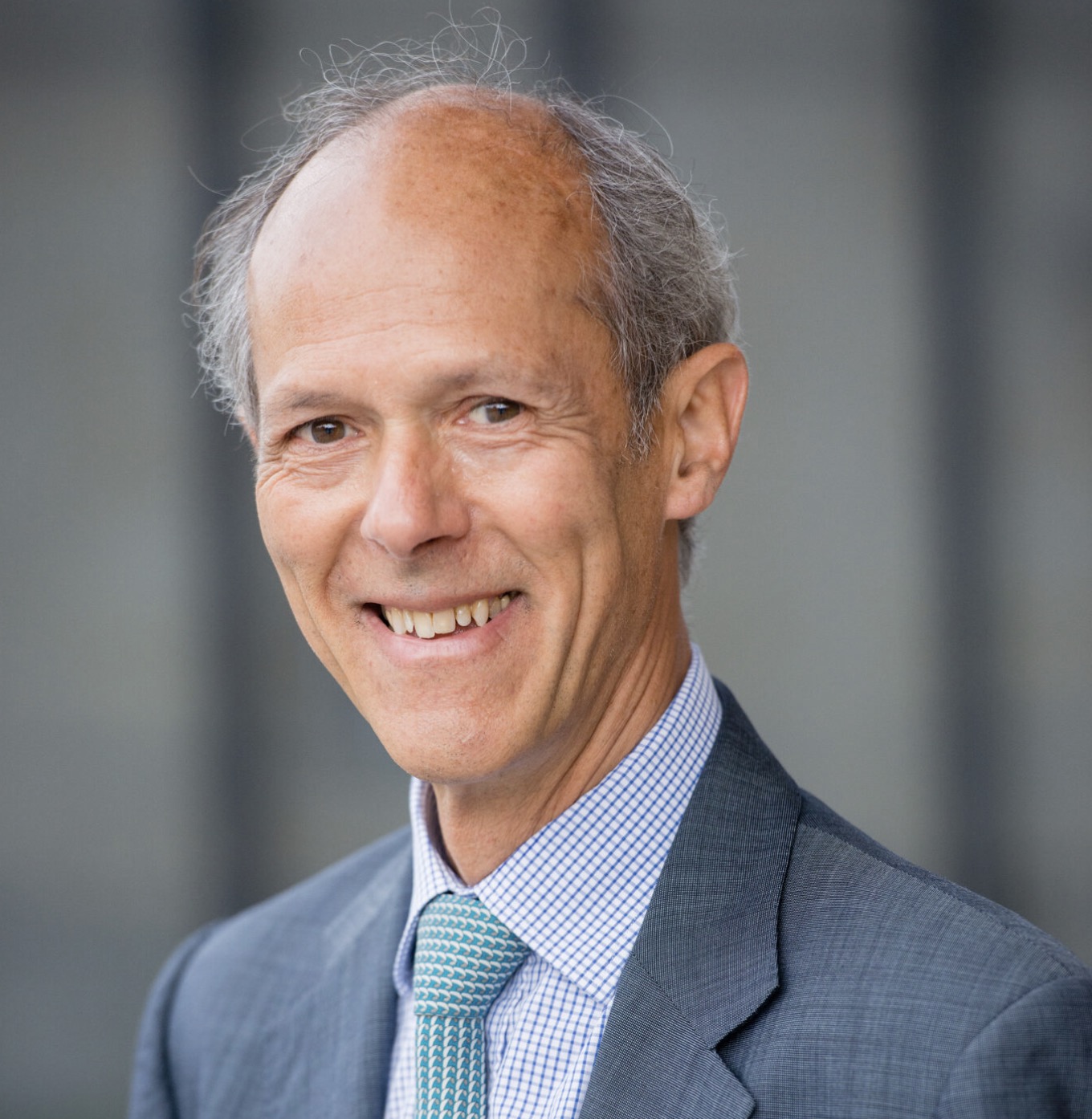
In this episode of Ethics and Innovation by Oxford+ brought to you by Equinox, host Susannah de Jager speaks with Jeremy Long, co-chair of the Oxfordshire Inclusive Economy Partnership, about what an inclusive economy looks like in practice and why averages hide as much as they reveal. Jeremy sets out the OIEP's three working groups, early years, youth engagement and inclusive employers, and the charter that lets organisations pick the pledges they can act on now.
He describes taking employers into HMP Bullingdon to see how ex-offenders can return to work, the early years summit that put school readiness back on the county agenda, and plans to revive work experience through the Opportunity For All event. The timing matters. Figures published on 27 August 2026 show 981,000 young people across the UK were not in education, employment or training between April and June, according to the Office for National Statistics. Jeremy explains how Oxfordshire can match unfilled roles with local talent, and how Equinox extends that work.
Susannah de Jager: Welcome to Ethics and Innovation by Oxford+, a special miniseries hosted by me, Susannah de Jager and sponsored by Equinox, Equitable Innovation Oxford. Oxford is one of the most prosperous and innovative places in the UK, but averages can be deceptive. Behind Oxfordshire's extraordinary concentration of universities, science, investment, and high growth businesses sit significant differences in educational attainment, access to employment, and economic opportunity.
So how do we ensure that the benefits of a successful innovation economy are shared more widely? Jeremy Long is co-chair of the Oxford Inclusive Economy Partnership. A collaboration of more than 100 organisations spanning business, local government, the universities in the county, education, and the voluntary and community sectors. Rather than trying to deliver everything itself, OIEP sees its role as catalytic. Bringing together organisations that can make a difference, identifying where interventions are already working, and finding ways to increase their reach and impact. Its work concentrates on four areas: early years, youth engagement, employment, and the OIEP Charter.
In this episode of Ethics and Innovation, we ask Jeremy what an inclusive economy actually looks like, where collaboration has already delivered tangible results. And as Oxfordshire's innovation economy continues to grow, how we can make sure that more of the people who live here participate in that success.
Jeremy, thank you so much for joining today.
Jeremy Long: Thank you very much.
Susannah de Jager: Before we kick off into too much detail, I want you to explain conceptually what the Oxford Inclusive Economy is.
Jeremy Long: So the Oxford Inclusive Economy Partnership, OIEP was a coming together something three, four years ago, I think I became conscious of, that there were lots of things happening in Oxfordshire making Oxfordshire better. But there were often many of those who were willing to do things didn't quite know how to make the right connections, didn't quite know where they could make the most impact.
So what we created was a network of many businesses, many local charities, voluntary organisations, all of our local authorities, and the two universities and we tried to get senior representatives from each of those, and I think we've been quite successful. In a coalition of those that would like to see an impact here, but can't necessarily achieve that impact singly.
So the OIEP is about identifying issues, in many cases, identifying and showcasing voluntary organisations that are already doing great things, businesses who would like to do more, and bring people together. We work with those that want to be involved over a hundred members. We take issues, we then bring people with sufficient seniority and in many cases, this is about bringing people to have the ability to make a change to actually go back to their own organisations and make something happen.
Susannah de Jager: It's amazing, and clearly, it's always admirable to want to make more impact. But why, for those listening who aren't familiar with Oxford, what were the issues that you were identifying in the region? Because I think it can sometimes surprise people when we have such globally recognised institutions here. The centre of the city is so beautiful and indeed is very affluent. What is it that you were really pointing at here?
Jeremy Long: You're absolutely right. One can look at many of the metrics for the city or the county, and those metrics on average will stand up nationally. But actually interesting, some of the more recent research that's been done has highlighted that the average masks in many areas really high attainment, and I don't think many of us will be surprised at that. But then equally underlies a low attainment. So whether it's public health, average life expectancy, whether it's educational outcomes, whether it's jobs. There are parts of the county that have had chronic under-performance and it was that, and recognising that we were at one and the same time in one of the most affluent regions in the country, one of those that is often stated, one of those regions which actually generates net funds for the national economy. We have job shortages, we have employers looking to find employees, but at the same time have chronic levels of underemployment and underachievement and that was really what made us look at how we could make some of that make a lasting change to some of those metrics.
Susannah de Jager: And just digging into some of those, because I remember being so shocked by hearing that the discrepancy in life expectancy from North Oxford to Blackbird Leys, which for those that aren't familiar is a very large council estate, I think the largest in aggregate in the UK, is 12 years. That is one of the biggest chasms in life expectancy in such a small area anywhere, I believe, nationally.
Jeremy Long: You're right, and as I say, it's not just in that. I mean, I think there is a deficit of aspiration in an area where actually youngsters have the opportunity to look at some of the most exciting job opportunities and career opportunities that there could be. And yet, we have areas where, as you say, you have schools achieving low outcomes and only yesterday at the time that we're recording this, national outcomes for school GCSE results, and yet again, we have schools in Oxfordshire significantly underperforming. Not as a result of a lack of effort, but in many areas where not just the kids, but the parents, don't see that they have the career opportunities and it's that one would really like to change.
Susannah de Jager: And I think that this alights upon something that people have perhaps heard, but many people listening may not have experienced firsthand, which is opportunity can be very proximate and yet not feel like it's available to you. I really want to dig into now some of the areas that you've chosen to focus on to close that gap.
Jeremy Long: So we have three active working groups. One on early years. Increasingly people recognise that those first few years of a child's life become critical in what becomes their path. Not just through the rest of their education, but through the rest of their life. And if they fall behind in those early years, that gap just becomes larger as they go through the education system and beyond. And so we felt that if we could make a difference, as we know there is in some cases, with youngsters presenting themselves at reception class, primary schoolers already behind the curve, if we could make a difference, we could make a lasting difference over a generation to outcomes here in Oxfordshire.
The second group is one focused on those already partway through the school system. So essentially those that are about to or in the secondary school system. And where one is already realising that in some cases, those kids have begun to switch off in some cases from the education system. And perhaps more significantly, their parents don't provide the kind of impetus to stick with the curriculum on a bad day or get to school on a bad day. And where we wanted to see at the youth level, what we could do to improve outcomes to help guide them towards career opportunities that there are in the county.
And the third group is what we've called an inclusive employer group and as we found when we first formed the OIEP, there are many employers who would like to be doing more whether it's in their own catchment or in larger organisations where they have a bigger footprint. They would like to do more in the community. But they don't often know quite where to start and how to make an impact. By bringing together, in many cases, employers who were already doing great things, or voluntary organisations who benefited from employers supporting them, we've created an inclusive employers group to essentially spread that capability.
And out of that, we created something we call the OIEP Charter which has been created elsewhere with some success. So we were borrowing something that we know had been successful elsewhere. And we created a series of Oxfordshire pledges within the charter. Things like encouraging people to pay the Oxford living wage, or allowing one's staff to volunteer, or taking on apprenticeships, or offering work experience.
But this list of pledges, we're not expecting any one organisation to necessarily fulfil them all, but it would be about getting going. And also then over time saying, "Well, how can we go further?" And so the charter has been a way of introducing ourselves to would be members of the inclusive employers group.
Susannah de Jager: And I think it's such an important point, drawing out a couple of things you said there. One, that people can pick and choose what suits their organisation, their scale, their bandwidth at any given stage. And I think that's a very smart way to do anything, quite frankly, so that, people don't feel they need to sign up for everything all at once.
But additionally, and you've touched on it quite lightly, I think that what's so important about what you're doing is that it avoids the duplication of the same resource, of identifying the opportunities in a given area that might be of interest to a company or a group or a kind of voluntary organisation, or that they might not even have considered, but that they might be able to add value. And you and I spoke about this when preparing, but there's so often a sense that people can't do things because they can't employ somebody full-time, but they probably don't need somebody full-time. They just need to have access to some of the ideas.
So I know that in terms of, getting corporates involved, you've had a lot of success actually in the employment kind of space. I'd love to hear some of those specific examples.
Jeremy Long: So when we launched the OIEP in 2023, one of the national speakers that we brought at the time was the gentleman from within the Timpson Group, who many people know, they're famous for many of their stores actually being manned by ex-offenders. We'd found through contacts, the person who's been running that programme for them for more than a decade and he came and talked at our launch event, and we then followed up with a series of subsequent events. And through that, then made contacts with Bullingdon Prison, one of our local prisons in Oxfordshire, and we've now run a series of, if you like, Seeing is Believing events. Taking employers down to the prison, working with their community liaison officers, and showing how it is possible to help ex-offenders back into the workplace.
And that was an example, again, where for employers to come to the prison, it was only because they were interested. Those groups were only because we offered it out and then people came. But as a result of that, and working with intermediary charities that are there to support ex-offenders like that, there's a case of being able to open an opportunity and giving employers the chance to be able to do something different.
In a different context. There is a huge amount of focus at the moment, as we know, in the 18 to 24-year-old group, for those that would like to find themselves in employment, the so-called NEETs and we've been looking at where there are pre-employment support. Where there are voluntary organisations helping to prepare youngsters for that first interview, or how to prepare themselves for even the first opportunity of work experience and so there again, we've been trying to close a gap that exists right now from youngsters who would like to find work, and employers who would actually be prepared to lean into the issue and by bringing the right kind of organisations together to make a difference.
Susannah de Jager: That's amazing. I think that it's a really under-examined area. You've also had a number of interventions on that educational piece, and I'd love to understand a little bit about some of those, if you wouldn't mind.
Jeremy Long: In forming the early years group, what we did, first of all, was bring together those in the county that we thought were most directly involved in it as an issue. Whether it be from the education system, from public health, from the county council. What we then did was hold an early years summit about a year ago, where we had about 100 people in the room, all of whom were involved directly or indirectly, and we showcased. We showcased some of what was going on nationally as best practice, some of what was going on here. Some of voluntary organisations here focused on early years. And I think it's fair to say we raised the issue in a way that it perhaps hadn't been raised for some time as a county.
And it's led to a number of those voluntary organisations being better supported. I think it's led to a better understanding of the issues. We know that it has led in some areas to a greater clarity as to some of the work that should go on and can go on. And we're actually planning another follow-up event for early next year, off the back of some of the more detailed plans that have now been devised. We're going to plan a follow-up event where we really sit down and turn those plans into specific actions.
Susannah de Jager: Are you able to talk about some of those action-based interventions might look like?
Jeremy Long: Well, we know that a lot of the issues around early years are often about the level of interaction between parent and child. For example, things like the opportunity for a young child to have a book, the reading to them, and one of the local organisations, an initiative called Growing Minds, has linked up with the Dolly Parton Library, which again, some people may know. Dolly Parton, as an artist, has created a library which provides books free, internationally, to voluntary organisations, who then will encourage parents to come in and sit down with their kids and begin to explore the world of books. There's been impact assessments done of the difference it can make through a few minutes of reading and the interaction.
Some of the other areas that we know we've highlighted is some of our very successful community hubs, where we have across the county walk-in centres opportunities for young parents to meet other young parents, to share their issues, their concerns. And again, what we've been able to do, I think, is show where some of those have been working best and encourage others to go about setting up similar centres. And we know now that there is a plan to roll out more of these community family hubs over the county in the next couple of years.
Susannah de Jager: It never fails to amaze me how many amazing things Dolly Parton has done. I love the idea of community hubs, because I think that, you're talking about these issues and they are intrinsically very delicate. But I like the idea that there's both kind of practical interventions and then more kind of collaborative. If you are not somebody that intuits how to give your child what they need, there's nothing quite like being in a community setting to then see it demonstrated, and I think that's a really lovely way to look at some of these things and, make sure that the learnings are propagated rather than singular.
Jeremy Long: And one of our biggest school groups in the county, River Learning Trust, has recently adopted a programme called Cradle to Career, where it's recognising that as a school, you are an anchor institution in your community and therefore, one would begin to look at what will be one's children in the classroom ahead of them actually joining you in reception. And then, ultimately, as they leave you, and as we know, again, it is a crucial issue at what point do those kids really begin to seriously look at their career opportunities?
So the idea of the Cradle to Career Partnership, which again is a programme that has been developed elsewhere, but which we've adopted, is to make over time an even greater impact on the success and the way that we can actually help those children during their education.
Susannah de Jager: I think there's no shame in adopting things that are really good. You and I discussed this again in the preparation, but there's no point reinventing the wheel if the wheel already exists and it works. There's a great benefit to leveraging work that others have already done.
It's interesting hearing you talk about the sort of cradle to career. I hadn't heard that expression before, so I'm not familiar with it.
This Oxford+ miniseries is brought to you by Equinox, Equitable Innovation Oxford. Equinox is a major regional partnership established by the University of Oxford to drive inclusive innovation and sustainable economic growth. Bringing together universities, local authorities, government, industry, investors, and community organisations, Equinox provides a unified voice for Oxfordshire, championing innovation that delivers economic impact alongside social value.
More than 80 organisations have signed the Equinox charter, committing to attract investment, remove barriers to growth, and ensure the benefits of innovation are shared more widely. By aligning Oxfordshire's world-leading research, enterprise, and talent, Equinox aims to unlock nationally significant growth, reinforce the county's position as a global innovation hub, and ensure that success creates skilled jobs, attracts investment, and delivers lasting prosperity across the region.
Often, and we've touched upon it again, there's a sense that these jobs that are available from innovation, from often extraordinarily kind of sophisticated academic research, that is not available to people that might have grown up in Oxfordshire.
But actually, there are so many jobs in those organisations that don't require people to be educated to the highest levels. They can be for school leavers, and again, I think that's quite a gap. I'd love to hear you just go into some of that educational work you're doing at that middle stage to just elucidate for people. This actually is available to you and there's a variety of jobs.
Jeremy Long: Well, we're going to have a go at revitalising the work experience programme across the county. It's fair to say at the time of COVID in many areas it's true, not just of Oxfordshire, work experience programmes that did exist but as a result of COVID, as a result of the degree to which many businesses have shifted to greater levels of homeworking, the levels of opportunity for work experience have diminished.
But as you've just said, and it is increasingly recognised, and I think we'll see with the final version of the Alan Milburn Report, that very, very early opportunity just to spend some time in a workplace is all part and parcel of someone beginning to shape themselves up, beginning to understand what a workplace is and as you say, in many areas, being able to say "Do you know what? I think I could do that or I think I'd like to do that."
So we're holding in the autumn something that we're calling the Opportunity For All event. Which, again, is going to be a bringing together of, in many cases, employers who are already doing this, other employers who we know would like to reach out, but where we know as a result of the work that's been done recently, there's been a skills improvement plan, quite an extensive piece of work done here, identifying where employers simply struggle to fill roles. Whether it be in hospitality, in retail, in technical roles, in logistics, in this county, our economic growth and prosperity is being held back in many areas by employers' difficulty in filling some of these roles.
And equally, as we were saying earlier, we have got levels of unemployment, not just amongst youngsters, but particularly amongst youngsters, but across all age groups and so the Opportunity For All event is about bringing those two, if you like, together and trying to close the gap.
We will be putting into that mix some of the voluntary organisations that are already being successful in joining those two strands together. We will showcase not just what's working already, but we intend to follow on after the event with workshops that are more employment specific and this will actually be one of the first joint OIEP Equinox events.
Susannah de Jager: Yeah. Okay. So tell me a little bit, because we've now come neatly on to this subject. Equinox was launched towards the end of last year. We're expecting the sort of 10 year strategy document, but I know that you've already been talking to them at length. How do you see that Equinox existing amplifying the work that you're already doing?
Jeremy Long: Let me, I think, go back to the appointment of our current Vice Chancellor. I think it was a very significant moment, the first time the university had someone who is local, who had grown up, who's made their career here and it was quite clear from the first time that Irene Tracy was appointed, she actually came to our launch in the second week of her term.
She was making it right clear from the outset that she wished the university, for all its global success, to grow and sustain that. She wished to see the university making a greater impact from a community point of view and that clearly absolutely echoed what we were about from the OIEP. We really welcome Equinox. I think it's a very important initiative for the university to continue to highlight the university's success in innovation, in research, to make our mark internationally is clearly very important to us as a university. But I think for the Vice Chancellor to almost emphasise the equi- bit, the equitable bit of that, I think is yet again a further statement. I think we've seen even in the last three or four years, we've seen a significant step up in what the university is doing here in the community. But I think we feel there is so much more that it could do. And as the OIEP, we're very happy to try and support that and help in that.
So what we are doing is working with the Equinox team to help them identify community links that they may not already have, to begin to look at specific KPIs, targets, that there could be for the community, and to look at appropriate, events, showcases, and to use the power of the university, which from a convening point of view is very considerable, to bring people together to do exactly the kind of things that as OIEP we would like to see happen.
Another aspect is research. It's often the case that because of being such a global university, the university would send its researchers off to Africa or South America to do very valuable pieces of research, but wouldn't necessarily think about what research could make a real difference in Blackbird Leys. Through setting up something called the Local Policy Lab, which has been a university initiative in the last couple of years, we now have the Local Policy Lab is now, very much part and parcel of what Equinox is seeking to do locally. We're feeding into the Local Policy Lab ideas for research, which we believe could make a difference and to give an example of that. The way the Local Policy Lab works is to put out ideas to students, undergrads, post-grad, to carry out short pieces of task and finish work against themes or ideas that might interest them as students, but where there is a local benefit.
One of the ideas we put up earlier this year was for a piece of work to be done on green skills here in the county. Where was there a shortage, a need for more green skills? Where was green skills training going on? And how was the area of green skills being dealt with in the education system? What awareness would kids have of some of the jobs? It's been a really interesting piece of research. It's only just been completed. We now want to turn that again into specific action as to how we can close some of the gap, if you like, on green skills in the county.
Susannah de Jager: Please educate me because it seems obvious what green skills might be, but I'd love to just check.
Jeremy Long: Well, Green skills, and we deliberately took it quite wide although it had to be a fairly short and sharp piece of research. So it was everything from perhaps the more obvious areas of fitment of energy efficiency equipment. So solar panels, heat pumps, and so on. It would've been those that might be working in areas of consultancy to support businesses of all kinds to become more energy efficient. But it also included those that would've been working in the natural environment. So deliberately working in areas perhaps of nature gain or rehabilitation of land.
It was, if you like, a way of looking at where are those jobs going to be created in the next decade? Who right now is providing the training, particularly post-school training, who is providing the training to go from general education into more specific education for those that want to take that on? And what is the awareness? What's the awareness at school level of those kind of pathways? Because those are really interesting careers emerging.
Susannah de Jager: Yeah, they are. Thank you for explaining that to me. I think it's an interesting role that you have, because you're convening, you're bringing people together, you're facilitating. As we spoke about earlier, you are making sure people don't have to duplicate the same resource to access these brilliant ideas about how they might create positive impact locally. But at the same time, I know that you're very keen never to take credit.
So where you might not amplify just how important this work is, because individual organisations will want to do this. And they are taking the initiative themselves, but the work you're doing is often invisible is so important just to platform the things that they might really engage with. I want to highlight that even if you might not. Jeremy, I'd love to understand, as you evolve as an organisation, what are your aspirations for the OIEP for the next sort of five years? What would you love to see coming out of it?
Jeremy Long: We have just over a hundred organisations that have signed the OIEP Charter. But I'd love to see that being a multiple of that. As much of that is just about awareness and about the time to cover the ground, as it were, to increasingly approach organisations and say, "Do you know what? Have you heard about the OIEP Charter? Can we talk to you about some of the elements in it?" And almost every time you do, you get organisations saying "Well, we already do number three and number seven, if you like. But if you make it easier for us to do number four and number six, we'd be happy to try and get involved."
One of my aspirations would be to see a much greater level of buy-in to the Charter and actually on that as well Equinox has created a Charter, and I think in its early days for us to have these conversations, but I think we ought to be looking at how we offer the elements of the OIEP Charter to Equinox. And again, as I was saying, to use the convening power of the university to begin to roll this out.
If I looked at early years, for example, as I've mentioned, I would like to see and be able to look back in a few years time at a much greater level of understanding and input and impact in the era of early years in the county. I don't for one minute want to diminish what's already going on, because we are aware of many very successful initiatives. But I think many of those close to the subject will recognise that, again, there could be so much more going on for the benefit of everybody. It's a benefit clearly to the individuals, but it's ultimately a benefit to the education systems itself. It's a benefit to public health. It's a benefit to those working in the family area. So I think if we could see greater impact in early years in the county. We know the kind of metrics that one needs to use to be able to measure that. So there's another area that we would like to see a really strong focus.
Susannah de Jager: Just to add something to that list that jumped out at me earlier, you were talking about the potential for increased kind of economic benefit, growth, productivity for existing companies. So there's a genuine benefit to employers, too, to be on board with this and to help train the skills into the domestic local workforce that they need because it's an expensive place to move to Oxford. So if you need a skills base that you're not currently seeing, the people may already be here. They just need to be up-skilled.
Jeremy Long: Absolutely, and also the university is successful in attracting, whether it be the most outstanding students internationally, or clearly the most talented academics, but those coming here want to feel that they're coming to a vibrant and a successful community and we all know that if an area gets a different reputation, it begins to impact on its global reputation.
So it's as important that the community as a whole is thriving for the university's global international success. And as you say, for employees to want to join local employers, many of them are increasingly making the choice about what that employer organisation is doing within its community, or what opportunities they're going to give you as an employee to do things in the community.
One of the initiatives we've been highlighting is the opportunity to go off and be a volunteer reader in one's local primary school. Now, we all know with increased home working, in many cases, when one was having to travel into an office, to find one's way to a primary school might have taken more time, might've been more difficult. But almost everybody now is round the corner, as it were, from a local primary school. And yet that opportunity to become a volunteer reader, and I know many people for whom it's actually a personal benefit, the satisfaction they get from being able to think that they've helped in a classroom, a youngster develop their own skills.
So there again, we've been able to make connections with voluntary organisations doing that, go to employers and say, "Have you thought about offering this out to your employees?" And it's the employees who then turn around and say, "Do you know what? We're really pleased that our employer allows us to do that for an hour and a half a week in our local school."
Susannah de Jager: Jeremy, for anyone listening whether they're an organisation, a school an employer, where should they go? If they've heard this interview, which I hope they have, and they've said, "Oh, I'd love to do some of those things." I presume they should just go onto your website and reach out through a contact form. Is that the best way?
Jeremy Long: Yeah, absolutely. You can, as an employer organisation OIEP.org.uk, you could sign up to the Charter today. If you're interested in joining one of our working groups, there again, you can volunteer to become part of the group. We always really welcome those that have got specialist knowledge, expertise, and as I've said, are keen to make a difference.
The OIEP is all about making a difference in areas where it wouldn't necessarily happen singularly, whether as an individual organisation or as an individual voluntary organisation. And as we've talked about earlier, we're very happy to support the Equinox Initiative, which I say I think is a very important one for the county.
Susannah de Jager: Couldn't agree with you more. Jeremy, thank you so much. I've really enjoyed this conversation.
Jeremy Long: Thank you very much.
Susannah de Jager: Thank you for listening to this episode of Oxford+, hosted by me, Susannah de Jager If you want to keep up with all things Oxford+, visit our website, oxfordplus.co.uk or sign up for our newsletter on Substack. Oxford+ is a podcast produced by Story Ninety-Four.

More episodes+

How Gordon Sanghera Built Oxford Nanopore

Can the UK Create Its First Trillion-Dollar Company?

Ethics & Innovation: Inside Microsoft's AI for Good Lab
Ethics & Innovation: Serving, not Harming and Connection, not Convenience
Ethics & Innovation: Can Trust Keep Up With AI?
Ethics & Innovation: Building an Innovation Ecosystem That Includes Everyone

Ethics & Innovation: Can AI Close the Justice Gap?

Ethics & Innovation: What Makes Us Human in the Age of AI?
Ethics & Innovation: Civic AI, Data Soil and Digital Democracy

Ethics & Innovation: Does AI Actually Understand Our World?

Ethics & Innovation: The Social Media Ban, Sovereign AI, and the Race We Can't Stop
Recycling Capital and Talent in Oxford's Innovation Economy

Unconscious Bias, Responsible AI, and the Future of Workforce Decisions

Bridging the Gap between Scientific Research and Industrial Impact
OX Tech Week: From Pub Meetups to a City-Wide Tech Festival

Healthcare Innovation When Lives Are at Stake
Building a More Inclusive Innovation Ecosystem in Oxfordshire
Lord William Hague on Talent, Technology, and Capital

Building a World-Leading Climate Tech Ecosystem in Oxfordshire
Defence Innovation in the UK: How Startups Win Government Contracts

Building a £10 Billion Vision: Inside the Ellison Institute of Technology with Lisa Flashner

The Multiplier Effect: Funding Companies, Ecosystems, and the Future of the UK
Oxford North: The New Innovation District in Oxford

The Cluster Effect: How Bicester Motion is Driving the Future of Mobility

The Psychology of Scaling Companies and Teams with Professor Robin Dunbar: Part 3
The Psychology of Scaling Companies and Teams with Professor Robin Dunbar: Part 2
The Psychology of Scaling Companies and Teams with Professor Robin Dunbar: Part 1

The Future of Genetic Medicine with Zandy Forbes, CEO of MeiraGTx
How Founders Pledge Uses Data to Maximise Philanthropic Impact

The Oxford Trust at 40: How Innovation and Education Power Oxford's Future

Can Sirona Rival Ozempic? A New Chapter in Obesity Treatment with Camilla Easter

Aligning Founders and Investors with David Mott

Building Billion-Pound Outcomes with Jack Edmondson

How Machine Learning in Oxford Is Transforming Medicine Worldwide with Lionel Tarassenko

Bringing Science to Society with Molly Stevens

How Oxford University Innovation Bridges Science and Business with Mairi Gibbs
What Formula One Teaches Us About Startups and Success with Adam Parr

Risk and Reward in Early-Stage Tech Investments with George Robinson

Charting Fresh Career Paths with Sue Douglas

From Oxford MBA to Startup CEO with Lily Elsner

Navigating Market Dynamics with Marcus Stuttard

Harnessing Local and Global Talent with Sarah Haywood

Navigating Capital Markets with John Derrick
Building Oxford’s Future with Anna Strongman

Breaking the Myths Around University Spin Outs with Irene Tracey

Navigating the Future of Oxford Sciences Enterprises with Ed Bussey

Oxford's Role in the Next Industrial Revolution with Dave Norwood

Diversifying the Investment Ecosystem with Rowan Gardner

Pension Investment and the Mansion House Compact with Nicholas Lyons

Lessons from the Motorsports Cluster with Mark Preston

From Research to Reality with Cici Muldoon

Nurturing Founder-Driven Ventures in Oxford with Peter Crane