Ethics & Innovation: Building an Innovation Ecosystem That Includes Everyone


.png)
.png)

Who really benefits when an innovation ecosystem succeeds?
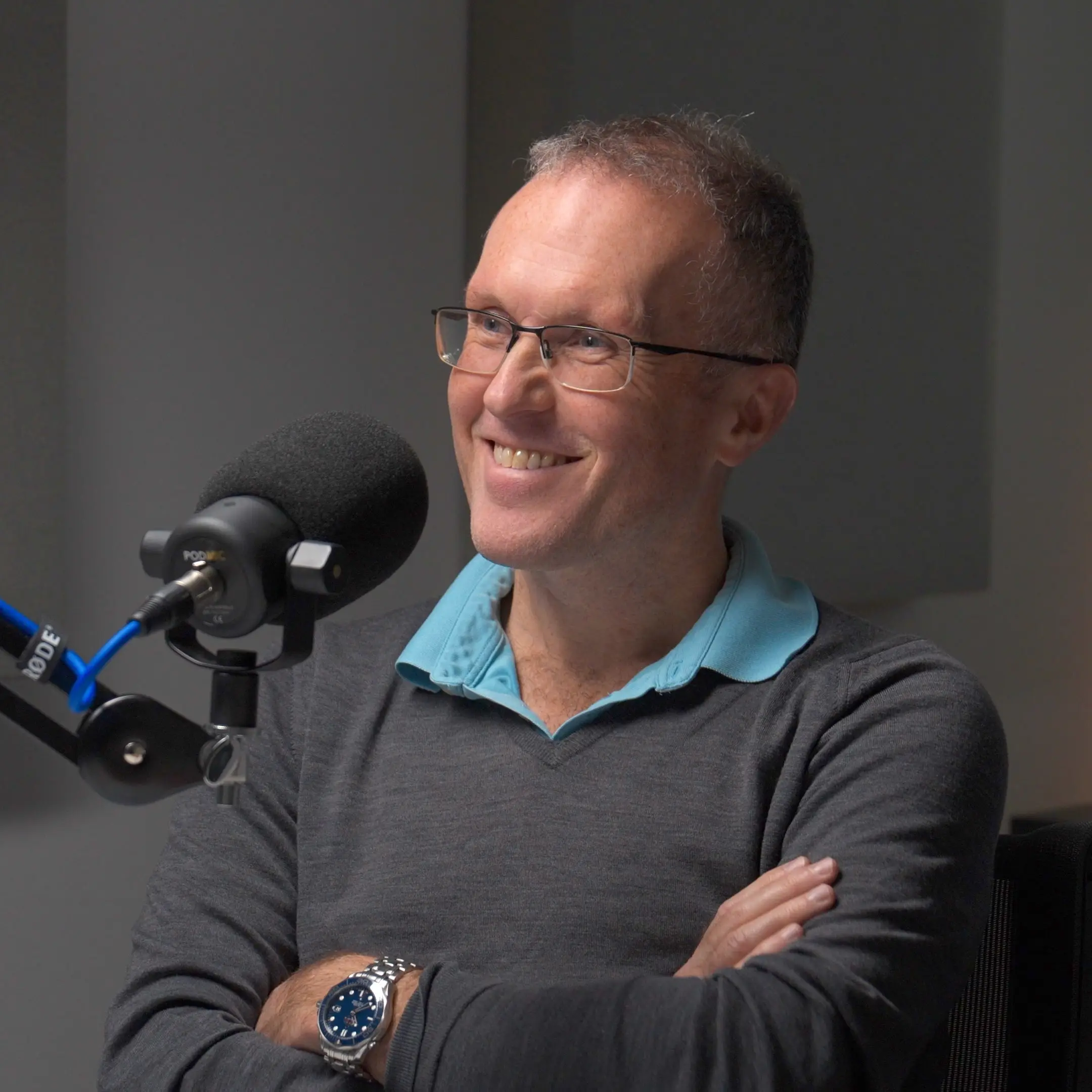
In this episode of Ethics and Innovation by Oxford+ brought to you by Equinox, host Susannah de Jager talks to Dr Olga Kozlova, Director of Innovation and Engagement at the University of Oxford, about Equinox, Equitable Innovation Oxford, the regional partnership she has helped drive since its launch. Olga explains why Oxford wants to avoid repeating San Francisco's mistakes, where economic success sat alongside rising poverty and crime, and how Equinox is instead building a skills agenda, an inward investment unit and a founders' pledge to spread the benefits of growth more widely.
The conversation lands as the Oxford-Cambridge Growth Corridor gains fresh momentum, with government plans to double funding and unlock up to £78 billion for the UK economy by 2035. Olga argues that Britain needs more national pride in its innovation strengths, and a clearer story about why Oxfordshire's growth should matter to everyone who lives there, not just those inside the university's walls.
Susannah de Jager: Welcome to Ethics and Innovation by Oxford Plus, a special miniseries hosted by me, Susannah de Jager and sponsored by Equinox, Equitable Innovation Oxford. Who benefits from innovation? Traditionally, innovation conversations focus on founders, investors, universities, and economic growth. But if innovation is to retain its social licence, surely its benefits must extend beyond those directly involved with creating it? Today On Oxford Plus, I'm welcoming Dr. Olga Kozlova, Director of Innovation and Engagement at the University of Oxford and one of the driving forces behind Equinox, Equitable Innovation Oxford.
We'll be talking about how do local communities experience the success of an innovation ecosystem, if at all? How do new technologies translate into jobs, skills, educational opportunities, and social mobilities? And how do we ensure that prosperity generated by innovation contributes to the infrastructure that allows communities and ecosystems to thrive? From housing to public transport, to inclusive access to opportunity.
Equinox was created in recognition of a simple but powerful idea. Innovation ecosystems are strongest when more people can see themselves within them and benefit from their success. Today, I want to explore what this really looks like in practise. Is it simply about fairness or is it actually essential to building a globally competitive innovation cluster? How should Oxford balance growth with inclusion and what responsibilities do successful ecosystems have to the communities within which they sit?
Olga, thank you so much for joining today. So we spoke earlier in the year when you had relatively newly formed Equinox, and we were obviously talking about the kind of broadest concepts. This miniseries is really diving into ethics and innovation and how these two often seen as distinct concepts should be brought together, which Equinox has almost timed this perfectly because I think that's something that perhaps felt tangential or even, dare I say, irrelevant for some people. It feels suddenly like a burning platform.
How has the work that Equinox is doing started and how is it evolving in this space, particularly focusing on the impact of innovation and how we might think about it?
Olga Kozlova: It's a really good start to the conversation, Susannah, because when Equinox was conceived and Irene Tracy, our Vice Chancellor really has been a champion and a leader for it. It was very clear that we wanted equitable part be as important as an innovation part and when you bring these two concepts together, which I think in the mind of the people within the university is absolutely the right thing to do because a lot of people go into university, they do research for the sake of making life of people, ordinary people better.
But at the same time, when you start conducting this conversation, you talk about innovation and how we need to grow companies, create jobs, for a lot of what I would say, just people, the ethical bit becomes almost an opposite. Essentially, you are in a business of making money and profit, which not necessarily are associated with being ethical and delivering positive impact.
So I think it's from being mostly absolutely ingrained in Equinox that we want equitable and we want innovation to be working hand-in-hand. We also had to deal with a lot of misperception that this are not naturally come together. I think we're getting there. I think a lot of people now are really excited about this concept of innovation delivering impact.
At the same time, I think we still have a little bit to go to convince everyone that this is really for the greater good.
Susannah de Jager: And just taking some of what you said there, I think that the point that it was your starting point is so important because it's really hard to reverse engineer these things and it's funny that people are resistant to this, including, you and I had this conversation. But companies often start with values. The question is whether they're able to maintain them through some of the forces that you discussed.
But somehow putting equitable at the heart of Equinox, it didn't feel obvious necessarily to all parties and I want to dig into the thing you said there, which is that it is evolving. Do you think that this is a moment in time where that was always going to be the course of action and that it's mainly about you educating your kind of partners, stakeholders, people that have signed up to the charter?
Olga Kozlova: I think it's probably, it's a bit of both. From my perspective is that when we look at innovation ecosystems, obviously San Francisco, Silicon Valley come as an example. And what they achieved in terms of economic success is obviously widely documented, widely known. At the same time, it's now becomes very clear that in terms of the quality of life of San Francisco didn't get it right. The levels of poverty, of crime, again, it become well evident that this is not really the example we want to go with.
So therefore, we launched Equinox, it was very clear for us that this is a direction of travel we wanted to go. At the same time, I think, particularly in Oxfordshire, where growth is not a universally popular thought, it's really became clear that we needed to take stakeholders with us on the journey.
But I do agree that with especially prominence of AI and I knew we weren't going to avoid using that word. There is so many questions being asked whether our society is actually benefiting or is ready for AI being just such a integral part of the world that I think these questions became just much more pronounced. It's not the perfect storm. I would call it a perfect opportunity for Equinox to develop and take it further.
Susannah de Jager: Yeah, because I think that anyone that was on the margins of this is realising they can't be anymore. I'd love to get into some of the granularity of how you see the work of Equinox evolving in this impact locally, what are some of the practical things that you're planning to do?
Olga Kozlova: There are a few things that we've done. First of all, we've convened a lot of organisations in order to get their views of what this equitable means for them. What we've discovered is that equitable covers all type of things, essentially, and it's really broad aspect. You can talk about inequalities, you can talk about skills agenda, you can talk about access to health. There's so many things in there.
So I think for Equinox, it was, like, we're very focused on delivery. So we don't want to try and, what you say, boil an ocean. We want to focus on particular things. I think what emerges is that the skills agenda in particular, how do we ensure that people who live in Oxfordshire has access to employment opportunities created by these companies? And by that, I don't mean just a PhD level jobs. A lot of these companies will create administrative roles, technical roles, which will be accessible through apprenticeships, or even just after after school, essentially. So how do you essentially pave the path for local people to get these jobs in these companies and make it so much easier?
The second part is how do you tell the story of what innovation and showcase how innovation can benefit people who live in Oxfordshire, live locally? And I think I've mentioned previously, when we talk about successes of our company such as OrganOx, for example, you would talk about the billion and a half exit and being used in various countries essentially. We only secondary tell that it saves 10,000 lives. And I think we need to create that narrative where people can see how it benefits them, the innovation thing.
There are also smaller examples, for example, our developers community and I've been recently to Oxford North to talk about what they do. It's part of when they apply for the planning permission, so that they talk how they're going to employ the local workforce, how they're going to support the young people, how they're going to create the parks and other facilities that people can use, essentially. So I think telling the narrative.
There are other things in the pipeline that we are working with people just to make sure that there are other deliverables that will come out. So if you just watch the space, it'll be more to come, but these are initial starting blocks.
Susannah de Jager: And it seems to me that, just taking that real example. Historically the university was seen as relatively closed, some of that is literally structural, these beautiful walls, but actually, you don't necessarily see what's on the other side of them. It doesn't feel like communal space and actually what's really wonderful, we're sitting recording this interview in the Schwartzman Centre of the Humanities, which was intentionally designed that you didn't have to register and check in, in order to come into the downstairs communal spaces and walk around.
Everything now is being designed with this more sort of inside out mentality, the public spaces. I know that Anna Strongman, who's the CEO of Oxford University Developments, really brings so much of that experience from her work in Kings Cross at Cold Drop Yards, and how to make it feel more accessible.
But I think that what perhaps those of us that already are integrated in Central Oxford may not realise is that there's still a whole cohort outside of that, communities that are very proximate that wouldn't feel these spaces are for them even if they're open. And I love that some of the grassroots work that I know you guys are looking at is looking to make sure that these spaces and these opportunities feel genuinely that they benefit a broader cohort.
Olga Kozlova: Absolutely and, for example, yesterday I was at the Saïd Business School where the NatWest had its pitching competition and awarded £100,000 of prizes to companies.
Susannah de Jager: Which a friend of mine won, which I was thrilled about Nina.
Olga Kozlova: Nina was absolutely brilliant. So I was privileged to judge and it's, again, it's another part of it because when I arrived to Oxfordshire, I was very clear. I learned that if you were connected to one of the universities and you wanted to start a business, you would get quite a bit of support. We have Oxford University Innovation. We have Inspire. Oxford Brooks has its own programmes. There is Oxford Science Enterprise. However, it became clear that if you were not connected to the universities, where would you get that support?
And so our partnership with NatWest, and I was absolutely delighted that they have their first employee and they also signed a lease on a physical space. So that, again, is to make this opportunity that if you want to start a business, there is support available irrespective whether you are linked to one of the universities or not. And I think that's all about making this innovation just that bit more accessible to anyone who lives here.
Susannah de Jager: And it's interesting, isn't it? Cause equitable, we've been talking about the community aspect. There are so many wonderful things on that side of things. But here, we were using equitable in a way that people might not even think. About that possibility, unless they've been subject to it, that actually Oxford is this amazing ecosystem, but some of the things on offer are not universal to all entrepreneurs. I have certainly heard that.
You know, we've just had Oxford Tech Week. Michael was just here as we started this interview and something that they said when I interviewed them prior to OxTech Week kicking off was that in Boston only 3% of startups are actually to do with the universities and the rest is an ecosystem that's around it. And I think as an aspiration, that sets us up for what Oxford maybe can and, quite frankly, should be in the next iteration as we all move forward.
What else are you doing on helping founding people actually? I'd love to hear a little bit more about some of those initiatives.
Olga Kozlova: So I think there are a few things that we've been working on. So the one of of them is around we're developing an idea of how Inward Investment Unit might operate, because in Oxfordshire, what is very clear, we don't have really clear front door for the companies who might want to locate here. How would you access a university? How would you find the right physical space for yourself? Essentially, how do you become part of this quite diverse ecosystem?
So we are currently working on developing a business case of what Inward Investment Unit should look like. Obviously, we have colleagues in Enterprise Oxfordshire in the County Council who support some of the activities that we have. But I think there is a general desire to do more, to be more proactive, and make it easier to attract and also retain companies in Oxfordshire. So that's the one piece of work.
We're also been, I think what we're trying to do is work with the various members of the community, and enterprise community, our innovation community, innovation ecosystem, is to identify things that maybe others would lead on. Because I think what we're very clear, that it's not for Equinox to do everything. What we want to make sure we were happy to shine the light.
But there is, for example, Emmy O'Shaughnessy from Oxfordshire Youth is really interested in exploring our founders pledge concept, how it might work, and we're really delighted to work and support her. We're working with Advanced Oxford on something that potentially maybe can help us ensure that our companies can access NHS and collaborate with NHS colleagues better.
So what we're trying to do is to work with people and help them deliver what they're really interested in and bring this convening voice and I suppose a bit of a marketing focus and comms focus to support what others are doing.
Susannah de Jager: And I think that's eminently sensible because there are people doing great things in many areas already and I'm a great believer that if somebody's doing something, there's no need to reinvent the wheel. And I think that just amplifying what's already happening is fantastic.
This Oxford Plus miniseries is brought to you by Equinox, Equitable Innovation Oxford. Equinox is a major regional partnership established by the University of Oxford to drive inclusive innovation and sustainable economic growth. Bringing together universities, local authorities, government, industry, investors, and community organisations, Equinox provides a unified voice for Oxfordshire, championing innovation that delivers economic impact alongside social value.
More than 80 organisations have signed the Equinox charter, committing to atract investment, remove barriers to growth, and ensure the benefits of innovation are shared more widely. By aligning Oxfordshire's world-leading research, enterprise, and talent, Equinox aims to unlock nationally significant growth, reinforce the county's position as a global innovation hub, and ensure that success creates skilled jobs, attracts investment, and delivers lasting prosperity across the region.
One of the elements that I think is really important, and you've briefly touched upon it. Is we were speaking there about amplification. There's a lot about innovation that I think can feel tangible to communities when it impacts them physically. We've spoken in the past about, affordable housing, about public transports, there's quite a lot going on in this domain in Oxford and I'd love to get your perspective because I think that there's a real moment and positive momentum around the Ox-Cam rail, the Cowley Branch line, and it feels good, but what are you aiming for to keep moving that positive momentum in this domain?
Olga Kozlova: That, I think, again, the example of where Equinox provides, I suppose an advocacy and data piece to support some of this broader development because Oxford Cambridge Growth Corridor, they've made announcements of the development corporation being under the consultation in Oxfordshire, which is brilliant. It builds on the work of the Oxfordshire Growth Commission. I think the fact that the East-West rail is progressing, maybe not as fast as we hope, but it's moving in there. I think the fact that, the, Cowley branch line is being built. From our perspective, our role is to provide advocacy.
Why do we need this? Because I think a lot of people are concerned, they think there will be more houses coming in. There will be more cars on the road. Transport will get busier. So on and so forth. And I can understand people's concerns. At the same time, I think we need to talk about, first of all, the opportunities that it gives people who live here and particularly the young people. We've talked about it about the employment and other opportunities.
But also the, fact that we need to recognise that we live in a very competitive world, and if we don't invest in Oxford and if we don't continue to grow, then these companies will go elsewhere and they'll take the jobs and the benefits of these jobs elsewhere, Singapore, Shinzheng, the developments in India, in China, even in the US, essentially. We operate in a highly global, highly competitive environment and for Oxfordshire to thrive, and for us to benefit from all these opportunities, we need to stay competitive and we need to invest in our infrastructure and our skill base. And also we need to invest in telling that story globally and blowing our own trumpet a bit more than we usually do.
Susannah de Jager: I really agree and I think that to split two separate things apart there. One is the virtuous cycle of people really feeling that it has any impact on their lives and you're obviously planning and working with people to really make sure that percolates through to all kind of different groups of people that do call Oxford home or might in the future. I think that's such an important piece of the puzzle, because there's nothing quite like feeling it, words are cheap or whatever the expression is.
I think the other side of it, and I'd love to know if you think that this is coming through yet at the grassroots level, because I really feel that there has been a change in discourse in a world now where there's been more notable conflict in a world where AI is coming so fast and there it is again, sorry.
But we are, I feel, that there's more of a burning platform that defence of our borders physically underspending on defence budgets and technological sovereignty and keeping innovation here. Do you think that people see that as, "Oh, I understand now why that might be more important." We've just this week had the social media ban. There is a sense that we don't need to be subject to these things. And in a country where we generate so much brilliance at that startup phase, do you see that kind of coming through conversations?
Olga Kozlova: Absolutely, and I think there is a lot more conversation in terms of we're creating these brilliant companies. We do all the heavy lifting, all the risk, and when they're just about to start scaling, they move somewhere else, typically, internationally in the US.
And they might retain their R&D base here, but the biggest benefits land somewhere else. That's one of the reasons, that Equinox is trying to address, for example, bringing more capital here, making sure that there is space for these companies to grow, making sure that we have corporate presence so the customers are here. Because all of it is essentially, it's yes, we're losing jobs, we're losing potential income on this one. I think the other bit, I think we need to think about broader UK PLC. So Oxford and Oxford are just signed, MOU with University of Liverpool and Liverpool Combined Mayoral Authority, which is all about us to maybe help companies manufacture in the Liverpool region. And the whole idea, how do we keep these companies in the UK?
And then I completely agree this is this security of supply. Because some of this cutting-edge technologies, if we don't keep them here, then we're going to be spending a lot of money buying it elsewhere. And also in the political world or geopolitical situation where it's so stormy, I would say, having these companies and having sovereign capability is incredibly important. It's becoming more and more important for us. So I think I would agree, I think this moment, I think people are waking up to the idea that, the globalisation and the fact that, we have our kiwis flown from New Zealand or wherever else might not always be there.
Susannah de Jager: I couldn't agree with you more. What I wonder as we have this conversation about educating communicating, educating sounds a little patronising, but communicating this to people that maybe don't think it's for them is you've got so many people who get fired up quite reasonably about the state of the country and things they perceive aren't working here and things that they're subject to.
And I think that your biggest task, as I hear you articulate it, is going to be communicating to those people that make up 85% of the country, not the 15%, that this impacts them and that it's important to them and that they should therefore be excited about it and promoting it and putting their sort of democratic pressure in this direction as well as others that are important to them. It's not easy.
Olga Kozlova: No, it's not and we need to have a few things, I think, few reflections on this one. First of all, national pride. We have probably three or four universities in the top 10 globally. We don't have three or four companies in the top 10 globally. And therefore, let's focus on what we good at. We're really, good at this deep tech, this innovation, the world and development. So how about we basically put our eggs in the basket where we know we are globally leading? So that's one.
My second point is, and I think that's where we suffer a little bit in the UK and I can see it. We're too easy to criticise ourselves. We just, we always tell every report that is published, it talks about all the negative things that is happening in the UK and what are we not good at and what we can do and others are doing it so much better.
Susannah de Jager: British self-deprecation.
Olga Kozlova: But the thing is, when you talk to Americans, people are really proud and they tell about why they're proud about their nation. And we need to talk that UK is a brilliant place to innovate. That it's a very welcoming place. I obviously not originally British, but I came here and it gave me career opportunities that I would never had in my home country. The fact that we speak English is brilliant because it's allows us to communicate with the rest of the world. We have incredible history. We have incredible brains. We're a proud nation. And I think we need to talk about these things, why it's so good to live in Britain.
Susannah de Jager: Yeah. And again, I think that there is some positive momentum around these things. I just finished the Season Four of Oxford+ and in my wrap-up, I feel very strongly that the mood music has shifted. That we're not talking about problems so much, we are presenting solutions. Equinox would be an example. Oxford Tech Week would be another example. I think that we're into a different mode. Pension capital is now coming on stream. The government seemed to really get it and I think by degrees, people are realising these things are terribly important to them individually, whether it's social media ban or things that are quite proximate and then flowing from there to, "Oh, this is important." Defence spending would be another one that's very topical at the moment. Not obviously a positive one necessarily, but one that people are becoming more aware of.
There is an opportunity here to build on positive momentum, and actually, Enterprise Britain, I think I introduced you to Eva Barboni, who's heading that up the other day. They're really passionate about this act. What is it? It's ambition capital talent. But one of their kind of sublines is that we must stop denigrating what we're good at here. That it's a habit maybe that's got out of control individually and by the press. Which is all to say I agree with you. In a very long way.
Obviously when we last spoke, you had just announced and you were in the fanfare stage. I know that now things have moved on. Give us a sort of how does it build from here? Where are you up to? And what does the next six months look like for you?
Olga Kozlova: That's a brilliant question, Suzannah. So we are just about to sign off on our 10-year strategy. Which will have clear focus areas and KPIs. And we're now moving, shifting to the delivery mode, essentially, what it is that we're going to do in the next six to 12 months. And the Equinox Council, our governing body, is really keen because they don't want it to be a talking shop. What they want to do is clear deliverables. A few things that we are currently planning one-year anniversary for Equinox, which will happen probably either late November or early December. And what we'd like to organise is investor showcase to showcase a brilliant scale-up companies that we have in early stage. On our partnership with NatWest to create an accelerator as I said, we now have the building that is the building that is a first employee. So we're going to be looking to launch the first programmes. That will be able to help bring the next generation of entrepreneurs into the scene.
And the last bit of work is that what we're working is on basically creating a campaign which says Oxfordshire is open for business. So how we create clear messages if you're an investor, if you're a company, why would you come to Oxford and basically launching a campaign in terms of sending this message globally. So this is what keeps me occupied at the moment.
Susannah de Jager: That's a lot to be getting on with and I'm really pleased to hear that you're splitting out of different stakeholders because the communication channels are so specific depending on who you want it to be heard by. So I look forward to seeing it and I wish you all the best with it and if I can do anything to help, get me involved, I think it's brilliant.
Olga Kozlova: Thank you very much, Suzannah. I'm sure we'll call on your time.
Susannah de Jager: Wonderful.
Thank you for listening to this episode of Oxford Plus, hosted by me, Susannah de Jager If you wanna keep up with all things Oxford Plus, visit our website, oxfordplus.co.uk or sign up for our newsletter on Substack.
Oxford Plus is a podcast produced by Story 94.

More episodes+

Ethics & Innovation: Inside Microsoft's AI for Good Lab
Ethics & Innovation: Oxfordshire's Divide Between Opportunity and Access
Ethics & Innovation: Serving, not Harming and Connection, not Convenience
Ethics & Innovation: Can Trust Keep Up With AI?

Ethics & Innovation: Can AI Close the Justice Gap?

Ethics & Innovation: What Makes Us Human in the Age of AI?
Ethics & Innovation: Civic AI, Data Soil and Digital Democracy

Ethics & Innovation: Does AI Actually Understand Our World?

Ethics & Innovation: The Social Media Ban, Sovereign AI, and the Race We Can't Stop

Recycling Capital and Talent in Oxford's Innovation Economy
Unconscious Bias, Responsible AI, and the Future of Workforce Decisions

Bridging the Gap between Scientific Research and Industrial Impact
OX Tech Week: From Pub Meetups to a City-Wide Tech Festival

Healthcare Innovation When Lives Are at Stake
Building a More Inclusive Innovation Ecosystem in Oxfordshire
Lord William Hague on Talent, Technology, and Capital

Building a World-Leading Climate Tech Ecosystem in Oxfordshire
Defence Innovation in the UK: How Startups Win Government Contracts
Building a £10 Billion Vision: Inside the Ellison Institute of Technology with Lisa Flashner

The Multiplier Effect: Funding Companies, Ecosystems, and the Future of the UK
Oxford North: The New Innovation District in Oxford

The Cluster Effect: How Bicester Motion is Driving the Future of Mobility
The Psychology of Scaling Companies and Teams with Professor Robin Dunbar: Part 3
The Psychology of Scaling Companies and Teams with Professor Robin Dunbar: Part 2
The Psychology of Scaling Companies and Teams with Professor Robin Dunbar: Part 1

The Future of Genetic Medicine with Zandy Forbes, CEO of MeiraGTx
How Founders Pledge Uses Data to Maximise Philanthropic Impact

The Oxford Trust at 40: How Innovation and Education Power Oxford's Future

Can Sirona Rival Ozempic? A New Chapter in Obesity Treatment with Camilla Easter

Aligning Founders and Investors with David Mott

Building Billion-Pound Outcomes with Jack Edmondson

How Machine Learning in Oxford Is Transforming Medicine Worldwide with Lionel Tarassenko

Bringing Science to Society with Molly Stevens

How Oxford University Innovation Bridges Science and Business with Mairi Gibbs
What Formula One Teaches Us About Startups and Success with Adam Parr

Risk and Reward in Early-Stage Tech Investments with George Robinson

Charting Fresh Career Paths with Sue Douglas

From Oxford MBA to Startup CEO with Lily Elsner

Navigating Market Dynamics with Marcus Stuttard

Harnessing Local and Global Talent with Sarah Haywood

Navigating Capital Markets with John Derrick
Building Oxford’s Future with Anna Strongman

Breaking the Myths Around University Spin Outs with Irene Tracey

Navigating the Future of Oxford Sciences Enterprises with Ed Bussey

Oxford's Role in the Next Industrial Revolution with Dave Norwood

Diversifying the Investment Ecosystem with Rowan Gardner

Pension Investment and the Mansion House Compact with Nicholas Lyons

Lessons from the Motorsports Cluster with Mark Preston

From Research to Reality with Cici Muldoon

Nurturing Founder-Driven Ventures in Oxford with Peter Crane