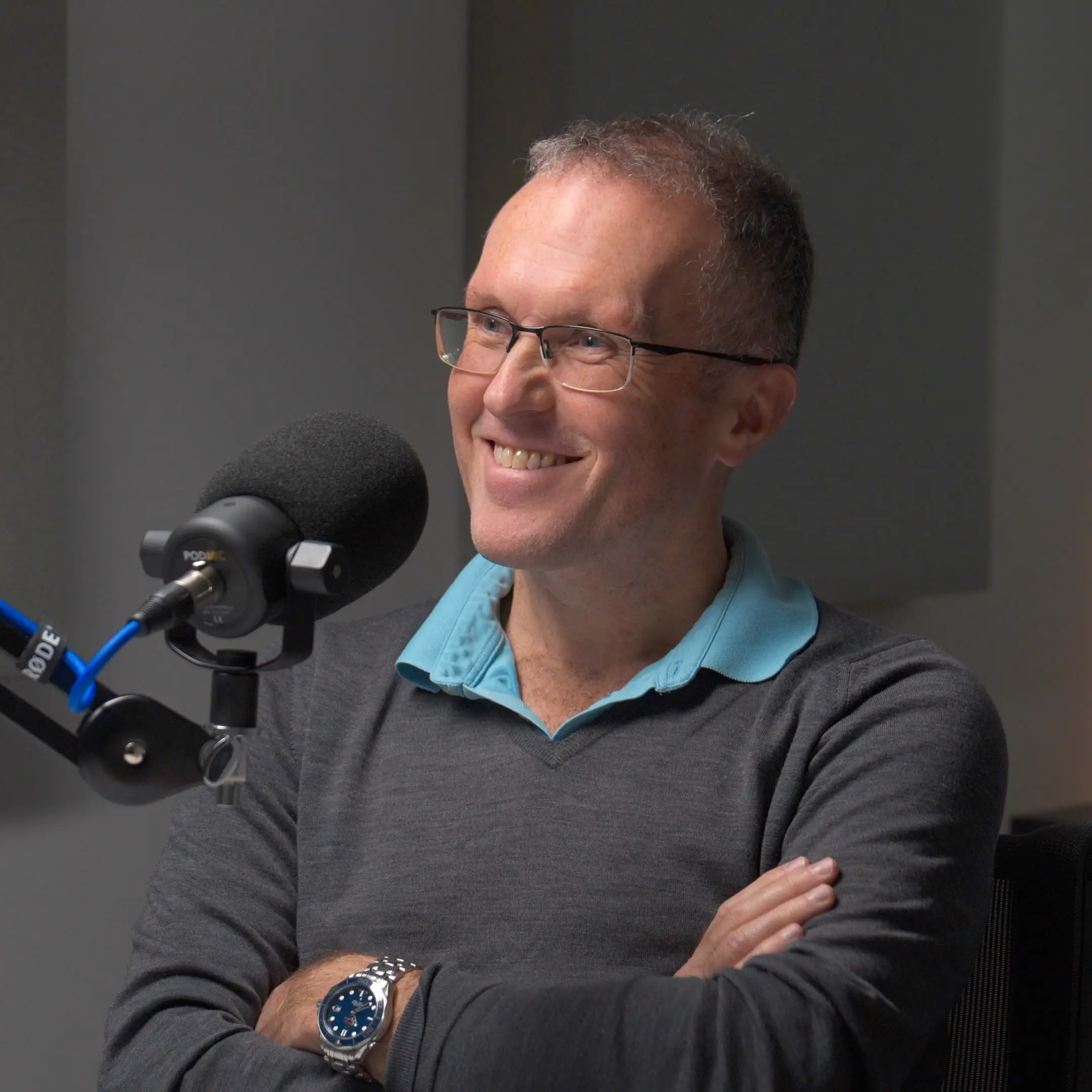
Could the same genetic data help us develop better medicines and identify disease risk years before symptoms appear?
In this episode of Oxford+ in Partnership with Mishcon de Reya, Susannah de Jager speaks with Sir Peter Donnelly, CEO and co-founder of Genomics, about turning Oxford research into tools for drug discovery and preventative healthcare. Peter explains why assembling public data takes years of careful work, and how human genetics can help scientists choose drug targets and the patients most likely to benefit.
The conversation also examines agentic AI, which lets scientists ask questions of genetic data without waiting for specialist analysis. On the healthcare side, Peter describes how polygenic risk scores could guide screening and prevention according to individual risk rather than age alone.
Research reported by Exeter on 22 October 2026, drawing on nearly one million genomes, stresses that genetic risk needs clinical and environmental context. That distinction matters as Peter discusses personalised medicine, Our Future Health and the practical challenge of making prevention work within existing healthcare systems.
Susannah de Jager: Welcome to Oxford Plus the podcast focused on innovation around Oxford. We look at everything across the ecosystem, the institutions, the people, the technology. If you need to learn anything about Oxford, whether it's how to take a first step in through the door, or as an experienced investor wanting to go deeper, this is the podcast for you. We have spent decades collecting genetic and health data. The opportunity now is to make it usable, to understand why disease develops, identify better drug targets, and find people at risk before they become ill. Sir Peter Donnelly co-founded Genomics as an Oxford University spin-out in 2014. What began with four geneticists in a small office above an Oxford pharmacy has become a global company, applying human genetics to drug discovery and preventative healthcare.
Today, we will discuss Peter's journey from academic mathematician to CEO, the decade spent building Genomics Data Advantage, and whether genetics combined with AI can fundamentally change how we develop medicines and manage our health.
Peter, thank you so much for joining today.
Peter Donnelly: It's my pleasure.
Susannah de Jager: So you're a mathematician by training. How did you segue into genetics?
Peter Donnelly: It was an interesting journey. The mathematics I did for my PhD and early in my career was modelling the way populations evolved, so what was called population genetics. So I was constructing mathematical models that helped us understand some of the forces of evolution.
In the mid-1990s, I moved to the University of Chicago where I had a joint appointment between the stats department and the Department of Ecology and Evolution. So I had a lot of colleagues who were proper biologists and scientists. I started to learn the science rather than the maths side and I got more and more interested in scientific questions. Eventually leading to developing methods for analysing large amounts of genetic data and that put me in a good position in the early 2000s to be involved in some of the major projects. The HapMap project which followed on from the Human Genome Project to give our first map of the diversity in different continental groups and then I was asked to chair something called the Wellcome Trust Case Control Consortium, which was a series of transformative studies which changed our knowledge of the way genetics played into all the common diseases, heart disease, diabetes, breast cancer, prostate cancer, and so on.
Susannah de Jager: And was there a moment in that journey as you just articulated it, where it really dawned on you how incredibly important the work you were doing was? Or was it always apparent?
Peter Donnelly: And I'd love to say I had a light bulb moment or a Road to Damascus experience but it was gradual. Because I was learning the science more and more, I realised that I had the right statistical and mathematical toolkit to develop new types of methods and models for analysing what was then large-scale genetic data that was only just being collected because of advances in the way we could measure DNA in people.
When I became involved in the Wellcome Trust Case Control Consortium, that was a large collaboration involving 15 or 20 academic groups in the UK. That was incredibly exciting and we thought then that we had a chance of really making some progress on understanding how genetics plays into human diseases.
Because until that time, although we knew genetics was important, because these diseases run more in families than you'd expect by chance, they're shared between twins more than you'd expect by chance. What we didn't know was how that played out, and the hope was through that large study, the Wellcome Trust Case Control Consortium, we'd start to understand. It was quite a large study for those days, but whether it was going to be large enough and it wasn't really until we got the first results that we realised that it was a pretty game-changing moment.
Susannah de Jager: Amazing, and then in 2014, you set up Genomics, which is all about collecting data. What took you to doing that? Because it's a huge departure from a primarily academic focus to then say, "I want to set something up that's focused on accessing even more data to make impact."
Peter Donnelly: It was a big change actually rather a bigger change in reality than I had anticipated at the time. During the late 2000s and early 2010s, I'd been lucky to be involved in a whole range of really exciting large-scale academic projects. I was by that time leading a large research centre in Oxford, the Wellcome Centre for Human Genetics, so 400 people across different research groups trying to understand genetics and human diseases.
Although the academic progress was really startling and exciting, and although every time we wrote a grant application or talked about our work, we talk about the impact it would have on people's lives, on their health, on our ability to develop new drugs for diseases, though we talked about that all the time, it just wasn't happening.
And along with some colleagues in Oxford, we realised that there's a big gap between doing the academic research and writing a scientific paper and actually developing the tools that would make this useful in practice. That's what spurred us to found the company, Genomics. We wanted to keep doing world-class science. I think it's fair to say we've been able to do that. But to add in the pieces that would allow us to develop the products and the methods that really would make a difference in people's lives.
We've been going for 12 years. I think we're close to that point now, which is fantastic. It was that desire to actually help the academic research have the impact it could, that drove us to found Genomics.
Susannah de Jager: And I want to come on to where you are, but before, I want to go back to something you already alluded to. What were the gaps? What were the things that perhaps you hadn't appreciated? Because the want to turn your research into impact makes perfect sense. But as you and I have discussed before, the gap between the academic world and the commercial is a large one.
Peter Donnelly: That's absolutely right. We set out to do a number of things to fill that gap. We wanted to create a sort of megadata resource that captured all or most of the studies. By then hundreds, by now, tens of thousands of studies. People looking at this disease or that disease or something else we can measure in people. All separate studies. We wanted to bring all that data together and create a data resource where you could analyse it all in one go, because we thought that would be very powerful.
That's a lot of work and a lot more tricky than it seems just talking about it.
Susannah de Jager: Yeah, it's a deceptively simple statement.
Peter Donnelly: Yes. But the hope was that by doing that, we'd have the ability to look at how changes in our DNA impact things about us, whether it's disease susceptibility, whether it's the stuff we can measure like blood pressure, lung capacity, cholesterol level, all the way down to what's going on inside our cells.
And the hope was to use that resource, on the one hand to help us understand biology better, and that's the piece that helps us, or helps others using our tools, find new drug targets, but also to be better at understanding people's disease risk from genetics and by doing that to allow us to measure for a person their risks across many diseases so we can give them and their doctors advice about the one or two diseases they're most at risk from years before symptoms develop so that the doctors can get them into the right screening programmes or prevention programmes or treatment programmes at the right time.
Coupled with all of that, there's the commercial side. So you need to do all that work, but you need to have products and you need to have a sales team and an engineering team and so on. So it was building those pieces as well. That was a key challenge and one of the things that you need to do to go from the academic world to having tools that are useful in practice.
Susannah de Jager: And you touched there, well, we both did, on this deceptively simple sentence of putting data in one place where you can interrogate it to get answers to these core questions. This is going to be an annoyingly simple question for, I'm sure, a very complicated answer, Peter, so forgive me in advance. But why? Can you explain to me as a layperson clearly and anyone listening, why is that so difficult? What is it that makes something that sounds simple actually not? Talk us through some of the actual practical steps.
Peter Donnelly: Yes, as you say, it's one of those things that seems pretty straightforward, and I often find when I'm talking to investors, that's their reaction initially. If all the data's publicly available, what's so special about what you've done? And the special piece about what we've done is a myriad things you have to do. First of all, get the data. So these are individual studies typically undertaken by academic groups. Often you have to email the PI of the group to ask them to make available summaries of the data, and that's what we use. It's anonymised summaries of the data. So that's fiddly. Sometimes it's in a repository and then you have to complete application forms, sometimes get ethics approval, occasionally just sitting on the web and that's much easier. That's the first piece.
Then there's an integration piece, so different studies use different genetic technologies and there's work you have to do. Dig, as it were, give them a common reference backbone. There's a very fiddly thing in DNA. I think everyone's aware DNA is double-stranded. It's a helix. There are letters in our DNA which convey the information, but the way the helix works, if there's a C on one of the DNA strands, there's always a G on the other, and if there's an A, there's always a T. And the problem that causes is that when people are measuring the DNA, if they measure one strand and get a T and someone else measures the other strand and gets an A, they're actually measuring the same thing. But that's not obvious when you get the data and so there's a lot of work to unpick that.
Then there's work around what we'd call the phenotype. So what they're measuring when one study measures blood pressure, high blood pressure, another one measures high blood pressure, are they using the same definition? These days, data's combined across multiple studies. So you have to look in page nine of the supplementary material of the paper to find out what those studies are, because if some of those studies are already in our database, we don't want to be double counting them. So there's a lot of fiddly stuff to make the data interoperable. We do QC. So there's all user-friendly and machine-user-friendly, and it's that adds all the value.
I'll often say to investors there are other groups that do the same with publicly available data. There's a firm called Westlaw who take publicly available court transcripts in the US and make them available in a machine-readable and searchable form. Bloomberg do the same with a lot of public information and get value out of the integration. Google Maps, all satellite images are available, but there's value in Google Maps. So there's quite a lot of value in putting the data together exactly because it's fiddly and difficult.
Susannah de Jager: And to give an idea to anyone listening of the kind of scale and, please feel free to correct me if this is not correct, but you've now got a platform that includes more than 45,000 genome-wide association studies alongside other genomic, proteomic, clinical and other phenotype data which is vast.
Peter Donnelly: Yeah, one way of thinking about size is that some of the tables in that data platform have two trillion rows.
Susannah de Jager: Wow.
Peter Donnelly: So there's a lot of data.
Susannah de Jager: I feel like we need a different metric.
Peter Donnelly: Yeah. It's big.
Susannah de Jager: It's big. Let's go into what you're doing with it. You touched upon it briefly. What are you doing? I know that you've got two main areas and I'd love to dive into where you're up to in each of them.
Peter Donnelly: Very happy to do that. So let me start with one side of the business where we try and help pharmaceutical companies and biotechs either find new drug targets or validate drug targets they're thinking of, or find the right patients for drugs that they're developing or already have on the market.
So something like 95% of clinical trials fail. Actually, if you're restricted to drugs that are genuinely new rather than mimicking something that we know works, the failure rate's even higher. There are a number of reasons for that, but the main one is we're not very good at picking the drug targets because we don't understand human biology and human disease well enough and actually, when you think about it, there's a good reason that we don't understand human biology. In most areas of science, the way knowledge moves forward is that we have a hypothesis, we design an experiment, perform the experiment and learn from that, and then we can either confirm the hypothesis or refine it or change our model.
That's what we do in almost every bit of science, but you can't do that when you're studying human biology because we can't do experiments on people. It's absolutely right. We wouldn't want a world where people are doing experiments on each other. So because you can't do experiments, we've had to learn about human biology indirectly.
So people would often study model systems, so animals whose biology we think mimics that of humans, or sometimes what are called cellular models, where you take human cells and study them in a dish and what we've learned is that while they can both be informative, they're often not very good about telling us what matters when we do things actually in humans.
Genetics is a game changer there. To cut to the quantitative piece, it's now well established that if a drug target has human genetic support, is at least two or three times more likely to succeed in a trial and the reason for that is, if you think about it, we all have slightly different letters in certain parts of our DNA code. Some of those letters change what happens to us and if we can follow that through, it's as if nature's done an experiment. If I look at the consequences of people who have an A at one position in the DNA compared to those who have a G, say, I can start to learn about the biology that bit of DNA plays into and that's the key idea. We can use our data to understand what might be happening when a company develops a drug.
So if they think that their drug will inhibit, so it'll stop a particular protein from doing what it normally does. We can look at our data for genetic variants, which slightly decrease the expression of the gene that makes that protein. So people who carry those variants throughout their lives will have a little bit less of the protein. It's a bit like they've been on a weak version of that proposed drug all their life. They don't know about it, so it's a blinded experiment and then we can just look in our data and see whether those people do they get less of the disease you're trying to treat? If they do, that's really helpful and if they don't, then that's worrying for the hypothesis. But you can also use that to learn what other consequences of that modification might be, so side effects. Through deeper analyses, you can often learn what are the right tissues or cells in the body that matter, and where do you have to make your drug work to have the impact you want?
Susannah de Jager: It's fascinating and it's important in a number of ways that to those that aren't performing clinical trials in the industry, it might not be evident. The first is quite obvious, which is that you're making very expensive clinical trials more likely to be successful. But something that I hadn't appreciated was that if you're testing a drug and you misfire, which I appreciate is perhaps not very carefully chosen words, your patent is already running and that therefore it's not just the cost of repeated trials, it's the time that you might have a patent that you can sell into the market.
Peter Donnelly: That's absolutely right. It's becoming increasingly clear that you can use genetics in clever ways to help you choose the right patients. So particularly for smaller companies for whom the first trial result will matter a lot, getting that patient choice right so that they get a successful first trial and an entree into a potential market while they're developing wider marketing access.
Susannah de Jager: Give us some examples. I'd love to hear how you've helped companies using this side of your company.
Peter Donnelly: We've had a longstanding partnership with Vertex Pharmaceuticals. Vertex really, really impressive large biotech, small pharmaceutical company. They've developed therapies which treat most cases in the high 90% of cystic fibrosis. So that was unthinkable 10 years ago, 15 years ago. They've made a massive difference there. Their philosophy as a company is to prioritise getting the right drug target and once they get a good target, they move heaven and earth to develop the drug that will do what they need.
We first partnered with Vertex in 2018, had a five-year deal initially that was extended once several years ago, and it's just been extended again for another four years. So that's one example of a very successful partnership where we're able to help Vertex either by suggesting new targets or when their scientists have come up with targets, we can run them by human genetics to see whether that's supporting the underlying hypothesis.
Susannah de Jager: And earlier in the conversation, we spoke about the concept of bringing all this data together. This is language that we're getting more and more used to in the age of AI and it's becoming more commonplace, not necessarily in areas as complicated as genetics, to see breakthroughs that are predicated upon larger sets of data being analysed. I know that you're using AI in a few interesting places on the platform too, and I'd love to hear how these tools are enhancing what you can offer your clients.
Peter Donnelly: Yeah, so we work in a couple of different ways. We have developed a platform, which is in a sense our data resource and a set of very sophisticated tools and analytical methods which sit on top of that. So that software platform in its core form allows expert users, people with training in statistics and genetics, to do the kinds of analyses that we've been talking about to help shed light on potential drug targets. Many of the methods in there involve machine learning and other sophisticated statistical approaches. So they're already cutting edge. Some of the tools which have been developed publicly, some proprietary to us in Genomics.
So one way we work is by licensing that platform to companies so their scientists can do the analyses to check out or to find potential drug targets. Where they want to, we can even add companies' own data into the mix so they can analyse that as well as our data. Some companies want to get our scientists to run the platform, and so we're providing the middle layer as well of expert science. That's what we do in the collaboration I mentioned with Vertex, for example.
Now, at the moment, it's a bottleneck that you need experts to be able to really tell you what the data says about genetic targets. We've worked quite hard to widen access, and we developed an agentic AI system, which sits on top of our expert user platform, and in effect, for the user, becomes their trained expert. So what that means is that instead of having to get statistical geneticists to do the analysis, a scientist in an R&D organisation can just type a question into the chat box. Scientist might say, "Is such and such a gene a good target for this disease?" and then our genetic AI system has the expertise itself to scour our data to find the right data sets, to know what are the right methods to run on that data, to look at the results of those methods and work out whether more analysis is needed and then when that process is finished, to summarise the results, both at a technical level for experts, but also at an informal level for scientists like the one who may have asked the query in the first place. But with clear signposts so that it's possible to dig into the details of what it's done. So we see that as potentially really powerful and a way of democratising these access to genetic insights.
At the moment, a pharmacist in a pharma company has to send off an email to their stat gen team. That'll get handled when they have bandwidth. It's usually limited. It's a bottleneck. It'll take a while and it's frustrating for the scientists. But we see a world where, for many queries, the scientists can ask directly, and then the platform will give them an answer. Sometimes it might flag things as being complicated and say it needs the expertise of a human, but often it'll be able to give a very good initial sense, which might be all the scientists need in order to help them think through different models or different hypotheses.
Susannah de Jager: And I think it's a common misconception that if somebody has the expertise and the data, it's going to be fast. It's still hugely complicated and so it's mind-blowing that you can expedite so much of that.
Peter Donnelly: That's absolutely right and even for the experts, one of the big attractions we hear from our customers in our platform is it allows them to do things in minutes that previously would have taken a half a day or a day because everything's there and all the tools are there. Whereas previously, they'd have to go out and find the right data set, they'd have to write scripts to get it in the right form to run their analyses and so on.
But as well as speeding up the work for experts, a really positive feature is this democratisation. Allowing many more people to have direct access to genetic insights in the drug discovery ecosystem or potentially even in the investor ecosystem, if they're thinking of buying a biotech they could use this tool to see what genetics says about its key targets.
Susannah de Jager: Ooh, I like that use case. That's an interesting thought. So drug discovery, targets, trials, expediting, even looking at what you might put into a clinical trial. All of this is one side of your business focused on life science and drug discovery. Tell us a bit about the other side of the business that you have founded. The same data, but pointing in a completely different direction.
Peter Donnelly: Yes, the other side of our business is in healthcare and to set some context, until a few years ago, if I had the entire DNA sequence from a healthy 40-year-old, I'd learn something medically actionable only in about one or 2% of cases. The reason for that is genetics has played into medicine through looking at individual changes, often a single letter out of DNA, which have a very big impact.
So think cystic fibrosis or muscular dystrophy, Huntington's disease. Those conditions are individually rare. They're actually collectively relatively rare, and the vast majority of them have onset very early in life, often in childhood, sometimes even before that. That means that if you get to age 40 and you're healthy, there's probably not much of that kind left to find in your DNA. Hence, if you comb through for that kind of change, only finding something interesting or actionable in about one or 2% of cases.
In contrast, it's now the case that if I have the DNA information from a healthy 40-year-old, I learn something medically actionable in about 70, 7-0 percent of cases. And that changed from 1% to 70% is because we can now measure the genetic component of risk for all of the common diseases, for heart disease, diabetes, breast cancer, prostate cancer, and so on. And for all those diseases, it turns out, if you take heart disease as an example, there's not one gene which matters for your risk of heart disease or two genes or three. There are a million or more places in your DNA where the individual letter you have at that position affects your risk. We're now able, using larger data sets like the ones we have, we're now able to identify what are the million or so positions which matter for heart disease, what are the ones which matter for diabetes, which ones matter for breast cancer and so on and then any one of those will only have a tiny impact on your disease risk. But if you aggregate the effects across all of them, that can be substantial.
So we developed the algorithms to calculate what are called polygenic risk scores. So polygenic just means many genes. Polygenic risk scores which capture the genetic part of risk for all the common diseases. And they can be very impactful. So some men are 40 times more likely than others to get prostate cancer because of their genetics. Some people are 30 times more likely to get diabetes, 20 times more likely to get heart disease, 15 times more likely for women to get breast cancer, all because of this polygenic risk. For all of those diseases, genetics is a really important part of risk. For breast cancer and prostate cancer, this polygenic risk captures most of the measurable risk at a population scale. For heart disease, for example, for a man between 40 and 55, it captures as much risk by itself as all the clinical risk factors we currently measure combined, age and sex and blood pressure and BMI and so on.
What that means is we can do a single relatively cheap genetic test on people once in their life and understand their risk across many diseases and then feed that into the health. We can tell the individuals and make suggestions on things they can do. In some cases, they can make lifestyle changes, but irrespective of that, healthcare systems already have pathways for these sorts of conditions and we can use it to target those pathways much more effectively.
So as one example, in the UK, all women get offered mammograms for breast cancer when they turn 50. Well, it turns out that there are some women who when they're 40, and in some cases even younger, have the same risk as a typical 50-year-old. At the moment, we don't know that because we don't measure it. And those women wait 10 years going through kind of lottery where you hope they don't develop cancer until they have their first mammogram. It makes much more sense to start mammograms for those women earlier. For example, when they turn 40, if they're at a high enough risk. And then there'll be some women who even when they're 50 are at really low risk still, they might choose to put off their mammograms for a number of years until their risk increases.
So in that way, the NHS could even spend the same or similar amounts of money on mammograms, but because you're directing them on the basis of women's risk, each one's more likely to find a cancer. So you're being much more productive for a given amount of spend on screening.
Susannah de Jager: And it's very interesting hearing you talk about that specific example because having turned 40 this year, I took myself privately for a mammogram, knowing exactly as you've just articulated, not that I was necessarily high risk, but that for some people it's worth screening earlier. And I think it makes an interesting point because you obviously can look at the National Health Service and say, "Well, it's much better for them now."
But even for those going in the private sector, it's a waste of resource. It's not in the case of mammograms, but some other checks. It would be so much better if we all had this information about ourselves to understand where on that spectrum we are, whether you're a cost to the National Health Service or privately.
Peter Donnelly: Absolutely right. It's actually personalised medicine. We've talked about personalised medicine for many years. We have that to an extent now in cancer and cancer treatment, but beyond that, we're not very good at it. This allows each individual and their doctors to understand their risks and to get them into screening when they need to based on their risk rather than relatively arbitrary criteria like age or for heart disease or cardiovascular disease to get people on statins early in life if they're going to be high risk before symptoms have developed rather than waiting until they've got issues with their arteries or other problems.
Susannah de Jager: And I know that you're working with Our Future Health. So are you able to talk about that at all?
Peter Donnelly: Yes. Our Future Health is a really interesting programme in the UK. They aim to collect about five million people, volunteers, participants.
Susannah de Jager: I'm a volunteer.
Peter Donnelly: Well done. I think they're upwards of two million already and amongst other things, they aim to give back to those individuals information about their genetic risk through these polygenic risk scores. And we're delighted to be working with Our Future Health on that. We're the exclusive provider of polygenic risk scores for them. They're currently working on the right ways to feed it back so they can do that in ways which are safe and work well and so that the NHS is well placed to take advantage of the information.
But it's a really exciting programme that's one of the routes to developing this more broadly in the UK. Beyond that, the NHS in its 10-year plan last year committed to rolling out polygenic risk scores across the country by 2035. That's also a really positive thing and colleagues in the NHS are working hard to try and navigate the best way to do that and to design the studies that will help us learn how to implement these scores at scale.
We've already done a trial with GPs in cardiovascular prevention to show that this fits in well with GP workflows. It's very popular with the patients. 98.5% of them found it helpful. It changed the way the doctors manage their patients. So we've shown it can be done and it fits into workflows. It's a matter of working out how to do that at scale and sadly, finding the resource to do that. Because although everyone thinks prevention's a good idea, it clearly is, and it will save health systems money in the long run, typically costs money in the short term. That's a challenge in a resource-constrained system.
Susannah de Jager: How are you working outside of the capital constraint? What are you doing in the private sector as well that might not be subject to some of those same forces?
Peter Donnelly: Yes. Well, and let me say first and foremost, we're very, very committed to helping the NHS get this to work, so it makes a difference for as many people as possible. We're also working with a number of the private providers in the UK. Spire Health is one example, Bupa are another and Bupa this month are launching a new prevention programme based around genetics.
So people will have the option of getting a genetic test which tells them about rare genetic variants. So what I talked about earlier, about pharmacogenetics, which is how genetics plays into the way we respond to different drugs, but also about polygenic risk scores. This will be offered to Bupa's individual customers and to people who get coverage through their companies where the companies are small and for larger companies, it's something they could sign up for.
Bupa are very positive about the impact that will have and the number of lives that will reach. And so I think within the next six months or so, there'll be an increasingly large number of people who have experienced these tests through that route, often through their employer provided healthcare policy and will start to see the benefits and that's a really positive thing, I think.
Susannah de Jager: It's so exciting and internationally? Because I think it's fascinating, this point around, you hear something, it's a great idea. Everyone agrees. And yet, the systems within which you need to operate and it financially makes sense are so important to the speed of impact, to use your earlier point. So what are you doing elsewhere?
Peter Donnelly: Well, we're in conversations with a number of entities in the Middle East where they have very forward-looking health systems and perhaps more resource. We're in advanced conversations with private insurers in Australasia and in Europe to roll out things like the ones we've developed with Bupa and we're in conversations in the US with healthcare providers and with some of the companies that offer sophisticated medical testing direct to consumers. So we're doing a lot outside the UK, but the UK is one of the furthest advanced.
Susannah de Jager: And when you look to the future of Genomics as a company, you've got these two sides of the business. Do you think that they will stay roughly in balance or do you think that one or other will move forward either faster or develop further in the next sort of five to 10 years?
Peter Donnelly: It's a great question. I'm pretty bullish about both sides of the business. I think there's huge potential on each side. At the moment most of our revenues come from the life sciences side. They're helping drug companies and biotechs. I think the healthcare piece is a slower burn, but we're in the early stages of revenue there. We're the first company to have an MHRA-registered product. That will pick up over the next few years.
Five or six years ago, these were interesting ideas. Now it's part of mainstream discussions in healthcare and mainstream discussions about prevention. So I think over the next four or five years, provided we do the right things, that piece of the business will grow very substantially.
Susannah de Jager: So here in Abu Dhabi, we're about to have the Future Health Summit and the entire conference is looking at predictive healthcare. So I agree with you. You're at 140 people across the UK, the US, and continental Europe. What are your plans for growth of the company specifically? Are you able to scale with the ambition you just articulated as you are? Do you need more people? What are the next steps for the corporate layer?
Peter Donnelly: Another really good question, as you might imagine, we think about these things quite a lot. I think there is an opportunity to scale. We're still, as you noted, relatively small. As we start to get traction, building up our commercial teams to really get out there and sell products on both sides of the business, developing the range of products, particularly on the healthcare side that will work well in different countries and different environments. There are different regulatory hurdles which also take effort. So I think there's huge potential to accelerate what we're doing with extra resource.
Having said that we're in a fortunate position as a company where we've got substantial revenues. I expect we'll be break even next year. We could have been break even this year had we wanted to, but we've been investing in the business. That will give us choices and interesting opportunities as we think about next steps, and I think there are a range of possibilities there.
Susannah de Jager: Well, I'm very excited to see it all unfold.
Peter Donnelly: Thank you very much. I'm pretty excited about it as well. It's been quite a journey, but I think we're at the exciting part and the fruition of the hopes we had 12 years ago when we founded the company to really start making a difference to people's lives.
As I often say to my colleagues and to others, I'm really confident that some of these ideas will be a routine part of healthcare in 10 or 20 years. I'm pretty optimistic that we'll continue to be a central part of that. When that happens, if we were to jump ahead 30 years or so from now, there'll be millions of people who are alive who would otherwise be dead because we've got better at preventing disease, and we've developed the right drugs to treat disease more effectively.
That's a great thing for those of us in the company to get excited about and get out of bed for. But I think we're very aware of the potential impact that we could have as we were all those years ago when we founded the company. It's been hard work, but the potential's still there and I think we're pretty close to achieving it.
Susannah de Jager: I'm so excited for you and everybody listening will have somebody who they're thinking of when you talk about preventative healthcare, who if these things had existed, would either not be fighting the fight they're fighting or would still be here. So we look forward to that day.
Peter Donnelly: Thank you very much, Susannah.
Susannah de Jager: Thanks for listening to this episode of Oxford+, presented by me, Susannah de Jager. If you want to stay up to date with all things Oxford+, please visit our website, oxfordplus.co.uk and sign up for our newsletter so you never miss an update. Oxford+ was made in partnership with Mishcon de Reya and is produced and edited by Story Ninety-Four.

More episodes+

How Gordon Sanghera Built Oxford Nanopore
Can the UK Create Its First Trillion-Dollar Company?
Ethics & Innovation: Inside Microsoft's AI for Good Lab
Ethics & Innovation: Oxfordshire's Divide Between Opportunity and Access
Ethics & Innovation: Serving, not Harming and Connection, not Convenience
Ethics & Innovation: Can Trust Keep Up With AI?
Ethics & Innovation: Building an Innovation Ecosystem That Includes Everyone

Ethics & Innovation: Can AI Close the Justice Gap?

Ethics & Innovation: What Makes Us Human in the Age of AI?
Ethics & Innovation: Civic AI, Data Soil and Digital Democracy

Ethics & Innovation: Does AI Actually Understand Our World?

Ethics & Innovation: The Social Media Ban, Sovereign AI, and the Race We Can't Stop
Recycling Capital and Talent in Oxford's Innovation Economy
Unconscious Bias, Responsible AI, and the Future of Workforce Decisions

Bridging the Gap between Scientific Research and Industrial Impact
OX Tech Week: From Pub Meetups to a City-Wide Tech Festival
Healthcare Innovation When Lives Are at Stake
Building a More Inclusive Innovation Ecosystem in Oxfordshire
Lord William Hague on Talent, Technology, and Capital
Building a World-Leading Climate Tech Ecosystem in Oxfordshire
Defence Innovation in the UK: How Startups Win Government Contracts
Building a £10 Billion Vision: Inside the Ellison Institute of Technology with Lisa Flashner

The Multiplier Effect: Funding Companies, Ecosystems, and the Future of the UK
Oxford North: The New Innovation District in Oxford
The Cluster Effect: How Bicester Motion is Driving the Future of Mobility

The Psychology of Scaling Companies and Teams with Professor Robin Dunbar: Part 3
The Psychology of Scaling Companies and Teams with Professor Robin Dunbar: Part 2
The Psychology of Scaling Companies and Teams with Professor Robin Dunbar: Part 1

The Future of Genetic Medicine with Zandy Forbes, CEO of MeiraGTx
How Founders Pledge Uses Data to Maximise Philanthropic Impact

The Oxford Trust at 40: How Innovation and Education Power Oxford's Future

Can Sirona Rival Ozempic? A New Chapter in Obesity Treatment with Camilla Easter

Aligning Founders and Investors with David Mott

Building Billion-Pound Outcomes with Jack Edmondson

How Machine Learning in Oxford Is Transforming Medicine Worldwide with Lionel Tarassenko

Bringing Science to Society with Molly Stevens

How Oxford University Innovation Bridges Science and Business with Mairi Gibbs
What Formula One Teaches Us About Startups and Success with Adam Parr

Risk and Reward in Early-Stage Tech Investments with George Robinson

Charting Fresh Career Paths with Sue Douglas

From Oxford MBA to Startup CEO with Lily Elsner

Navigating Market Dynamics with Marcus Stuttard

Harnessing Local and Global Talent with Sarah Haywood

Navigating Capital Markets with John Derrick
Building Oxford’s Future with Anna Strongman

Breaking the Myths Around University Spin Outs with Irene Tracey

Navigating the Future of Oxford Sciences Enterprises with Ed Bussey

Oxford's Role in the Next Industrial Revolution with Dave Norwood

Diversifying the Investment Ecosystem with Rowan Gardner

Pension Investment and the Mansion House Compact with Nicholas Lyons

Lessons from the Motorsports Cluster with Mark Preston

From Research to Reality with Cici Muldoon

Nurturing Founder-Driven Ventures in Oxford with Peter Crane