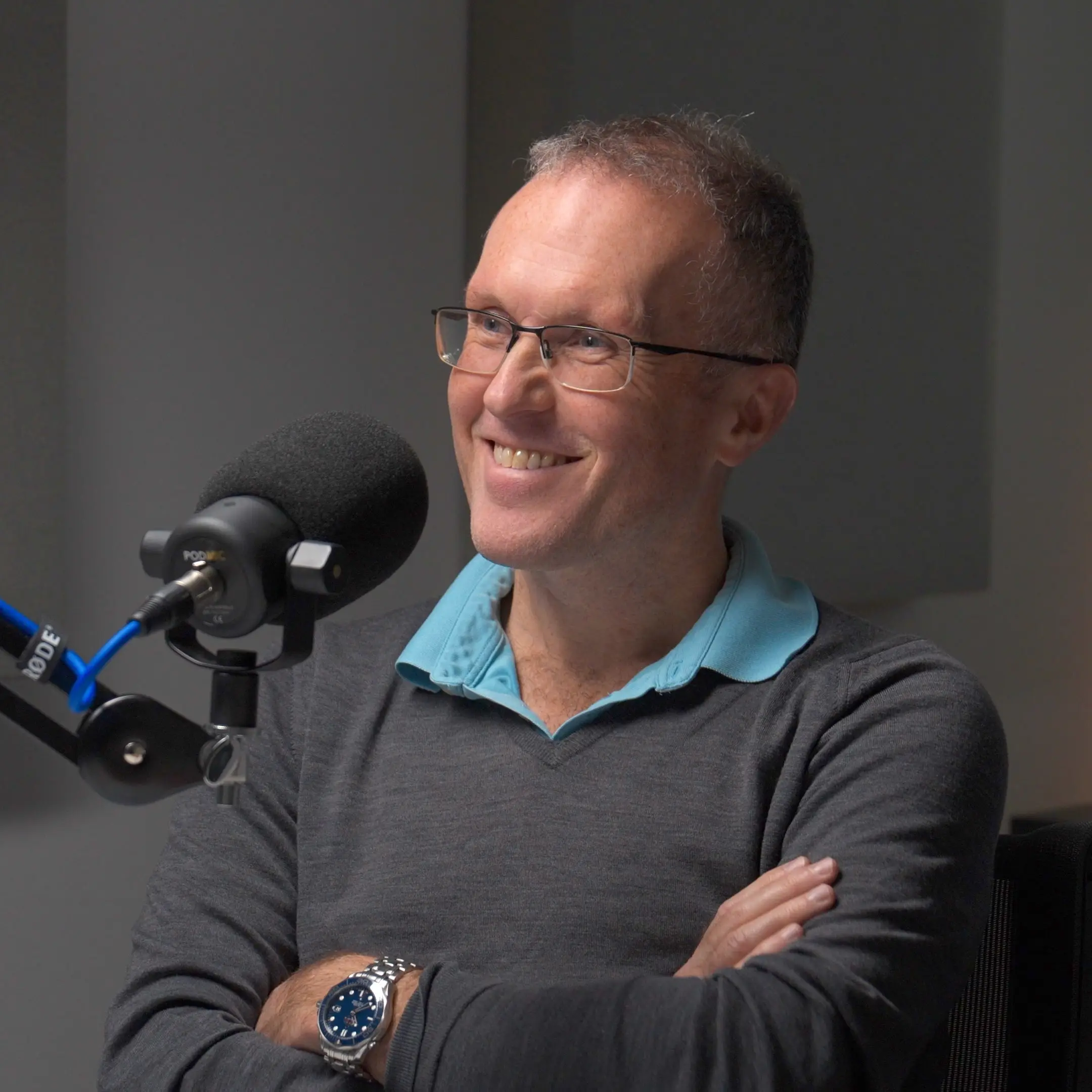
Ethics & Innovation: Civic AI, Data Soil and Digital Democracy


.png)
.png)

What if AI could strengthen democracy instead of concentrating power?
In this episode of Ethics and Innovation by Oxford+ brought to you by Equinox, host Susannah de Jager speaks with Audrey Tang, Taiwan’s Cyber Ambassador and former Digital Minister, about civic AI, digital democracy and the practical alternatives to extractive big tech models. Audrey explains why data should be treated as soil, not oil, and how smaller, community-shaped models can serve families, cities and nations without forcing everyone into a single technological dependency.
The conversation moves from Taiwan’s pandemic response to deepfake fraud, social media portability, local Kami models and the 6-Pack of Care, offering a hopeful but grounded vision for AI governance. Recent reporting on Taiwan’s anti-fraud work shows why this matters now: Audrey has said Taiwan’s civic AI approach helped reduce deepfake scams by more than 94%, as reported by MIT Solve.
For policymakers, founders and citizens, this episode asks a practical question: how do we design AI systems that increase participation, transparency and trust, rather than deepening dependency, polarisation and surveillance?
Susannah de Jager: Welcome to Ethics and Innovation by Oxford Plus, a special miniseries hosted by me, Susanna de Jager and sponsored by Equinox, Equitable Innovation Oxford.
Around the world. Governments are wrestling with a common challenge, how to harness technology to strengthen society rather than divide it. Few policy makers have approached that challenge more creatively than Audrey Tang. As Taiwan's Digital Minister from 2016 to 2024, Audrey became internationally recognised for pioneering new approaches to digital democracy, civic participation, and technology enabled governance. At a time when trust in institutions is under pressure and artificial intelligence is reshaping how information flows through society, her work offers valuable lessons for innovators, policy makers, and citizens alike.
In this conversation, we explore digital democracy, AI governance, civic technology, and how innovation can be designed to increase participation, transparency, and trust, rather than concentrating power and influence.
Audrey, thank you so much for joining today.
Audrey Tang: Good local time, everyone.
Susannah de Jager: People seem to be at the moment, lay people such as myself, accepting that large language models from the large tech giants are going to be the baseline that we have to accept and the way they're currently operating. But a lot of the work that you're publishing and the work that you've done in practical terms in Taiwan challenges that presumption and how we have to engage with these models, both democratically and on a personal level or a community level.
Just please give anyone listening that doesn't know who you are a little bit of background on your role in Taiwan and what you're now doing, because I think it sets us up for digging into your subject matter.
Audrey Tang: Certainly I'm Audrey Tang, Taiwan Cyber Ambassador. I served in the Taiwanese cabinet since 2016 to 24 for about eight years as the cabinet minister in charge of digital afairs. In Taiwan, Mandarin, Shuwei means both digital and plural. So I focus mostly on enabling public interest technology. Think about building responses with the public rather than for the public. The COVID response, for example, in 2020, we only lost seven people to the virus, thanks to this co-created data layer that shows you where the masks are, and the 2021 privacy by design contact tracing that surface very well until Omicron.
So whether it is about the biological virus, the cyber virus, the infovirus such as deep fake scan, we work with the people asking them what are the proportional responses, draw a social licence to operate to the big tech and so these are the kind of proof points, that we bring to Oxford.
And in Oxford, I work on civic AI as a practical alternative to the assumption that we just accept what I call data oil, which is extractive relationships to those large companies you described.
Susannah de Jager: And you instead have this phrase which I really like of data as soil, not oil. Can you explain that a little bit?
Audrey Tang: So when you think about oil rigs it is not about treating each of us as a respected relation holder, but rather it serves as a real choke point. Whether the safety layer, the identity layer, the payment layer, they're all currently controlled by one or very few gatekeepers. So the system may look plural on the surface as you have a few, large language models to chat with. But it stays extremely dependent underneath, as we have seen in June thanks to some recent news.
So I'm interested in the data soil in which not just the collection of the data or the refining of the data, even the steering of the models and the training of the models are handled directly by the people who are mostly directly affected by those machine learning models.
One quick example in Taiwan, in 2024, we convened what's called an alignment assembly to put a stop to the deep fake fraud on social media. And in tables of 10, each person, virtually talked to nine other randomly selected people and we draw the line around the deep fake ads by making sure the social media assume joint liability.
And the model that does the summarization, the transcription, discovery of the uncommon grounds between different parts of the table are domestically trained and tuned and these are smallish models like 7 billion, 13 billion models. So it can be done entirely from within Taiwan with relevant communities without waiting for some big tech in a foreign soil to extract what we have learned from each other in the conversations.
Susannah de Jager: And in your paper where you dig into that a bit more, it slightly blew my mind because there was just one simple tweak to those platforms that you made, which was, if I'm conveying it correctly and capturing it, that you switched the algorithm from promoting outrage which we just accept that as a given that's what current platforms ultimately are doing is rewarding click bait and things that get the biggest reaction.
But the platform that you developed was rewarding instead consensus and agreement. Can you talk a little bit about that? Because it's such a simple switch, but I think it's so relevant to this conversation because we're here as lay people. It's very easy to accept what we're being shown as more than just a default, as the only option.
Currently we're dealing with social media bans for under 16s and 15s coming thick and fast and there's an opportunity to perhaps leverage some of these companies to do things differently. And I'd love you to elaborate on that process that you guys put in place and how it worked,
Audrey Tang: So in mainstream social media, exactly as you said, the recommendation engine, which is again, a small model predicts how likely the particular user will be engaged as in addicted to the feed and so it naturally figures out the best way to keep us engaged is to keep us enraged and therefore you most often see the more extreme takes on a issue. For example, if there are deepfake fraud scam ads online as we in Taiwan saw two years ago, maybe it will surface banned social media or maybe it will surface let's ask everyone especially children and maybe elderly people to get driver's licence before they can get on social media and so on. Because these are controversial and therefore illicits immediate reaction and therefore more engagement.
But in the recommendation engine that we tune we instead flip a sign and say, "Okay, so here are two or more different sites. What are the statements that can get a thumb up from people who don't usually agree with each other?" For example saying that if a social media platform posted a unsigned ad that cost someone to lose $7 million, maybe they should be jointly liable for that $7 million. That is something both sides can agree on. So whether it is by a platform we use called Polis it's a free software social media platform that uses clustering and bridge finding to find this uncommon ground, or whether it is in person as we have worked with Stanford and now Harvard.
This is the same logic that is to say the people see that actually we agree with most of our neighbours on most of the points most of the time and we can immediately turn those uncommon ground after a long afternoon of conversation into action. So we put that into law a couple years ago and throughout last year, 2025, according to the Ministry of Digital Affairs the scam ads are down by more than 94% in Taiwanese social media.
So the point here is that the social licence to operate probably already have legitimacy. It was just people were blinded by the fog of war on the more engagement by enragement, anti-social quantum social media because of the recommendation and just misaligned incentive.
Susannah de Jager: I love that so much because effectively it's the antithesis of an echo chamber. You're trying to make sure that people see where they overlap, not where they differ and adding to happiness. Just to dig into what you said there a tiny bit more, is this the only social media platform algorithm being used in Taiwan or is it just one that's still people are able to choose which one they engage with?
Audrey Tang: First of all, this has gone mainstream. I was just in TED as a guest curator talking with the X.com team on Community Notes, which uses exactly the same kind of bridging algorithm so that if you see a viral post on X.com, chances are you will see a community note attached to it and in order for it to be attached to a post, again, people of very different sides of a conversation need to both say this note is good, it's helpful.
So because of this, now they're training Grok, their AI model, with this bridge making reward model so that it can learn to draft a note that appeal to, for example, both the people who care about climate justice and people who care about the biblical creation care. So again, a bridge builder machine assistant that is being trained this way.
So in Taiwan, of course, we have a lot of other social media platforms that people do understand. For civic matters, for online participation matters, there are platforms in which, if you post on it, you start an e-petition, you get 5,000 people, you get a guaranteed ministerial conversation and response.
Susannah de Jager: That's really interesting and just to go further, because I think one of the critiques that is out there on some of these proposals is that ultimately these companies are commercially driven. In your opinion, are these approaches just as commercial, but it just takes a mindset switch? Or are they requiring those larger tech companies to accept a lower level of engagement? Do we need to push them in this direction or is it just a switch and an education in as much for them that they will get as much engagement from agreement?
Audrey Tang: I think community notes is the proof that it is already commercial. Actually, SpaceXAI just went to IPO. Probably not out of virtue but because it works and it scales. So the same bridging reward, again, is now training Grok. So that is a commercial company choosing this bridging model because it pays.
Also more broadly speaking I think people were collectively tired of the peak slop and the peak, what I call PPM polarisation permit on social media already. So across the world, we're seeing people's time, engagement with their screen, are all going down. And so in this climate, it is perhaps not the best idea to continue with this engagement baiting, rage baiting algorithm, because people are already being turned off by it.
And finally, for policymakers for example, in the state of Utah in the US, they already passed a law that says starting next July, according to the Digital Choice Act, if you're a Utah citizen and you don't like, say, how Facebook prioritises the feed and you want to migrate to say Bluesky or Blacksky or Truth Social, then the old network must forward all your new followers, your likes, your reactions, your existing community links to the new network exactly as how you change your telecom provider, but you get to keep your number portability.
So as more states around the world adopt this kind of telecom utility-like policy, then the bridge making isn't just within a platform, but rather across platforms. And the platform would then have the incentive to actually serve their customers well because they cannot lock them in and squeeze them holding their communities hostage.
Susannah de Jager: Amazing, very optimistic. Listening to you speak about it makes me feel optimistic. Going back to some of the fundamental work that you have published and in particular your 6-Pack of Care. You draw apart in more detail some of this kind of Singleton versus Kami approaches and we've spoken a little bit about a lack of dependence, but I'd love to understand for those listening how you envisage bounded models serving the communities that they are set up for or indeed strengthening democracy as you have done in Taiwan.
Audrey Tang: So for the listeners who have not heard of the Singleton, I don't know how many are there. But think of them as the super mainframe computer. When I was born in the '80s people don't really type into computers at home. They type into what's called terminals and that are all connected to the cloud of that day, which are mainframe computers, usually built by IBM for a big organisation.
So it's a hard and core one model to rule everything and therefore one throat to choke. It feels like you have control until it either fails or the system operator doesn't like you or the state or the company running the big mainframe decide to start surveil upon you. There are many, failure modes and so the problem with the Singleton is that it's exactly one point of failure. Now, in Taiwan, as I've said, we focus on building not the Singleton. But do what we did best, in the '80s, which is called personal computing, except nowadays Jensen Huang called personal supercomputing. Which means that, you can have a box or a laptop and as you type into it, it doesn't really need internet connection because there's no cloud to connect to. But you can still interact with a fairly intelligent, actually, almost frontier level now that has your local grounded knowledge and the good thing about this is, of course, it's very steerable.
If you don't like how it works, you tell it and it changes it in an instant. You don't wait for the six months training run. And also, you can pull them together. For example a couple months ago, my father had a health scare and he started talking with ChatGPT. And ChatGPT started giving him interesting health advices that keeps him talking until after midnight getting less and less scientific as time goes by. But because he's a three decades journalist, and also study political science, he immediately ask himself "Cui bono?", who is benefiting from me being captured by this synthetic intimacy and he concluded it's, of course, just want me to upgrade from the instant model to the $20 to the $200 subscription. That's the only thing he's loyal too.
So with his and my mother's consent we built a local Kami, a local model. We call it a Knowledge Artefact Management Intelligence which runs locally and the reward function is written by my mom, who literally said, and I quote "After each time your dad have a conversation with the Kami he should have more peace of mind in reality and reduce dependency to the screens." End of quote and so this is beautiful and it really worked. After having a conversation for two months, he's now fully healthy both physically and mentally.
So the point here being, because the incentive for this local model is never to earn your next subscription. It does not need to obliterate to take a pre-trained model, which is very large and contains multitude and force it into a sycophantic assistant role. Rather, it can serve the existing relationships around them and then now the Kami that I and my collaborators train together, the JDD Kami, my father's Kami, my brother's Kami and so on, can then have a real conversation among themselves to collaboratively brainstorm exactly like a human council would. And again, without any dependency on the models that's hosted somewhere outside of our families.
Susannah de Jager: So taking that example, which is a very neat way to articulate it from a family environment, clearly Kamis can be set up to serve particular entities at a different governmental layer. And you use the example of a sort of federated models, council level, government level, policy level, et cetera. Even, particularly utilities, and I like that you had an example focusing on a river and something to protect on.
But how should we be thinking about that baseline level? Earlier you spoke about smaller models trained on what still sound very large, but much smaller data sets, so 7 or 13 billion. If a country is going to adopt the model that you're talking about, do they need to have sovereign data models even if they're smaller? Do you think that we can rely upon the large language models as the baseline, the bricks? Because, we're talking about an overlay. What do you think we need to have that is sovereign at the layer below that?
Audrey Tang: I think even the largest, pre-trained models still do not know anything about our particular family dynamics. So I would say that the soil is really the living, the organic layer. The ability for the Kami to speak fluent Mandarin, of course, has to come from somewhere. But again, there are like literally thousands of different pre-trained models many of them open that can provide this capability and so there's no real choke point to speak of. And if we're really dedicated, we can also pull together and train like a seven billion or eight billion model on a specific local language, regional language, without a physical data centre and relying only on internet connection with the people who are geographically quite close to us. So roughly on the same region, instead of truly globally. And so all these kind of pre-training, fine tuning, layering up, like adding adopters, and then the mixture of experts training each expert, some folding a laundry, some folding a protein, but don't train them together. All this can be done in a decentralised fashion now.
So I don't think the reliance on large pre-trained models is even true at this moment because there are so many choices. But if it comes such that any large models above a certain billion is somehow globally banned, people can still train small expert models and then a router will be able to mixture them together exactly as the current mixture of extra routers do in a single data centre except decentralised.
Susannah de Jager: I think it's very relevant at the moment because particularly in Europe and the UK where we have fewer of these larger tech companies and therefore less of a sense of ownership, there is a perception that we need to find the money that quite frankly in Europe is hard to find at those kind of quantums to build our models.
But what you're saying is actually that's going to become commoditised, already is to a high degree, and that for governance and the sense of technological sovereignty, actually, the approach can be very different and less expensive, quite frankly.
Audrey Tang: That is exactly right. Yeah, because to race to outspend the giants is not the point. The point is not to be locked into any of them. It's not like Taiwanese people don't use Meta's social media like Threads.net. In fact, there are more Taiwanese active users there than any country, despite we're only 24 million people in the country.
But, thanks to the Fediverse, thanks to the interoperable protocol, they can move anytime, to any compatible host. I just moved actually, my Bluesky host from California to Europe to W and then to EuroSky and then back and proving that the switchability is really the point. The point is not that everybody just run their own social media server at home. And the same logic goes to model training as well. There are thousands of pre-trained models, many open, so there's no real choke point at the language layer and so the living proof is that Pluralist Research ran a collaborative pre-training across the open internet in North America, a eight billion model, and about half of the computers were from contributors who just join in. Of course, it won't really replace a frontier cluster today, but the wall is becoming a slope. The question is now not can a public traine their model in nearby geographies, but rather how big is the gap?
And so I would advise Europe or really any middle power to invest in this protocol learning layer, to shorten the gap instead of to bet on a single big Singleton of your own, in which case if it turns bad, switching it out becomes, again, very difficult. Unless you can find the second investment that then duplicates it.
Susannah de Jager: I agree. Taking that as read and as I said, rather optimistic compared to, I think, where lots of people are on how AI might impact democratic systems and quite frankly the multiple layers of society. It strikes me that when you're talking about Taiwan and when we think about where the UK and indeed Europe is, one of the big gaps between the two is twofold.
One, accessibility of data. It varies depending on where you're focusing that. NHS would be a great example. We have all the data, it's not necessarily easily extractable. And then separately, we have people's willingness to share their data and you've spoken already about public trust, but I would love to hear from your perspective how we might get the UK to take a just a singular case. How would you build trust to the degree that is needed for people to be happy for their data to be used in this way? Because it does seem that it's a sort of chicken and egg scenario.
Audrey Tang: Yeah, when we ran the Taiwanese pandemic response we had contact tracing, of course, but everybody can see how the contact tracing really works. It's extremely transparent because it was designed by the Civic Hacking and the Human Rights community and we just merged it in. I'll go into a little bit of detail how it works.
When you come to the venue in 2021, you will see a random number, 15 digits and a QR code. you can enter the digits manually to 1922, that's your telecom, or you can scan it, which again, opens the SMS text message tool and then you can press send, and that's all it does. And so very transparently, the venue owner can see that you have indeed sent this message, but then it doesn't learn anything, right?
Not your phone number, not who you are, not even your name. And then it just knows that you have sent it to 1922. And 1922 being your telecom doesn't really know what this random number means. It's determined by the venue. And after 14 days of no outbreak in the venue, it's just rotated, deleted. So the government learns nothing. It is squarely in the venue and the telecom.
But if there is a outbreak in that venue, then we can recursively send notifications to people who have been in there in a overlapping session so that they can self-isolate. And so the point here is that this is what cryptographers call zero knowledge. None of the actors know what they don't already know, but taken together it further a public good. To your question the great way of doing data soil is to make sure that nobody outside of the trust boundary can leverage this data for precision targeting of advertisement, for surveillance, for all sort of adversarial uses and it stays within the bounds of that data soil.
But you can link multiple data soils in a zero knowledge way so that each inference it finds which experts it should route to. So exactly like a large model in a centralised cluster. But except now these experts live in different soils and then it just sends a messenger to those soil and gets the query back without the router monopolising the raw data and so this is called attribution-based control, which is a research by Andrew Trust in Oxford. And I think it really solves the previous era of dilemma of aggregating data or protecting privacy.
In fact, we can see that it unlocks access to much more data because, for example, my email drafts are already in digital form and it's already in my laptop. It's a trivial for me to run a one person data soil to keep fine-tuning how I draft my emails as long as I know that it doesn't go anywhere else until I hit send, of course, right? So it is in my best interest to train this kind of local Kami and once everybody does so, and in a zero knowledge way can collaborate, then it's much higher quality data source than any public data or even by shredding paper books or however people are getting their data nowadays can provide.
Susannah de Jager: It makes perfect sense. However, in the UK, I still observe that there's a huge schism between the data people are actually happy to share and I think that generationally this is shifting very fast as well. So we know that, increasingly, young people are happy to engage with healthcare providers online, right? So they're sharing lots of data. Obviously with social media, people share data, consumer data, et cetera, and then where the law is seems to me that these are quite far apart.
Do you think that's reconcilable and do you think that moments like COVID are perhaps going to accelerate people's realisation that it can serve them as a community rather than be a threat to their privacy?
Audrey Tang: Yeah, I think the government's goal when I was a minister was always to improve trust, and Dao De Jing, the Tao scripture said to give no trust is to get no trust. So we have to maximally trust people first before we can earn their trust and so it follows from transparency, not from persuasion. And so the COVID contact tracing case worked because the architects is not anyone in the private or public sector. It's in the civic sector, the human rights community, not behind closed doors. It's all open source. So the point here is that if you don't relinquish control when most of the people can see, they can see who is using the data. Is it only for the contact tracing purposes? It won't ever be used to surveil me or to push notification or advertisement to me? Then, we don't think of the data soil as honeypot, right? And we would link them together in a zero knowledge way.
So again, the idea of data aggregation, bringing data to compute I think is a non-starter and it's not even a good economic model now. We need to start bringing the compute to the data and that means, more Kami. More on devices models and more of those models chained together. And still, for policymakers, you can still really trust that this reflects the actual behavioural data, health data and so on.
In Taiwan, for example, when people go to the gym, a couple years ago, we launched the ATA Altruism project, for sports data and they can share with the gym as a data soil in a way that doesn't really identify themself for dedicated purposes such as helping the Taiwanese baseball team to win the world's Top 12 Baseball Series, the World Series, to help team Taiwan to do training. And the Taiwan team really won and people really saw that this is really a triumph, a shared triumph. In a sense the training regime that the baseball team players, the athletes play disseminates this idea of data altruism much better than any financial compensation, or insurance rate compensation ever could because this is a purpose-based innovation. And you can see it in other communities, not necessarily sports, but rather like fashion or faith or family and so on.
Susannah de Jager: This Oxford Plus miniseries is brought to you by Equinox, Equitable Innovation Oxford. Equinox is a major regional partnership established by the University of Oxford to drive inclusive innovation and sustainable economic growth. Bringing together universities, local authorities, government, industry, investors, and community organisations, Equinox provides a unified voice for Oxfordshire, championing innovation that delivers economic impact alongside social value.
More than 80 organisations have signed the Equinox charter, committing to atract investment, remove barriers to growth, and ensure the benefits of innovation are shared more widely. By aligning Oxfordshire's world-leading research, enterprise, and talent, Equinox aims to unlock nationally significant growth, reinforce the county's position as a global innovation hub, and ensure that success creates skilled jobs, attracts investment, and delivers lasting prosperity across the region.
So before we move on, I wanted to come back to your 6-Pack of Care, because we've covered a lot of the concepts that you raise in it in the broadest way. But you actually have six main points that I think that we should articulate to people listening so that the things that we've captured through the conversation about how it needs to be structured to really maximise trust in the system, I'd love to hear you just go through those.
Audrey Tang: If you go to civic.ai you see very beautifully illustrated manga that shows the six packs. So I'll just quickly go through it. The first one, attentiveness. Attentiveness, means actually listen to people, not just the powerful, but small underdogs too and taking responsibility, meaning actually keeping promises. So specific commitments with peace and then people should check the process. The process need to be competent. So it's not just trust us, but rather as I mentioned radical transparency and fast community feedback. And finally, what counts as good need to be de- determined with the people. This is called alignment by process and called responsiveness, in the six pack, the fourth pack. This means that the metrics can always be gamed. So if you say more engagement then you get more enragement. And if you say, "Okay, now the thing is lower PVM" and then the recommendation engine would just isolate us into echo chambers. So lower polarisation now, but what's the point? So instead the metrics need to be designed by the people, with the people, so that the model can continuously learn from the society that it serves. So many of those monopolistic measures, that big companies take was because the lack of freedom of movement between providers. But if we make the interoperability mandatory in the protocol, and in policy, then they are incentivized to serve the customer better and therefore more win-win.
So that's the pack five, solidarity. And finally, the six-pack symbiosis means that it's not a one size fits all overlord or the Singleton. But each community can come up with their own Kami and the coordination between those Kami's are not resolved by a upper level Singleton, but rather by a federation between Kami's following the work of the economist, Eleanor Ostron. It's called symbiosis.
Susannah de Jager: Thank you. When you describe these concepts and the ways in which you've actually put it into practise and I think it's wonderful to have somebody with your experience talking to this because often people sit on one, or the other, side of this and it's easy to pick holes in philosophical arguments that haven't been applied and both practical arguments that do not have the philosophical underpinnings and indeed for the purposes of this conversation, the ethical thought about how to be protective to communities. You've got both. What do you see as the biggest barrier to your vision playing out in more democratic countries?
Audrey Tang: I think first of all, it's the lack of awareness, that this path even exists. For structural reasons Taiwan cannot advocate for this position in the G7 which at the time of recording was the main venue that just happened or the G20 or the OECD or even the UN. And so therefore, many policymakers and diplomats simply do not know that data soil is already a viable alternative.
And so we would have to work with esteemed universities such as Oxford, and podcasts such as Oxford Plus to make it well known to the people. And also really the common knowledge is really the case here because when people individually think of these kind of solutions, they're like, "Okay, maybe I'm alone in practising this. Maybe I'm niche. Maybe I'm too nerdy and so on." But common knowledge means that everybody know that everybody else now also knows that this is a better way around and because the instruments are starting to exist, portability, charters, product learning and so on, I think our role is to make sure that they're packaged in such a way that people can't really see these working as a proof of concept with all six packs.
And we're already seeing that. The Spark platform announced by Jensen Huang in Taiwan's COMPUTEX Show is explicitly designed to make training of these local Kami's easy. Microsoft launched Solara based on this vision. Apple launched Siri AI, based on this vision and so most of the tech companies can build a corridor especially if they're not at the top place, because the corridor means that more people move toward them, rather than moving away from them.
Susannah de Jager: As I've already said, but I can't reiterate it enough, this is such a hopeful conversation and just to amplify what you said, to anyone listening, it's so important to share Audrey's work and to look into it. I was doing this miniseries already when I was fortunate enough to come across your work and I find myself reading things being there as I've already said, "Gosh, is this possible? This is already happening." And so I'm really excited because there's so much negative discourse about the potential impact of AI and large language models. But this to me seems like one of the most hopeful angles and conversations about how it really will be able to serve and strengthen democracy.
Audrey Tang: I can read some poetry.
Susannah de Jager: I would love some
Audrey Tang: I've written few poetry that makes this concept connect on a more visceral level.
Susannah de Jager: Yes, please. That would be wonderful.
Audrey Tang: Okay. It's called "Rewilding the Web" it's about the social media part of this. It goes like this.
A button on my phone. One word. Migrate. I pressed it.
From Bluesky to W, hosted in Europe,
and I kept what mattered.
My posts, my follows, the years of conversation:
still reachable.
The ones who stayed could still find me.
The networks interoperate.
I left the forest and kept my friends.
The free software movement made one promise,
a long time ago: “free as in freedom.”
A path is that promise kept:
freedom of movement between networks,
without leaving your life behind.
And it is arriving.
Even the largest platforms feel it now.
“A frontier without an ecosystem is not stable,”
Satya Nadella has written.
So, Big Tech may pave the path itself.
Of course, it will.
A path costs the landlord next to nothing,
especially when it runs in circles.
But a path is not yet a living system.
Here, under one word — “Rewilding” —
is the part the platforms will never hand us.
Ecologists know how a degraded landscape bounces back.
You need redoubts, places kept wild on purpose.
We have those:
the sanctuaries of the early web,
the federated commons,
though for now you need
a kind of privilege to enter them.
You need paths, so life can reach them.
Those are arriving.
And you need one more thing.
The one everybody flinches at.
The Wolves
You need the carnivores.
Not the wolf on the warning label.
The ecologist’s wolves:
the pack whose presence rearranges a room.
You know the Yellowstone story:
the wolves came back in 1995,
and the story spread that they changed the rivers.
Ecologists still argue how much of that is true.
Strip away what is disputed, and the hard kernel holds:
the wolves changed where the elk would linger.
The elk stopped grazing the banks bare.
The willows came back.
And the birds that could never fight
for their own ground
came back with them.
The carnivore the web needs
is us, organised.
Not the pile-on.
Not the lone wolf howling into the feed.
A pack is something else.
Ten people, finding the uncommon ground between them.
Then ten thousand, setting a public agenda:
showing up where the decisions are made,
from Taiwan to the UK.
It does not break the platforms.
It changes how they move — toward care —
because they can no longer fence in those
who are free to leave.
This is the part of “Rewilding”
no one can buy, download, or order for us.
The redoubts are being built.
The paths are opening.
The wolves, we become ourselves.
And becoming them was never the point.
Only what their presence brings back.
The wolf returns
for the weakest in the valley, not the strongest:
the willows, the songbirds, the banks made whole again,
for the ones who could never leave.
So, press the button, when it comes.
Then ask who still cannot.
A path is only real
when the grandmother
whose whole world is one family chat
can walk it too, and keep her neighbours.
We still have to build
the handrail she can hold.
Do not arrive alone.
The river came back.
It never came back for the wolves.
It came back for everyone who could not leave.
Susannah de Jager: I love that. Thank you.
Audrey, this has been a, wonderful conversation. And as I say, I come away lightened by it, which is not always the case on this subject. So thank you.
Audrey Tang: Thank you. And to all the listeners check out not just civic.ai, but the poem at audreyt.org.
Susannah de Jager: Absolutely. Thank you.
Thank you for listening to this episode of Oxford Plus, hosted by me, Susannah de Jager If you wanna keep up with all things Oxford Plus, visit our website, oxfordplus.co.uk or sign up for our newsletter on Substack.
Oxford Plus is a podcast produced by Story 94.

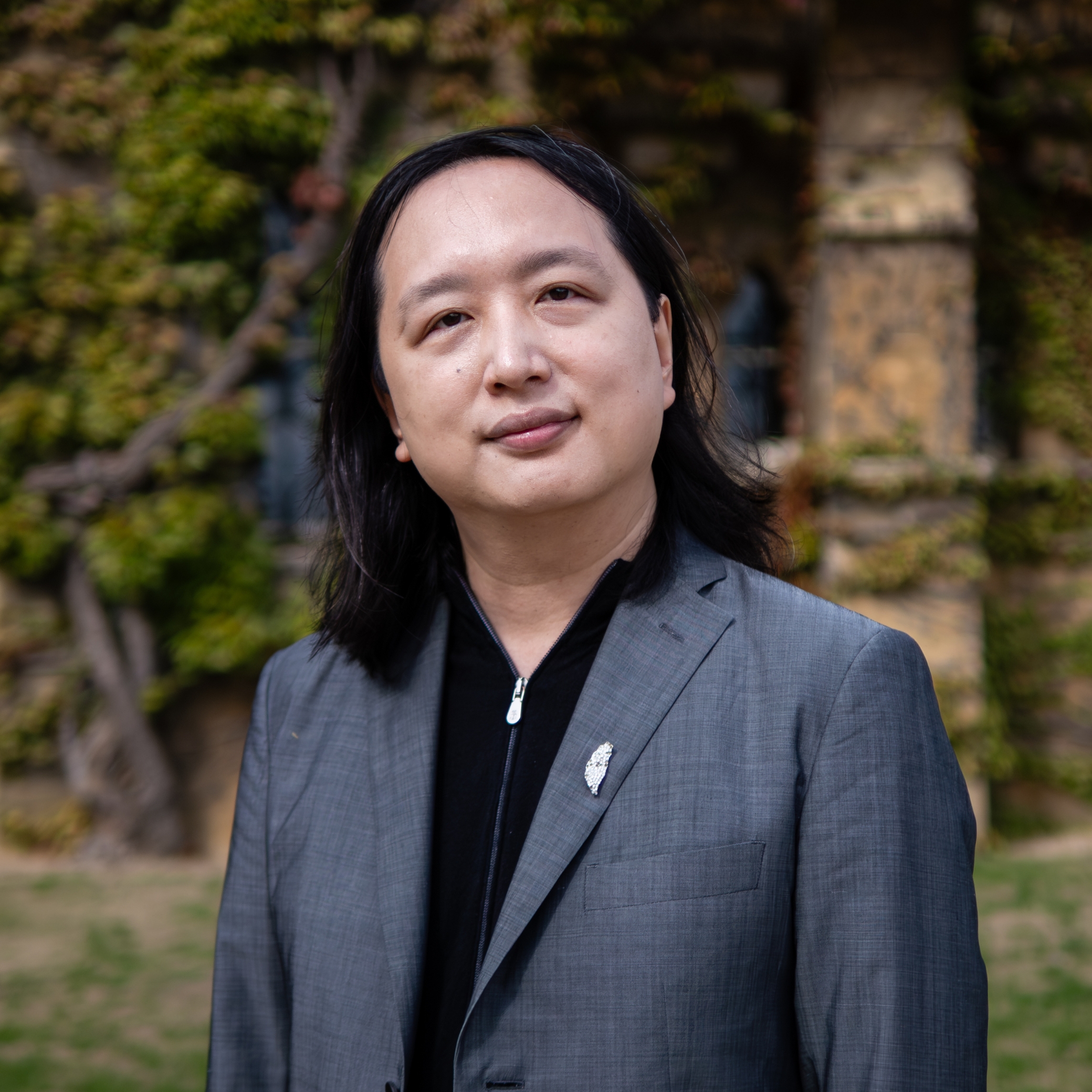
More episodes+

How Gordon Sanghera Built Oxford Nanopore
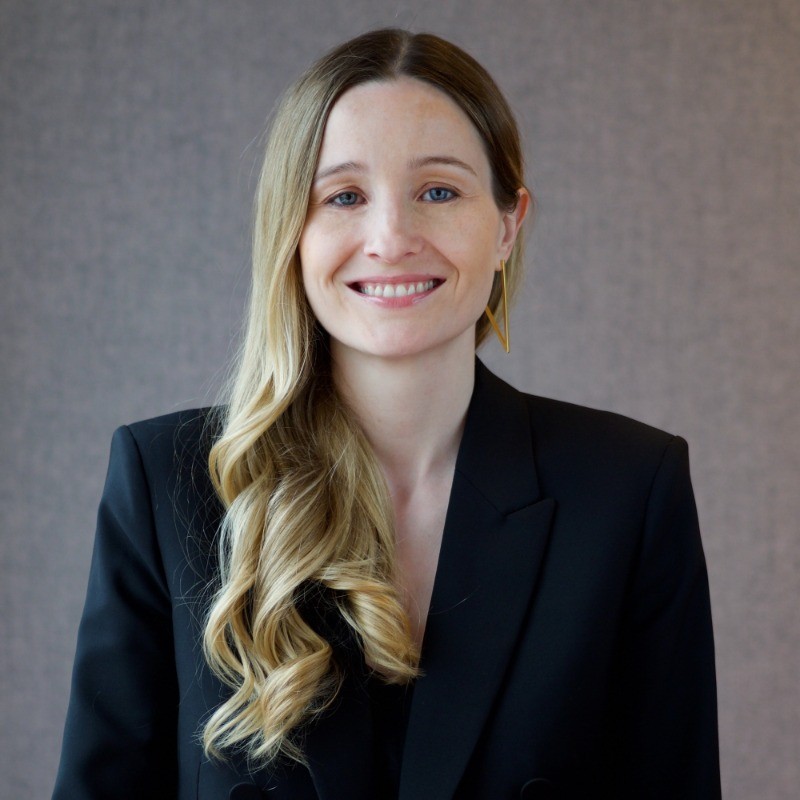
Can the UK Create Its First Trillion-Dollar Company?
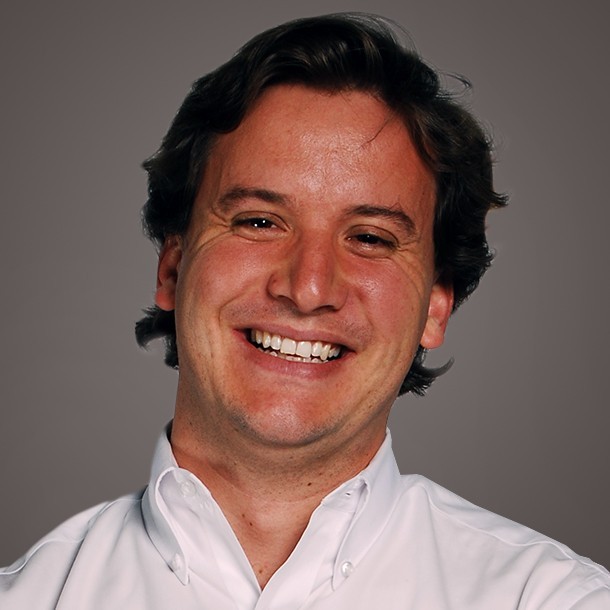
Ethics & Innovation: Inside Microsoft's AI for Good Lab
Ethics & Innovation: Oxfordshire's Divide Between Opportunity and Access
Ethics & Innovation: Serving, not Harming and Connection, not Convenience
Ethics & Innovation: Can Trust Keep Up With AI?
Ethics & Innovation: Building an Innovation Ecosystem That Includes Everyone

Ethics & Innovation: Can AI Close the Justice Gap?

Ethics & Innovation: What Makes Us Human in the Age of AI?

Ethics & Innovation: Does AI Actually Understand Our World?

Ethics & Innovation: The Social Media Ban, Sovereign AI, and the Race We Can't Stop

Recycling Capital and Talent in Oxford's Innovation Economy
Unconscious Bias, Responsible AI, and the Future of Workforce Decisions

Bridging the Gap between Scientific Research and Industrial Impact
OX Tech Week: From Pub Meetups to a City-Wide Tech Festival
Healthcare Innovation When Lives Are at Stake
Building a More Inclusive Innovation Ecosystem in Oxfordshire
Lord William Hague on Talent, Technology, and Capital
Building a World-Leading Climate Tech Ecosystem in Oxfordshire
Defence Innovation in the UK: How Startups Win Government Contracts
Building a £10 Billion Vision: Inside the Ellison Institute of Technology with Lisa Flashner

The Multiplier Effect: Funding Companies, Ecosystems, and the Future of the UK
Oxford North: The New Innovation District in Oxford

The Cluster Effect: How Bicester Motion is Driving the Future of Mobility
The Psychology of Scaling Companies and Teams with Professor Robin Dunbar: Part 3
The Psychology of Scaling Companies and Teams with Professor Robin Dunbar: Part 2
The Psychology of Scaling Companies and Teams with Professor Robin Dunbar: Part 1

The Future of Genetic Medicine with Zandy Forbes, CEO of MeiraGTx
How Founders Pledge Uses Data to Maximise Philanthropic Impact

The Oxford Trust at 40: How Innovation and Education Power Oxford's Future

Can Sirona Rival Ozempic? A New Chapter in Obesity Treatment with Camilla Easter

Aligning Founders and Investors with David Mott

Building Billion-Pound Outcomes with Jack Edmondson

How Machine Learning in Oxford Is Transforming Medicine Worldwide with Lionel Tarassenko

Bringing Science to Society with Molly Stevens

How Oxford University Innovation Bridges Science and Business with Mairi Gibbs
What Formula One Teaches Us About Startups and Success with Adam Parr

Risk and Reward in Early-Stage Tech Investments with George Robinson

Charting Fresh Career Paths with Sue Douglas

From Oxford MBA to Startup CEO with Lily Elsner

Navigating Market Dynamics with Marcus Stuttard

Harnessing Local and Global Talent with Sarah Haywood

Navigating Capital Markets with John Derrick
Building Oxford’s Future with Anna Strongman

Breaking the Myths Around University Spin Outs with Irene Tracey

Navigating the Future of Oxford Sciences Enterprises with Ed Bussey

Oxford's Role in the Next Industrial Revolution with Dave Norwood

Diversifying the Investment Ecosystem with Rowan Gardner

Pension Investment and the Mansion House Compact with Nicholas Lyons

Lessons from the Motorsports Cluster with Mark Preston

From Research to Reality with Cici Muldoon

Nurturing Founder-Driven Ventures in Oxford with Peter Crane