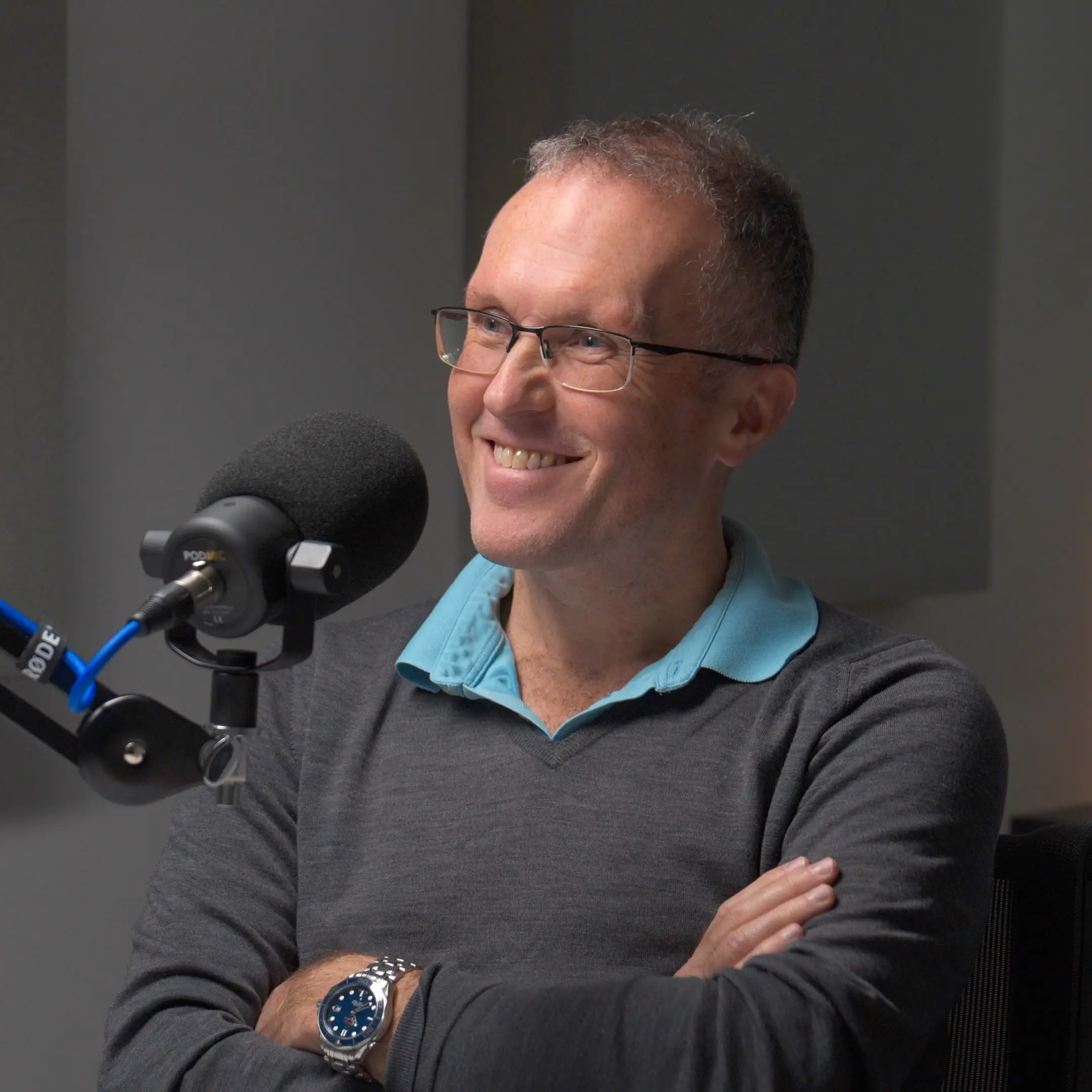
Hermann Hauser on Europe's Scale-Up Gap and Keeping Its Unicorns at Home


Why does Europe keep producing breakthrough science and then lose the companies built on it?
In this episode of Oxford+, host Susannah de Jager speaks with Dr Hermann Hauser, co-founder of Amadeus Capital Partners and co-founder of Arm, about the gap that has defined European innovation for four decades. Europe creates more startups than the United States and produces university research of comparable quality, yet its scale-ups still cross the Atlantic for the later, larger rounds. Hermann sets out what he believes would change that: a working Scaleup Europe Fund, pension capital permitted to take risk, faster movement of management talent, competitive pay and share options, and a European exchange deep enough to take companies public at home.
The fund was formally established in August 2026 with a €5 billion target, and Dutch pension fund ABP has since committed €250 million as the first step of a €1 billion programme. He is candid about Arm itself, naming three costly mistakes, and explains why his forthcoming book argues that sovereignty means the retention of choice. His conclusion is blunt: it's technology, stupid.
Susannah de Jager: Welcome to Oxford Plus the podcast focused on innovation around Oxford. We look at everything across the ecosystem, the institutions, the people, the technology. If you need to learn anything about Oxford, whether it's how to take a first step in through the door, or as an experienced investor wanting to go deeper, this is the podcast for you. Europe can build world-class technology. What it struggles to do sometimes is keep it. Few people have seen both sides of that problem as closely as Dr. Hermann Hauser. Born in Austria, he did his PhD in physics at Cambridge and co-founded Acorn Computers, the company behind the BBC Micro. In 1990, Acorn span out Arm Holdings, which he co-founded and whose chip designs now power almost every smartphone. In 2016, Arm was sold to Japan SoftBank for $32 billion. It is Europe's greatest technology success, and one of the clearest examples of value moving abroad.
Hauser went on to co-found Amadeus Capital Partners. He's a former member of and an advisor to the European Innovation Council and is now a director of the new five billion Euro Scale Up Europe fund. The fund made its first investment in August anchored by one billion euros from the European Commission alongside pension funds and insurers from across Europe. His argument is that capital is only the start. To make Europe the obvious place to scale, we also need to let talent move freely across borders, let growing companies pay competitively, put pension capital to work at scale, bring industry in as early customers and partners, and regulate in ways that help companies grow, and build a generation of growth investors who can lead the largest rounds. Get that right, and the companies choose to stay, bring the jobs, tax, and know-how with them.
He argues that the stakes are now strategic. If Europe can't scale its own technology, it will be left in the domain of a hegemon, whether that is the US or China. The question now has a new urgency for Britain. The UK has offered 150 million euros to join the Scale Up Europe Fund. France has pushed back and a UK EU summit is expected before the end of the year. Today, we ask Herman what Europe and Britain must fix and whether the arm story would end differently today.
Hermann, thank you so much for joining today. So if we go back to when you first wrote the Hauser report, what were you trying to fix?
Hermann Hauser: There was a problem at that time that research results that appeared at British universities had this gap before they managed to be translated to products or services in the real economy. In Germany, there are the Fraunhofer Gesellschaft that bridge that gap and create a very close relationship between the big German or car manufacturers in particular and the universities. We felt that a British Fraunhofer Gesellschaft would be the right way of solving that problem that we had in the UK.
Susannah de Jager: And you asked, not in that first report, but I believe in 2014, for 30 Catapults by 2030. And we now have nine. What happened? Did the need shift? Do you think that's the right number or do you still think that we should have had more?
Hermann Hauser: No, I think the need is still there. But on the positive side, it must be said that the technology transfer offices in our universities have actually become more effective than they were in the past and the relationship between large companies and the universities, thanks to the Catapults, has also improved. So though I'm very keen, of course, to still have more Catapults, it would be wonderful to have 30. In a way, I'm not surprised that we didn't quite reach the number 30.
Susannah de Jager: So it's been supplemented by other things kind of picking up the slack and rising around it.
Hermann Hauser: Yes, I think they have. The whole system, I as a general comment, I must say has improved enormously since I first started doing technology transfer and spin-outs some almost 40 years ago now.
Susannah de Jager: And so what are the gaps that you still perceive?
Hermann Hauser: The biggest gap that we have, not just in the UK, but also across all of Europe is scale-ups. Our universities in Europe have an output that is comparable to American universities, so we don't have a university problem or a creation of IP problem that is comparable. We create more startups in Europe than the Americans. This is a little-known fact, so we actually don't have a startup problem, we're doing very well and then we really lose the plot in scale-ups.
Out of the 12 unicorns that I've been involved in, every single one of them ended up in the US because all the bigger rounds are normally done by US companies, and then they often insist that the company moves to the US or has the headquarters in the US. So this is very detrimental for Europe, and that's why we set up the Scale Up Europe Fund that we just launched, which is five billion, probably going on to seven billion, and then in two or three years' time, probably 20 and maybe eventually 100 billion is the ambition that Ursula von der Leyen has articulated.
There is hope that we can keep some of these really exciting technology companies in Europe by also providing the bigger funding in Europe, because sometimes it needs hundreds of millions and occasionally billions. That's the real problem that we still have.
Susannah de Jager: And you spoke there about the European Scale Up Fund that you're obviously on the board of, and it's fantastic. Clearly the largest pool of capital in Europe at, I believe it's estimated 15 trillion euros, is pension capital. It's still at below, and I got these statistics from my friend Andreas Munk Holm at EUVC, who's about to lead the conversations at Slush on this, and he was saying it's still estimated to be below 0.05% of that capital is in venture of some kind. What do you see as the biggest way to educate, encourage, regulate some of that capital into this space? Or do you think it needs to be entirely optional?
Hermann Hauser: Fortunately we are very good at analysing our problems in Europe. So, one of the reasons why we managed to get the Scale Up Europe Fund, done in just one year is everybody agreed that this is the big problem, and everybody piled in once we put the cornerstone down of a billion with the EIC, and described exactly what the Scale Up Fund should do, and then, EQT, of course, we chose to manage and fund for us.
The same is true for the pension problem that you just outlined. Our problem is not the money. Fortunately, we're still rich, the 15 trillion that you mentioned, which is, at the moment, almost locked up, in the pension and the insurance industry would be, available if only the right asset allocation was made by these funds. So they need some encouragement. Fortunately, again, this is a well-known problem also across the political class. I'm pleased to report that my partner, Anne Glover, has contributed to a report in Britain that changed the law in Britain that now allows pension funds to make investments in private equity and venture capital is called the Mansion House Accord.
Unfortunately, there's still only a trickle of investments that we're seeing from the pension funds. We've got the money, we've got the money in the pension funds, we've got the money in insurance companies. You mentioned earlier that the allocation to venture is 0.05%, in America it's 1-2%. So, this would basically solve, the financing problem. If our pension funds just upgraded their allocation to this tiny percentage, I mean, it's only, still only one or 2% and it would make all the difference.
The same thing is true in Germany. There is legislation going through which hopefully from January will allow German pension funds to invest in private equity and venture capital and I know these discussions go on in a number of other European countries as well.
So as so often, we're very good at analysing our problems. We might be soon giving us the legal framework to allow these pension funds because the biggest pension scandal in the UK was not the Maxwell scandal where Maxwell had his fingers in pension funds. But the well-meaning legislation that followed with Gordon Brown, because at that time, 40% of the British economy was funded by pension funds and because Gordon Brown said, "You must make 100% sure that the pensioners get their money," pension funds then said "We know how to do this, so we just put it all into gilts." So that meant that the pension funds withdrew from the British economy, harming the British economy enormously, by far the biggest scandal, pension scandal, that has ever happened in Britain.
But not only that, because the pension money is now in gilts rather than in public markets, it shortchanged the pensioners. So the pensioners got a much worse deal by being so super cautious, and that's why we managed to change the law again and to allow that.
Susannah de Jager: Yeah. It's a lot of damage that's been done because we now sit at such low levels and do you think, you referred there to Anne, your partner, contributing to the Mansion House Accord, and Sir Nicholas Lyons, who I've had the pleasure of interviewing on this podcast. I was working on some of this alongside him as Lord Mayor as well. Do you think that it's now well acknowledged by most pension trustees that they should and could be investing in this space and what's the gap now? Is it just that they need the expertise to get comfortable again?
Hermann Hauser: I think that's exactly the problem. They are all aware of it now. There is a lot of encouragement that they get from the universities, from the government and from the venture industry. But they're so risk-averse and they have a tradition of just looking at fees as the only criterion rather than looking at returns. It really needs a culture change amongst the trustees and since so many of the pension funds are actually quite small pension funds. They just know the culture is they buy the big funds and if they invest in private equity, they normally invest in the US rather than in Europe which is a rather galling aspect of the present culture, given that European venture capital for the first time in history gives better returns than American venture capital.
Susannah de Jager: Yeah, as somebody who started her career selling European equities to institutional investors just after the financial crisis, I can confirm that people will not get fired for hiring BlackRock and they are quite risk-averse on this.
You spoke there about the returns actually being better and when you and I prepared for this call, I think you gave me some really great statistics around the ratios of startup capital, which I think is sort of, one to three, Europe versus the US, and then as it gets up to scale-up, it's one to seven. I'm always a little bit sceptical, not because it's not true, but, effectively, if we put more capital in, do you think the returns will come down because at the moment, we're skimming for the absolute best of the best that get through the net. Do you think that's an inevitability or do you think that we could keep that outperformance?
Hermann Hauser: No, quite the contrary. We're so starved of money at the moment that we can't reap the benefit of our technology. We've got more technology than we know how to grow. There is the additional problem of management talent, which we also need to solve. But Trump is helping us a lot because, we now have access to American management talent, which often is European, who want to return to Europe.
But this remains one of the main advantages that Silicon Valley still has, that if you want to grow a company from, say, 100 million to a billion or so, you go to the manager at Apple or HP or Google or Meta who runs a billion-dollar division, and there are two big differences, with this, between Silicon Valley and Europe. The first is that they're willing to look at it and the second, if they like it, two weeks later they're in that company because all the notice periods in Silicon Valley are two weeks. Neither are true in Europe.
Susannah de Jager: Have you seen the campaign being run by Enterprise Britain on non-competes and notice periods targeting exactly this issue?
Hermann Hauser: No, I have not but I'm delighted to hear that there is one.
Susannah de Jager: No, and it's been picked up quite well by the Labour government. I don't think that they have had confirmation yet, but Labour seem to be seriously contemplating exactly this issue which has been championed by Enterprise Britain as an entity which is sort of campaigning for exactly as you said, scale up and startups would hire more people and we'd have more velocity of talent if these restrictions were withdrawn.
Hermann Hauser: Absolutely. And in the meantime, let's get some of our star managers back from the US.
Susannah de Jager: Yeah, I agree with this. What are the other things that we could do more around? 'cause we've spoken already about scale-up capital. There's a pretty well-acknowledged gap there. You've just spoken about the talent. We've already spoken about the fact that actually the technology and the ideas is not the problem. You know, lots of people point to, are we a little bit lacking in ambition for either our countries or individually? What's your view on that?
Hermann Hauser: Yes, there is still a lack of ambition, but compared with 10 years ago, we're beating ourselves up all the time because we're not as good as Silicon Valley. Silicon Valley will probably remain in the top spot for a little longer. But if you look at where we were, say, 10 years ago or so the order has not changed. Silicon Valley is still at the top. When it comes to Europe, Britain is leading and Europe is still lagging behind. But the gradient used to be very steep. The order is still the same, but the gradient has become a lot shallower. We're not in bad shape. We're catching up with them.
Susannah de Jager: And with that ambition, that maturity increasing capital, do you think that there's also a sense, and you and I again discussed this in preparation for this call, that there's more of a burning platform to have those scaling companies retained in Europe or in the UK as technological sovereignty becomes much more front and centre of many people's minds?
Hermann Hauser: Yes, I'm just writing a book on technology sovereignty because Trump forced Arm to do something during Trump one that they didn't want to do by saying, you do what I say or I will withhold the EDA software that you need to produce chips, so you won't be able to produce any chips, which would be a bad thing for Arm. So we had to comply.
It was ridiculous. I really got my back up because at that time, Boris Johnson was Prime Minister of the UK. He's one of my pet hates, you know? But if he had said "You must do that," I would've gritted my teeth and said "He's a democratically elected prime minister of the UK. He's got the right to tell a British company what to do." But for the guy in the White House to tell a British company what to do really got my back up. So that's why I'm writing this book on technology sovereignty and we just need to at least keep our great companies when they're growing in Europe in Europe rather than letting them go to the US.
The one thing that still needs improvement since you asked, is the relationship with our big companies. This is a great advantage of the Silicon Valley ecosystem. It's this tight relationship between the big tech companies in Silicon Valley and the whole venture community and the startup system and that doesn't really exist to the same extent in Europe, partially because we've got so few big technology companies. It's ASML, ARM, SAP, or there are five hectocorns in Europe at the moment. In America, there are 36, I believe. These are companies that are worth more than 100 billion. We just need to work on that too.
Susannah de Jager: Coming back to something you just said on technological sovereignty, you touched upon the fact that it's even more important to retain our European companies here so that we don't get leveraged against. Do I, if I infer through that point, read that perhaps you think in the new world order that if you have an international company, a lot of that ability is already gone?
Hermann Hauser: No. The first thing that we had to do when we wrote this book, I'm writing it with Hazem Nakib, my coauthor, was to define sovereignty. Sovereignty must not be interpreted as autarky because not even the US or China, can produce all the critical technologies themselves.
In fact, originally, the idea of the book was going to be that there are going to be three technology sovereignty circles, the US, China, and Europe. And if you are not part of a circle yet, you really ought to choose Europe because it's the only one that isn't the hegemon. If you join the US, it will ask you, "Are you with us or are you against us?" And if you say, "No, I'm with you," I would say, "Great. Now do exactly as I say." And the same thing with China. Europe is the only, and I'm a passionate European, as you know and I'm also very passionate about the fact that each country was willing to give up a little bit of sovereignty to create a governance layer above the nation state. It's the only area in the world that has managed to do that with all its flaws, but it sort of works. It's got the second most important currency in the world. It has the largest trading area in the world now. There's still lots of things to be sorted out but that was going to be the suggestion.
We soon realised that these three technology sovereignty circles can't be self-sufficient either. So then the right definition of sovereignty had to be the retention of choice. That you cannot be forced by a single country. So we ask three questions in the book. One, do I have the critical technology that I need to run my country and the economy? Do I have that technology myself? In which case everything's fine. The second question is, do I have access to it from a number of independent countries so that no single country can use economic coercion to make me do things that I don't want to do? And if I get a no there, then the third question is, do I have guaranteed long-term, longer than five years, unfettered access to the technology from a single country like this, mainly the US or China?
And if you get three nos, you must do whatever it takes, because if you don't, you expose yourself to this dependence on another country. Then in a way it's equivalent to the soldiers occupying your country because they can basically tell you what to do.
Susannah de Jager: These things are so much larger than they seemed even five years ago when you talked about technological sovereignty. It was not a buzzword and I think that the world is such a dangerous place now that people suddenly really realise for the first time in a long time that this is going to be about the defence of European values in so far as that they are uniform anyway.
Hermann Hauser: Absolutely.
I have a nice story on the European values because as you probably know, I spend a lot of time in New Zealand, and the New Zealand government discovered that, I'm, there for almost half a year. So I became part of a committee that looks at, restructuring the innovation system in New Zealand.
And they asked me, "Could New Zealand join Horizon Europe?" And I said, "I don't know, but I'll ring my friends in Brussels." The answer was New Zealand does not score very high on geographic proximity. But this is not the question we ask. The question we ask is, "Do you share European values?" And of course, New Zealand had no problem with that because it's basically a spin-off from Britain. So, New Zealand, together with Australia and Canada, made applications to become part of Horizon Europe, and I'm pleased to tell you that New Zealand is now part of Horizon Europe.
Susannah de Jager: There you go. I read an article the other day by Fareed Zakaria saying how much Marco Rubio misunderstands what makes the West great and saying that it is the export of European values, not strength, not courage, not things that could be demonstrated by lots of different leaders, actually, of all different beliefs, but actually the appeal of European values is still very broad and that people subscribe towards that, which I thought was a well-put point.
Leaving politics a little bit aside and moving on to another point that you and I touched upon. So we spoke about kind of velocity of talent. We've spoken there about funding of kind of the pension funds. But additionally, there's the remuneration code, and there's what we pay people in the UK, and indeed in Europe, and how that is perceived locally by contrast to the US.
And what might you like to see in that domain, if anything? Because it does seem around the edges that there's some language, we'll see if it communicates into action, that suggests that the Labour government is leaning into this idea of we've got to pay people, we've got to increase entrepreneurs' relief again, we've got to incentivise, dare I use the word, people to stay and scale here.
Hermann Hauser: Well indeed, and of course it's both the salary and the share options that are the two key levers that we have in order to incentivise people to work hard as they should. But also to lure back some of our top management from the US and we just need to pay them what they get paid over there, otherwise they won't come back.
Actually, in practice, they will come back for a little less. So it's not that we need to pay them exactly the same amount. But the difference must not be as big as it is now.
Susannah de Jager: And so if we were to call out the sort of four or five things we want. We want more money from pension funds, we want notice periods and non-competes scrapped or at least made asymmetric in favour of employees, remuneration limitation, and then I suppose what comes after all of this is we need the support of genuine people here. Do you feel that there is enough grassroots support in Europe and the UK for our entrepreneurial founders?
Hermann Hauser: I think the culture change, that was a real problem say, 10 or 20 years ago when I started this, the attitude of professors was that they wouldn't dirty their pure academic hand by doing this pact with Mammon. All these cultural changes have happened already, so I think we're in reasonable shape
Susannah de Jager: there.
I'm pleased to hear you say that. Summarising a lot of your feelings is one thing, but obviously it comes from a place of being incredibly well-informed, which is of course why you were on the board of the EIC and the Scale Up Europe Fund, and you founded Amadeus Capital Partners.
But ultimately, you came into this world as a founder yourself and I'd love to just hear you go through that journey and that story and the points of departure where you feel that perhaps mistakes were made and how you think things hopefully are better now or need to be changed even further to make sure that we don't lose the likes of Arm and that we retain the value. I'd love you to draw upon those experiences and some of the specifics.
Hermann Hauser: I don't actually think that we have lost Arm. The headquarters are clearly in Silicon Valley and Rene this brilliant CEO that we have at the moment, of course, is based there, but most of the people are still employed in Cambridge. So in that sense there is a positive story about Arm as well.
The argument that we can make about, of course, the headquarters being in Silicon Valley is because that's where all the big deals need to be done. So it's also a positive story that, Arm, of course, has become and needs to be a global company and if you want to be in technology, the centre of technology still is Silicon Valley. So, could we have done things better? Yes. I think, Julia Hoggett, she's the CEO of the London Stock Exchange. She claims that we've made three mistakes with Arm, and I don't disagree with her.
The first mistake was selling it to SoftBank for 32 billion at the time when we had a billion dollars in the bank. So there was no reason to sell ARM. It was just that when Masa Son offered a 43% premium over the share price of the takeover, of course, all the fund managers went for the exit and had champagne in the evening. The second mistake was that we didn't manage to get it listed again on the LSE. Arm was always dual-listed between the LSE and NASDAQ, because of one, apparently she says, of one minor regulation that she managed to get rid of six months later. So she, just missed it.
But the third, in many ways, was by far the biggest, and the third mistake was that when Arm went public on NASDAQ at a valuation of 50 billion, we went back to all the fund managers in London and in Europe and said, "Look, you've made lots of money with Arm, the first time around. Here is a chance for you to buy back in the $50 billion valuation is a bit more than what you sold at, but nevertheless." And they all said, "You must be joking. Which European companies have you ever come across that give good returns after a 50 billion dollar valuation?" Thereby ARM is now worth 250 billion dollars, thereby missing out on the biggest creation of wealth in a three-year period in Europe ever. So they would've made five times their money in three years as the American fund managers made that invested in it and witnessed something that shows the dominance of technology in our economy. Because creating value of 200 billion that one single company, European technology company, and Arm is small compared with the Seven Sisters in the US. One single company managed to create more value in three years than the entire German car industry, that's Mercedes, BMW, VW, and all the supply chain has managed to create in 100 years.
So getting the balance right between where to invest, that's why the message to the pension funds and the government is it's technology, stupid. If you don't invest in the technology sector, you're not going to get the growth that you need to support the living standard of the next generation.
So it's technology, stupid. That's really.
Susannah de Jager: I'm so pleased you've just used that quote. I used that last week in a post on LinkedIn. I was like it's in the application, stupid. And do you think that message is now better understood?
Hermann Hauser: I'm pleased to say that I do get quoted on it's technology, stupid more often these days and let's hope it sinks in.
Susannah de Jager: Good. Hermann, when you and I were preparing for this call, we also discussed the possibility of a European exchange. In the past, you called for the German and the London stock exchanges to combine. Do you think there's space for that today?
Hermann Hauser: Oh, absolutely. That's the next take. We absolutely have to have it. We just need that capital union. It's the one, after the scale-up money, being able to go public on a European stock exchange is an absolute must.
Susannah de Jager: And on a personal level, do you think that anything around sort of Bitcoin and blockchain plays into that or do you think that's just a sideshow?
Hermann Hauser: Stablecoins I think are going to be more and more important. Because of the volatility of Bitcoin people don't realise the fundamental importance of the blockchain. The blockchain is a very valuable bit of mathematics where you can outsource the trust a bit of mathematics rather than the banks or individuals. This will play an increasingly important part in the financial system going forward.
Susannah de Jager: Yeah, I really agree with you. Thank you, Hermann. This has been a fantastic conversation and I hope that many of the things that you have called for years and indeed in this conversation come to pass because we do feel, as you touched upon, that we're in a much more positive place. Attitudes have shifted, people seem to be broadly in agreement. We now just need the action to follow through into impact.
Hermann Hauser: Yes. We've got two great allies in getting Europe to the next stage, and they're called Trump and Putin. If we can't get our act together now from pressure from the West and pressure from the East, we never will. So let's take advantage of that and finally get our act together.
Susannah de Jager: Thank you, Hermann.
Hermann Hauser: Thank you.
Susannah de Jager: Thanks for listening to this episode of Oxford+, presented by me, Susannah de Jager. If you want to stay up to date with all things Oxford+, please visit our website, oxfordplus.co.uk and sign up for our newsletter so you never miss an update. Oxford+ was made in partnership with Mishcon de Reya and is produced and edited by Story Ninety-Four.


More episodes+

Human Genetics and AI with Sir Peter Donnelly

How Gordon Sanghera Built Oxford Nanopore

Can the UK Create Its First Trillion-Dollar Company?
Ethics & Innovation: Inside Microsoft's AI for Good Lab
Ethics & Innovation: Oxfordshire's Divide Between Opportunity and Access
Ethics & Innovation: Serving, not Harming and Connection, not Convenience
Ethics & Innovation: Can Trust Keep Up With AI?
Ethics & Innovation: Building an Innovation Ecosystem That Includes Everyone

Ethics & Innovation: Can AI Close the Justice Gap?

Ethics & Innovation: What Makes Us Human in the Age of AI?
Ethics & Innovation: Civic AI, Data Soil and Digital Democracy

Ethics & Innovation: Does AI Actually Understand Our World?

Ethics & Innovation: The Social Media Ban, Sovereign AI, and the Race We Can't Stop

Recycling Capital and Talent in Oxford's Innovation Economy

Unconscious Bias, Responsible AI, and the Future of Workforce Decisions

Bridging the Gap between Scientific Research and Industrial Impact
OX Tech Week: From Pub Meetups to a City-Wide Tech Festival
Healthcare Innovation When Lives Are at Stake
Building a More Inclusive Innovation Ecosystem in Oxfordshire
Lord William Hague on Talent, Technology, and Capital

Building a World-Leading Climate Tech Ecosystem in Oxfordshire

Defence Innovation in the UK: How Startups Win Government Contracts

Building a £10 Billion Vision: Inside the Ellison Institute of Technology with Lisa Flashner

The Multiplier Effect: Funding Companies, Ecosystems, and the Future of the UK
Oxford North: The New Innovation District in Oxford

The Cluster Effect: How Bicester Motion is Driving the Future of Mobility
The Psychology of Scaling Companies and Teams with Professor Robin Dunbar: Part 3
The Psychology of Scaling Companies and Teams with Professor Robin Dunbar: Part 2
The Psychology of Scaling Companies and Teams with Professor Robin Dunbar: Part 1

The Future of Genetic Medicine with Zandy Forbes, CEO of MeiraGTx
How Founders Pledge Uses Data to Maximise Philanthropic Impact

The Oxford Trust at 40: How Innovation and Education Power Oxford's Future

Can Sirona Rival Ozempic? A New Chapter in Obesity Treatment with Camilla Easter

Aligning Founders and Investors with David Mott

Building Billion-Pound Outcomes with Jack Edmondson

How Machine Learning in Oxford Is Transforming Medicine Worldwide with Lionel Tarassenko

Bringing Science to Society with Molly Stevens

How Oxford University Innovation Bridges Science and Business with Mairi Gibbs
What Formula One Teaches Us About Startups and Success with Adam Parr

Risk and Reward in Early-Stage Tech Investments with George Robinson

Charting Fresh Career Paths with Sue Douglas

From Oxford MBA to Startup CEO with Lily Elsner

Navigating Market Dynamics with Marcus Stuttard

Harnessing Local and Global Talent with Sarah Haywood

Navigating Capital Markets with John Derrick
Building Oxford’s Future with Anna Strongman

Breaking the Myths Around University Spin Outs with Irene Tracey

Navigating the Future of Oxford Sciences Enterprises with Ed Bussey

Oxford's Role in the Next Industrial Revolution with Dave Norwood

Diversifying the Investment Ecosystem with Rowan Gardner

Pension Investment and the Mansion House Compact with Nicholas Lyons

Lessons from the Motorsports Cluster with Mark Preston

From Research to Reality with Cici Muldoon

Nurturing Founder-Driven Ventures in Oxford with Peter Crane