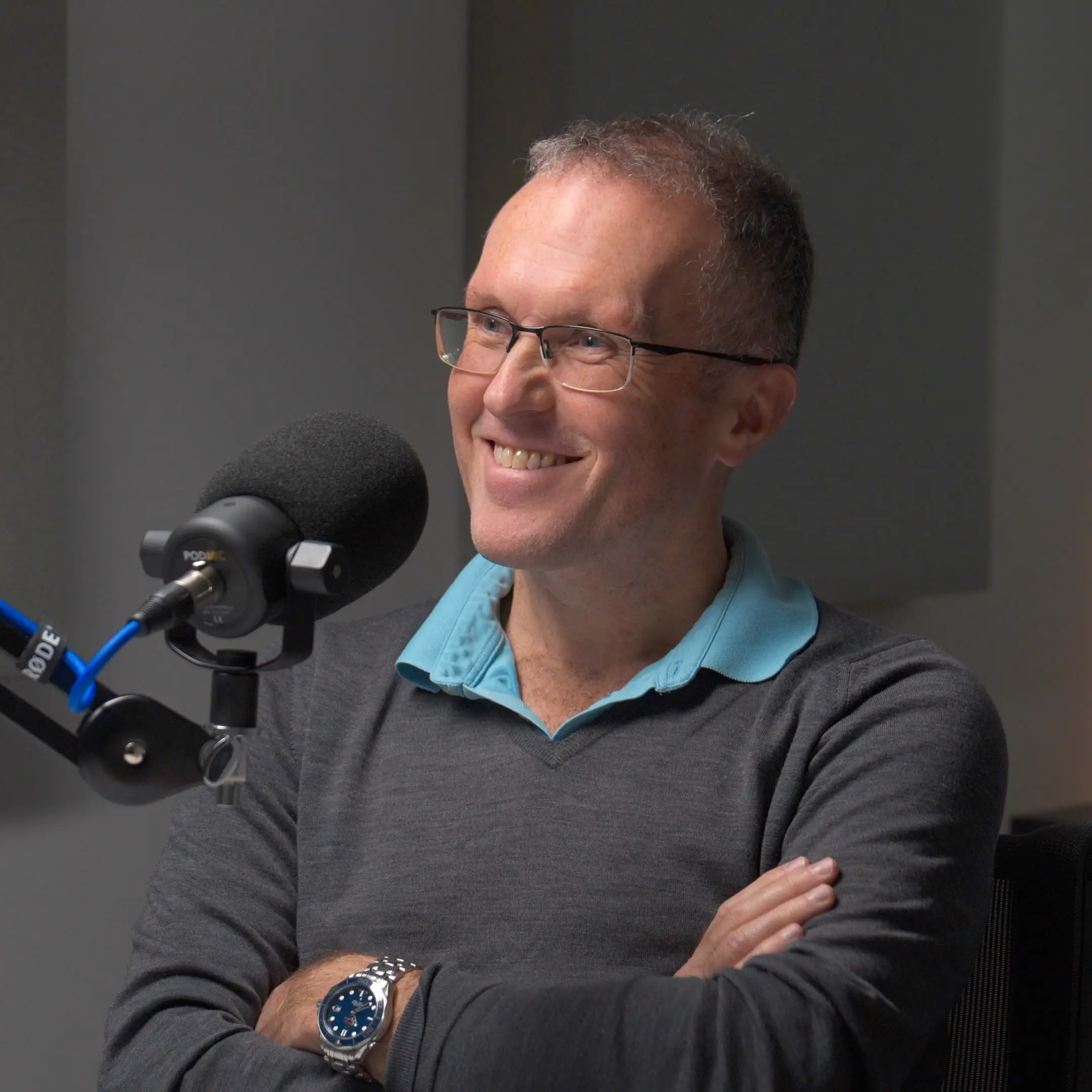
Britain's Next Innovation Wave with Tom Adeyoola at OxTechWeek


How can the UK turn its research strengths into companies that grow and stay here?In this episode of Oxford+ recording at the first OxTechWeek, Susannah de Jager speaks with Tom Adeyoola, Executive Chair of Innovate UK and former founder of Metail, about the changes he wants to make to the country’s innovation system.
Tom explains his proposed shift from funding individual projects towards supporting promising companies over time. He discusses how Innovate UK could connect research to growth capital, why pension investors need information they can use to assess deep technology, and what the sale of Oxford Ionics taught him about the need to prepare UK funding earlier. He also argues that government procurement should help promising companies reach customers, and that Oxford, Cambridge and other university regions can attract more investment by working together.
A UKRI evaluation published in November found that a decade of quantum research and skills investment supported 74 spin-outs and attracted an estimated £482 million in private investment. The conversation closes with Tom’s hopes for Oxford in 2050, including the housing and space needed for companies and talent to grow.
Susannah de Jager: Welcome to Oxford Plus the podcast focused on innovation around Oxford. We look at everything across the ecosystem, the institutions, the people, the technology. If you need to learn anything about Oxford, whether it's how to take a first step in through the door, or as an experienced investor wanting to go deeper, this is the podcast for you.
This episode was recorded live in May at the first Oxford Tech Week. Thank you to Christian de Koning and Michael Collier of Founders and Funders for creating it and for hosting this conversation. My guest is Tom Adeyoola, Executive Chair of Innovate UK. Tom was a founder himself, and since taking the role, has narrowed Innovate UK's focus to fewer sectors with one aim: turning breakthrough ideas into industry giants. So what happens to those outside those sectors, and what does it mean for Oxford?
Tom, absolute pleasure to have you here today, and I know that this audience is very much for you. So about a year ago, you took over as the Executive Chair of Innovate UK, but prior to that you were a founder yourself. So I'd love to hear a little bit about your experience as a founder because it's very evident that that has fed into what your strategy is in your current role.
Tom Adeyoola: Yeah, thank you very much. So I graduated from the other place, Cambridge, over 25 years ago. Started life originally for a year as a management consultant, and then the internet boom was happening. So that felt really exciting to me and I ended up jumping into an internet start-up called Sportal in 1999, having worked on the AstraZeneca merger as a consultant, and once I joined Sportal, that sort of started really a 25-year career working in start-ups. So working or rather learning the mistakes of others and getting paid for it before then starting my own in 2008, and that start-up was very much built on what I felt was world-class, world-leading research technology and computer vision to build an apparel-based start-up looking at solving the online clothing fit conundrum.
And I'd been spending a year on thinking about what to do in terms of building a start-up because I'd done the build-out of a product line for a gaming company from scratch to 70% of the UK market and took it international. So I had the confidence to do my own thing. I needed a way of doing that and I certainly felt at that time that to compete on a global stage, you needed world-class IP because a US company would always raise 10 times more than you. So you needed a starting position from which to build something that could be globally significant. I was driven by trying to solve big problems, big challenges. I wanted to be a big, successful company and solve something that was meaningful.
And I always—I think it's Larry Page who talked about the toothbrush test. So for something to be meaningful and big enough for Google to go after, it needed to be something that a consumer would think about at least twice a day. So it's that sense of a big enough opportunity and certainly as an economics graduate, I cared about systems. I cared about trying to solve and fix parts of systems, and with disruptive innovation, be it business model, be it product, or be it actual technology. So how could you disrupt and improve how a system works?
I then had an 11-year journey as a start-up founder of a business called Metail. And actually earlier today I met someone here, Henry, who was a friend of somebody I worked with at a consultancy who then did a PhD thesis, which talked about my start-up, which was very weird. So, I had that journey. I worked with a professor at Cambridge University. I ended up having an office in Cambridge, and a commercial down in London. I couldn't raise money really in the UK; 80% of 25 million pounds that I raised on that journey from 2008, I raised out of Asia. We became a global business. I had an office in Singapore for a part of that journey. I had outsourced operations in India.
But it was a struggle and I was part of a cohort of founders. I remember we had a dinner, 2012: there was myself, Ian Hogarth, who went on to create the AI Safety Institute and now runs a VC called Plural that is a big and really interesting deep-tech VC in the UK. There was Tom Blomfield, who at the time was founder of GoCardless, who went on to create Monzo and is now an ambassador for Sovereign AI, the government Sovereign AI programme. And then obviously Matt Clifford, who created Entrepreneur First and went on to create the AI Options Opportunities Plan for government as an adviser to the PM. So we were a group of founders trying to do stuff from 2008, finding it very difficult. Money wasn't quite there. The infrastructure wasn't quite there and we've subsequently since come out and wanted to try and fix what we saw as the things that didn't enable us to achieve escape velocity with the start-ups we had at the time and the ecosystem as it was at the time.
I sold my company in 2019, and then I was really much focused on what were the things that I felt needed fixing, again, thinking about system. Growth capital, I felt, was a really important bit, and the only way to do that would be through pension reform and so I started pushing the needle quite hard on pension reform, which led to me being pulled in to co-author the Start-Up, Scale-Up Review for Rachel Reeves in opposition. We're not going to find any more new commodities out of the ground, so what was going to be the driver of the next wave of growth for the UK? And I really believe that it is our world-class research base that we have through the universities that we have, and it will be about mining IP out of our universities better, quicker, and faster. So how could we get that out of our universities faster? And those were the two elements that I focused on in that review.
And then I was asked, I got a tap on the shoulder, 2024, to consider this job, Innovate UK, which felt to me like the messy middle and could I unravel the messy middle as a start-up person going into government bureaucracy, it felt like a crazy idea, but I felt that I couldn't not do it, if that makes sense. I was shortlisted pre the election under the Rishi government, and then asked again and re-shortlisted again. It was a year-long process. I went from April 2024 to April 2025 before I then agreed on the basis that Patrick Vallance was very clear, strategic, focused on what he wanted to do and then Ian Chapman, having had a conversation with him as the UKRI CEO, also being of similar mind.
So as somebody with a bias to action, it felt like the stars were aligned with reference to that spine to enable stuff to happen despite going into something which is quite a treacle-based machine.
Susannah de Jager: There are so many things I want to unpick from that. We'll come to the pension capital side of things later. But you are now in post and you have had all these learnings. You've got quite a different strategy that you announced in March. I'd love to go into some of the changes that you're going to make and really unpick what your vision is for what Innovate UK should be doing in order to solve some of the problems that you were subject to and many people I'm sure have been subject to.
Tom Adeyoola: Yeah, so coming into Innovate, I mean, it was quite impenetrable to understand what it did. I was a founder who had successfully got three Innovate grants over my time and encouraged others to get grants and they were important parts of the journey. But I think over the course of a decade, it got very complicated; it was involved in lots of different things, really hard to understand what its focus was and how it was delivering for the nation. But at the same time, Innovate has a big budget, right? So its annual budget is a billion pounds that is being injected into the innovation economy primarily through businesses on an annual basis. So a lot of money, which should have a big multiplier effect on the UK.
So coming in, it was very much a case of I needed to understand the organisation. I wanted to then simplify and clarify the purpose and then build a plan of delivery to enable the organisation, both inside and outside, to be very much focused on outcomes — what are the outcomes we're trying to deliver? And as an organisation which was delivering and getting money out into the economy, it was actually very input-obsessed.
So a billion budget, but we have to land within 1% of that budget, right? So, of a billion, we've got to be no more than 10 million under. We can't be a penny over—10 million under that budget, and that's whilst giving money out to businesses that are doing projects and that we don't have control over those projects. So it's—you can see how the incentives then start to push you in directions which are not necessarily outcome-focused. It was very much an organisation—it has been very much an organisation focused on funding projects. So for me, it's like we have to move from an organisation funding projects to an organisation supporting companies, right?
So that's a big shift and I think over the last decade as well, what we've seen is, especially exacerbated by Brexit, a push towards how do we get money out into the economy in every corner of the economy and very much spreading the jam everywhere. The way I talk about it, if the spectrum is Universal Credit for business over here and international champions, I would say that the dial of where Innovate UK was closer towards Universal Credit for business and if we're trying to have an impact on economic growth and productivity in the UK, we need to be pushing in the other direction.
My inspiration, if you like, certainly has been the approach that was taken by Sport England, UK Sport, post-Atlanta '96. Atlanta '96, we got one gold medal and the approach taken then was to really understand where we had strength, expertise and where we could actually be successful. They worked out it was in all the sports where you sat down: bikes and rowing, and really narrowed that focus and then and, certainly with the cycling as well, it was leveraging our IP base. So important work in wind tunnels with the universities to understand and deliver an edge and off the back of that, start to deliver success, double down on the successful areas, actually remove from areas where we didn't have opportunity, but actually focusing on those sports of saying, once you have a talent base and once you have the emergence of success, you will then get support. So success begot success. It was a no-compromise strategy, and 20 years later, we were second in the medal table.
So it's that sort of approach that I want to take with Innovate, where we need to be focused on how do we take breakthrough ideas to becoming industry giants? How do we understand the end-to-end of all the sectors that we're involved in? The government's given us industrial strategy with sectors that they want to focus on. We should be following that. But within that, we should be looking even deeper into subsectors where we believe we have the research base, talent pipeline, and industrial strength that gives us a right to win and in those areas, we need to ensure that we are providing the support to take them there.
Our support isn't just through funding grants. We have a unique position in the ecosystem in terms of access to policymakers, regulators, procurement, and funders to be able to do the long-lead-time conversations that can help founders who don't have any time, right? So that is our power. I certainly believe that we are too fragmented as an ecosystem because we think we are much bigger than we are and we need to be way more joined up. I believe we have, pound for pound, the best research base in the world. We also have the second biggest private capital market in the world. So that should be enabling us to deliver outsized outcomes for the IP that's coming out of our research base.
So our job is to basically reduce the knowledge gap, which clearly exists between those two areas and act as a tech due diligence engine to speed the connectivity of our research base to capital. If we can do that and then get more of our money investing in ourselves, we can get more of our companies achieving escape velocity, and I won't have to be sat here telling you that I subsidise R&D for the US economy.
Susannah de Jager: So I agree with everything that you've just said, but playing devil's advocate for a moment, I know you did a lot of listening last year when you first came into post: you went round, you were kind of corroborating this thesis. I'd love to understand, has there been any kickback or fear around whether removing some of that jam, as you put it, is going to damage the ecosystem?
Because we're sometimes a little flippant with, "Hey, we're great at start-up. We're bad at scale-up." There was some question in a recent budget about removing EIS; that didn't happen. But if you were to remove your grants and EIS, suddenly we might not have such a good start-up ecosystem.
Tom Adeyoola: So I mean, I would say it—from my perspective, it's not about removing grants. It's about basically being much more focused in how we are pinpointing our efforts. When I came in last year, I think there'd been a report in February from PwC which said that we have the lowest churn rate in early-stage businesses in over a decade, despite the highest formation rate.
So we've generated basically a pool of zombie companies which aren't going anywhere. And I think also subsequently that it's been too difficult to understand the signal of what is and has high potential and what doesn't and we've sort of infantilised, I think, that early stage. When what we need to build is real competitive tension and liquidity in that market so that the talent goes to the good businesses to progress because we do have a high pull on the talent that we generate. If too many are staying alive in certain respects and we're not basically moving the resources to the ones that actually do have the potential and the capability of achieving success, then they don't move fast enough. And I think in our system, the lack of speed is hugely important, and that's an edge that the US definitely does have over us and that was one of my big reflections coming into Innovate, was that there wasn't a value of time in the sort of government relationship and arm's-length body ecosystem.
Susannah de Jager: To summarise, we need to fail fast, which is much more American but something we can learn from.
Coming back to what you're going to do at Innovate UK, because we glossed over it there, but you were talking about the connectivity of the ecosystem, and I know that you're very keen not to sort of have people coming in at various points in Innovate UK and to make it more joined up.
How do you see, for one of the companies that fits the profile you're describing, how do you see that continuum working and where do you see the stepping-off points?
Tom Adeyoola: Yeah. So I think previously the strategy had been quantity-based. So it was trying to reach a million innovators and as a consequence, incentives were all wrong: there were three different databases within Innovate. I think as of last week, we've shrunk from three to two, and by the end of next month, we'll be down to one.
So as a company that comes in, the key will be that we start tracking them and monitoring them and my aim is that we hide the wiring and push it on the inside and we start to have a proactive relationship with all of the companies that enter, if you like, the stream of the ecosystem and start working with us. As a consequence, the triage should be on: are you a high-potential business? Do you come in? There should be something for everyone in the sense of like, you might not be right for us right now, but we will direct you towards other things that you could be doing and other schemes that can help you on your way.
But once you are in, I want our model to be something similar to what I've seen in the quantum space, which has been actually the model that I keep talking about internally of the one that we want to replicate, where that was a case of like, there's really interesting research in the labs where the research councils will fund that research. We then as Innovate create a Petri dish for companies to emerge, and then we start tracking the cohorts through their lifetime. In this case, we helped NSIF then invest in the ones which were strategically important, and I think also provided information to the British Business Bank for investments, and then advocating for those companies ongoing.
So Oxford Ionics, Oxford-based business, you know, I was gutted when they sold to IonQ. I spoke to both CEOs the day after that was announced. But I asked the question directly of, to Chris Ballance, like, "Why did you take this deal? I've just got here and my goal is to make sure that you can stay and scale here without having to generate a big daddy to take you forward." And he'd taken that deal because it was the right thing for the business at the time, and there was no UK alternative. My goal will be, going forward, is to make sure we have the relationships with all the cohorts of companies coming through so that even when they've gone past the stage where our money is meaningful, that we are still advocating them into government, and we are preparing the ground for them. Because their moment of raising money, and there's about four or five of them trying to raise 100 million plus. It was highly predictable that there would be that cohort of companies trying to raise that money at that time and so two to three years ago, we should have been doing the work to prepare the ground for UK-domiciled money to be ready to do that investment.
And I'm still having those conversations. I'm probably talking to Oxford Ionics and IonQ on a bimonthly basis still, because I think it's hugely important that we ensure that the research base for that entity stays in the UK, that we grow their impact in the UK, and likewise, the same with other companies of that cohort: ensure that we are learning what needs to be learned to ensure that we are doing the right things. And I think you'll see with the work that government has done to recommit now another 2.5 billion with advanced market commitments of saying, "If you can achieve these things, we will buy quantum compute for you."
It's like laying the groundwork for that to happen so that we aren't caught cold. That's the bit that I want to make sure that we are doing and by maintaining the relationships and keeping an eye on these companies, we can do that. And also we can help join up the system further on and certainly with the British Business Bank, which has been given a huge mandate over the course of the last year, it's been given an extra sort of 26 billion to invest. They don't have the technical expertise to understand what's coming out of the pipe. We have to do that job for them. We have to ensure that the British Business Bank, for example, is investing in Wayve in year one, not once it's become a unicorn.
Susannah de Jager: And you were speaking earlier about the pension reform, what you did. You were working for Labour. I was actually still trying with the Conservative government at the time. Yours was arguably more successful. But the Mansion House Compact was signed when Nicholas Lyons, Sir Nicholas Lyons, was at the end of his mayoral year. I think that was the end of 2022. We are now nearly four years beyond that. How do you see your role in Innovate UK as helping to galvanise some more of that money? Because it's been slow; it's still coming, but you made the point earlier, and I wholeheartedly agree, for those that don't know, we've got four trillion in UK pension capital. Only 600 billion of that is in defined contribution, but it's going to grow. It's a meaningful sum of money. These commitments are 2030 5%. So it should be a meaningful amount of money, but it's flowing slowly.
Tom Adeyoola: Flowing slowly. To your point, it's such a big market. We don't need a huge amount of it to have a meaningful difference.
Susannah de Jager: And by the way, just to interrupt, 50 years ago, we used to have 60% of UK pensions were holding UK equities and now it's less than 1%. So there has been quite a global mindset, not bad for pension holders, but hasn't helped our homegrown talent.
Tom Adeyoola: And there's a roundabout way that we're invested where basically UK money is invested then in US funds who are then investing in UK businesses. So it's too many steps removed. By getting more of that pension money back in the cycle, I think you also close the gap between the different constituencies. So the teacher who taught the student who's become an entrepreneur, them having a stake in that entrepreneur's future, you want to create that sense of we're all in this together.
Things are moving slowly. Actually, on Thursday I had a roundtable at the London Stock Exchange with a bunch of pension funds. It was quite interesting and eye-opening and I was making that point of my job is to try and basically present all of the information on what's coming through the pipeline and to make deep tech and hard tech and the IP understandable to the investment community. So what I need from them is to tell me how they need stuff presented so that they can make the choices they make and it was very palpable in that room that there's still a huge element of caution and a sense of like, "Oh, start-ups, they're a bit dodgy, aren't they?" But it's like, "Well, the Americans are investing in this stuff."
They're also still looking far too much at historical data over a period where, because we didn't get businesses away during the internet era, we didn't create any of those mega growth businesses that the Americans did. But the era just behind that was the mobile era, which we were fantastically good at and for a brief moment when I left university in February 2000, we had the biggest company in the world in Vodafone. So things go in cycles, and I think there's an educational piece to the community to understand we're now in the middle of a new cycle where we do have emergent technologies, where we do genuinely have top one, two, three status things from quantum to engineering biology; there's a whole mix of elements here where we really have huge potential.
With us as Innovate, we've been too focused on presenting our information and our metrics into government, and we need to be focused in the way that pension funds will understand. But I genuinely feel there's a big movement, and there were some people in that room, and some of the funds who were saying, "We are putting money to work." Schroders has now put together a fund of 600 million plus and there is a sense in that room that actually over the course of the next 12 months, we might move from nowhere to being actually world-leading on the DC pensions side of things.
But there's also, I think, a move in Europe, certainly with the Scaleup Europe Fund which was recently announced and the government has said that we will be negotiating to be part of that. That is a five-billion fund which will be going to the deep-tech community, which also generates this momentum of pressure of like, "Oh well, if Europe's going to have this five-billion fund, we should get our ducks in a row and get our act together as well." And the geopolitics of everything is also moving the needle. So for reference, I met with a US VC a few weeks ago, and their opening statement was: "We believe in scaling companies in situ." There is no way they would've said that a couple of years ago. And after pushing them a little bit, they sort of then started to admit, "Oh, it's because Oxford scientists won't move to the US any more."
So, that sense of, like, okay, actually, money and the ability for these companies to stay and scale here is changing; the geopolitics is changing; the capital environment is pointing in our direction. Everything still is moving far slower than I'd like it to. But I think, actually, we're finally all pointing in the right direction.
Susannah de Jager: And I think you've drawn upon something but touched on it quite lightly there, which is there is a realisation in Europe, in the UK, that the only pools of capital we have are our kind of our sovereign wealth funds, as it were, is pension capital and that in order to keep data sovereignty, control of our borders, if we just are subject to other tech companies, we're going to lose control of things that are very important to the UK and to Europe.
Susannah de Jager: This is a good time to perhaps lead into what are those areas that are in particular focus for the industrial strategy? And I'd love to also lean into how do you see Oxford's place in some of those more specifically?
Tom Adeyoola: I think very much we're trying to take the approach, and it's one that we're trying to do at speed, and Ian Chapman at UKRI is also really laser-focused on this, is that in each of our industrial strategy sectors, we have to be really narrowly focused on the areas where we can genuinely have a world-class position and generate leading companies so that we have chips on the table to actually negotiate with, like, what are our red lines? What is our position? And certainly, when I'm looking at the AI space, it's very much trying to narrow down. There's an emergence around AI fabless chip design. We do have existing UK strength through Arm in chip design. We're possibly and probably never going to really do large-scale manufacturing here, but certainly on the design side, that is an area where we really can start to dip into the ability to have and present a position to negotiate in what are becoming increasingly fraught and bullyish type trade negotiations.
And we are a middle power.
We are a middle power, yes. If we care about IP creation, we need to not be as naive as we are in international markets. I was on the board of a company founded by an Oxford PhD alum that essentially got their patent, and they'd become number one in the market for their product sector everywhere, and they were patent-infringed out of China and undercut in the Asian market which killed that side of the business, and then they were litigated out of the US market because the US market is a last-man-standing-wins from a cash basis. People aren't playing games in those markets. They know how to play really hard, really fast, and we need to understand that we have to think differently if we're going to generate and get escape velocity with companies, and I believe research intensity is really important, but we also have to play aggressively with strong government support in protecting IP when we go out to play against the US, Chinese, and others.
Susannah de Jager: And it's interesting, isn't it? Because I think as recently as even maybe two years ago, possibly three because of Ukraine, people were still very global in their mindset and not seeing this as a sort of burning platform. And now through a series of, you touched upon kind of geopolitical, the conflict in the Middle East, the conflict in Ukraine, people are realising: no, this is really important. We need to keep this and it's not serving us not to.
Tom Adeyoola: And I think what we've seen generally is an acceleration of like winner-takes-all with a lot of these industries where companies that do get to scale take all of the economic value creation and so everybody else is playing the sort of hits business type, a lot of activity to generate sums and pop out and generate some sort of value. But then that value then gets quickly acquired and accrues to the big beast.
I remember in 2009 being at a conference where the question was, would there ever be another SAP in Europe? And SAP was the biggest tech company in Europe, 35 billion market cap. Next biggest was Autonomy at five billion. I looked again 2017, the market cap growth of SAP was more than all of Europe's unicorns combined. So by having a company that had escaped, you're generating that momentum to keep going. And I think, yeah, AstraZeneca is our largest company, which is still a sub-hundred-billion valuation business. And we've got now in the US multiple, multi-trillion-sized companies accumulating value at a huge amount of scale and we don't have anything to trade off.
So certainly from a big tech perspective, what are our red lines? How do we control our red lines in terms of social norms, country values, but also in terms of economic value generation? The levers of power are massively skewed and we need to basically leverage our research and science base to ensure that we can have some levers that we can control ourselves.
Susannah de Jager: So we've spoken a little bit about the investor side of things, but something you and I have touched upon and plays into the theme you were just lightly touching on there is procurement and actually interaction with our domestic marketplace, which is never going to be as large as the US. But historically, certain elements of it have been, to use your phrase, like wading through treacle.
What do you think you might be able to do there and how are those discussions evolving? Because NHS is the obvious one.
Tom Adeyoola: Yeah, procurement, 400 billion a year. It's a massive—it's probably the biggest lever that government has. I think the number of people across government working on procurement is 6,000 people. But procurement is one of those things, again, which suffers from the old IBM adage, right? Nobody gets fired for taking the cautious approach and buying the thing that is the least risky.
We have a scheme called Contracts for Innovation, which is a scheme where you can procure innovation, right, through a contract. The difficult bit actually with that is that's a contract for innovation, but it doesn't guarantee the next bit, which is then the contract for the commercial product, right?
So everything starts again. So an element of what I want to do is how do we at least change that approach so that if you do achieve the innovation goals, that's the beginning of a commitment to then the next phase of procurement.
It's the same in defence. It can even end up being a block to being able to apply to the next level.
You end up being the small company that proves the innovation for then the large company to go and win the contract and that's something that I'm trying to avoid. And just even with the work that we're doing with the companies that we work with, and if we do deliver on that mission of being the tech due diligence engine, I want the companies that pass through that to be kitemarked so that they essentially end up jumping steps on the procurement frameworks so that people can understand, "Well, actually, if I procure that, I'm not taking a risk against myself and against my job. It's something which, where the liability risk has been taken elsewhere within government already." And also just with reference, like I've sat in rooms with all the chief scientists for every government department and went round the room talking about procurement and the mindset finally came to me and I said, "Look, I'm the only person in this room who doesn't have a PhD and isn't a professor, but you're all wrong, because you're all looking at procurement like it's about fairness and giving these poor SMEs a chance and thinking about it in an altruistic-type way. That is not the right approach. This is about getting world-class innovation into our government services whilst also giving a contract to a UK world-class start-up business that meaningfully changes their trajectory, also gives them a reason to stay and scale in the UK. It acts as an anchor. These are three economic imperatives. This is not charity."
Susannah de Jager: You touched earlier upon a sense of our scale and that sometimes the UK has a slightly kind of perhaps outdated sense of its place in the world. We've also joked about the other place and I think that it's really important to look at our sense of scale and where the opportunity is because there's a lot of work going on now to join up the golden triangle.
And I'd love to hear, from your perspective, how Innovate UK is going to be kind of part of that because we can fit in Silicon Valley's pocket. We should be working collaboratively. Miniature fiefdoms are not helping.
Tom Adeyoola: Yeah, I've always thought that we're an anti-Goldilocks-sized country, so we're not small enough like a Sweden and Israel that you think global day one, and we're not big enough like a US or China where by de facto being big in your market, you are already at global size and the traditional investor approach in the UK is: grow big enough in the UK and then think about international markets.
The problem with that is that you end up going too slowly, people get to see what you're doing, and then the copycats can emerge and take those international opportunities before you get a chance to go there. And also, a founder's journey is tough and difficult, and if you're taking 14 years to get to an inflexion point where somebody's taking nine, by that time, you've potentially had a family, you've been living really poorly: why can't we afford childcare? Why is this all so difficult? And all of your wealth is trapped in a single vehicle and therefore you're more likely to take that acquisition or de-risk your life the moment it comes.
Now I therefore believe very strongly that we need to connect everything up and understand that we are a medium-sized country. We also aren't generating enough in pockets to achieve the scale that we need in terms of the vehicles to deliver. So, OSE is delivering what, one or two companies a month? That's not enough deal flow for a multi-billion-sized fund, which is the size fund that you would need to start generating the growth capital to go into investments. But across our university base, across the country, we do have enough deal flow, right? So it's for us as a national body, we need to group and connect all of the activity that's happening through our universities to be able to display and showcase that to the entities that don't have time to visit more than Oxford and Cambridge.
And I think certainly from a brand perspective, Oxford, Cambridge, and some of the London universities are very visible, but even I remember talking to the Amanis and they were like, "Oh, Oxbridge, what else is there?" Right? So they don't see more than these brands, but we do have more to offer, and I think by bringing everything else together—actually, together, we are stronger, and that highlights the capability that we have in the UK. And then you start to understand how powerful we are. The same thing is true, to be frank, of the European opportunity. So the Scaleup Europe Fund starting at five billion, it wants to be a top-quartile fund. To be a top-quartile fund, you have to have UK companies in it. It's not achievable without that.
So we are in a position of strength as the UK in terms of what we generate, and we sort of have to start to realise that, and we have to start to pull together in a way which can demonstrate that ability of scale. The same will be true for all these funds. It's like, "Well, I want to see 30 companies; I don't want to see five." And that does necessitate the Oxford, the Cambridge, the London, et cetera, and our great northern universities coming together and being able to pull together the sense of there is more here than just the one or two. It's actually a full ecosystem and environment. We've got the talent base that can deliver on the needs of these companies as they scale, so we won't need to move the company somewhere else.
So it all comes together and certainly I do like some of the projects I've started to see, like Cambridge has done where they're like: build the idea here, but we scaled the manufacturing opportunity in Manchester. So how can we do more of that as a UK to understand the ability to, again, house the talent, generate the ideas, and build the product?
Susannah de Jager: And to the point you made earlier, rather than spreading the jam, decide what we're going to win at and then percolate the manufacturing or the other benefits of keeping those companies here more broadly. And I know that Irene Tracey has been very hot on this with TenU in the sense of: land is expensive in Oxford, so we can have Oxford scale-ups going elsewhere. We're running out of time. So just quickly, I'm going to ask you, if we get this right, how do you envisage Oxford will look in sort of 2050?
Tom Adeyoola: Gosh, 2050. There is no way that Oxford doesn't and isn't, again, still one of the top three places in the world from a research-innovation perspective. Especially with the emergent technology base across life sciences, quantum, engineering biology, and AI coming through and it is a talent magnet. The thing that we have to be able to do well to maintain that momentum is to resolve on, "Well, where are the people going to live?" Right? So how do we make sure that we have the clusters around Oxford where people can live, where they can build their companies?
So I spend a lot of time at the Harwell campus, which is a big cluster now of space-related companies and others. How do we ensure that there are places for the emergent companies and spin-outs that start here to be able to expand and grow here and access the talent base? And for this to continue to be this magnet for the best people in the world to come research, engage with others and generate and take their ideas to the next level.
I'm very optimistic about certainly the next 20, 30 years for the UK, because I really believe that the emergent technologies coming through now in our research base are going to be the cornerstones of the next eras of growth for the world and we have the chance to centre it here in the UK.
Susannah de Jager: Thank you. We'll also be celebrating the 25th anniversary of Oxford Tech Week.
Tom Adeyoola: Yes. Perfect.
Susannah de Jager: Thanks for listening to this episode of Oxford+, presented by me, Susannah de Jager. If you want to stay up to date with all things Oxford+, please visit our website, oxfordplus.co.uk and sign up for our newsletter so you never miss an update. Oxford+ was made in partnership with Mishcon de Reya and is produced and edited by Story Ninety-Four.

More episodes+

Hermann Hauser on Europe's Scale-Up Gap and Keeping Its Unicorns at Home

Human Genetics and AI with Sir Peter Donnelly

How Gordon Sanghera Built Oxford Nanopore

Can the UK Create Its First Trillion-Dollar Company?
Ethics & Innovation: Inside Microsoft's AI for Good Lab
Ethics & Innovation: Oxfordshire's Divide Between Opportunity and Access
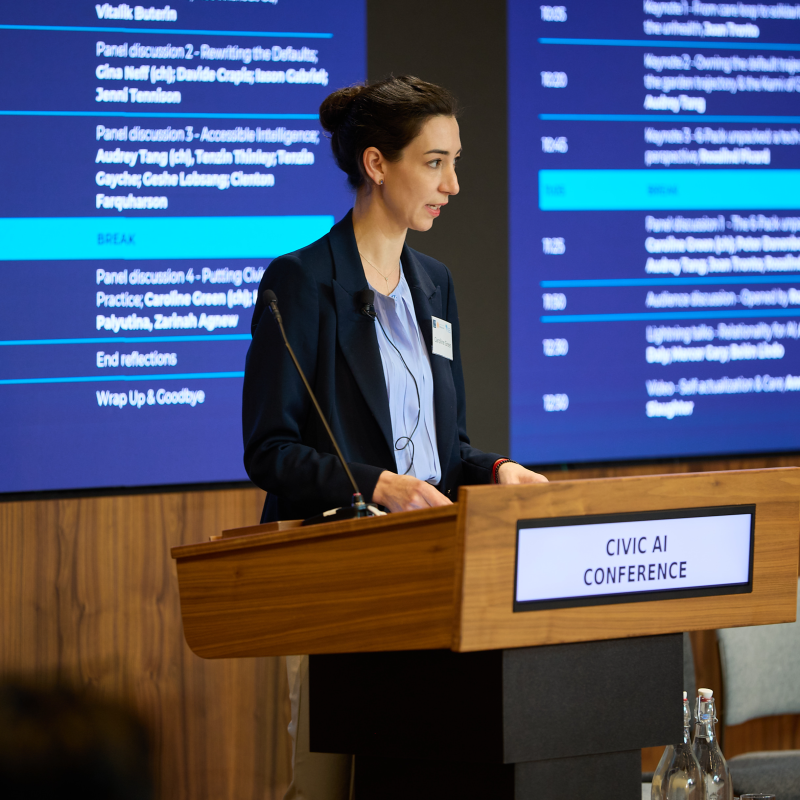
Ethics & Innovation: Serving, not Harming and Connection, not Convenience
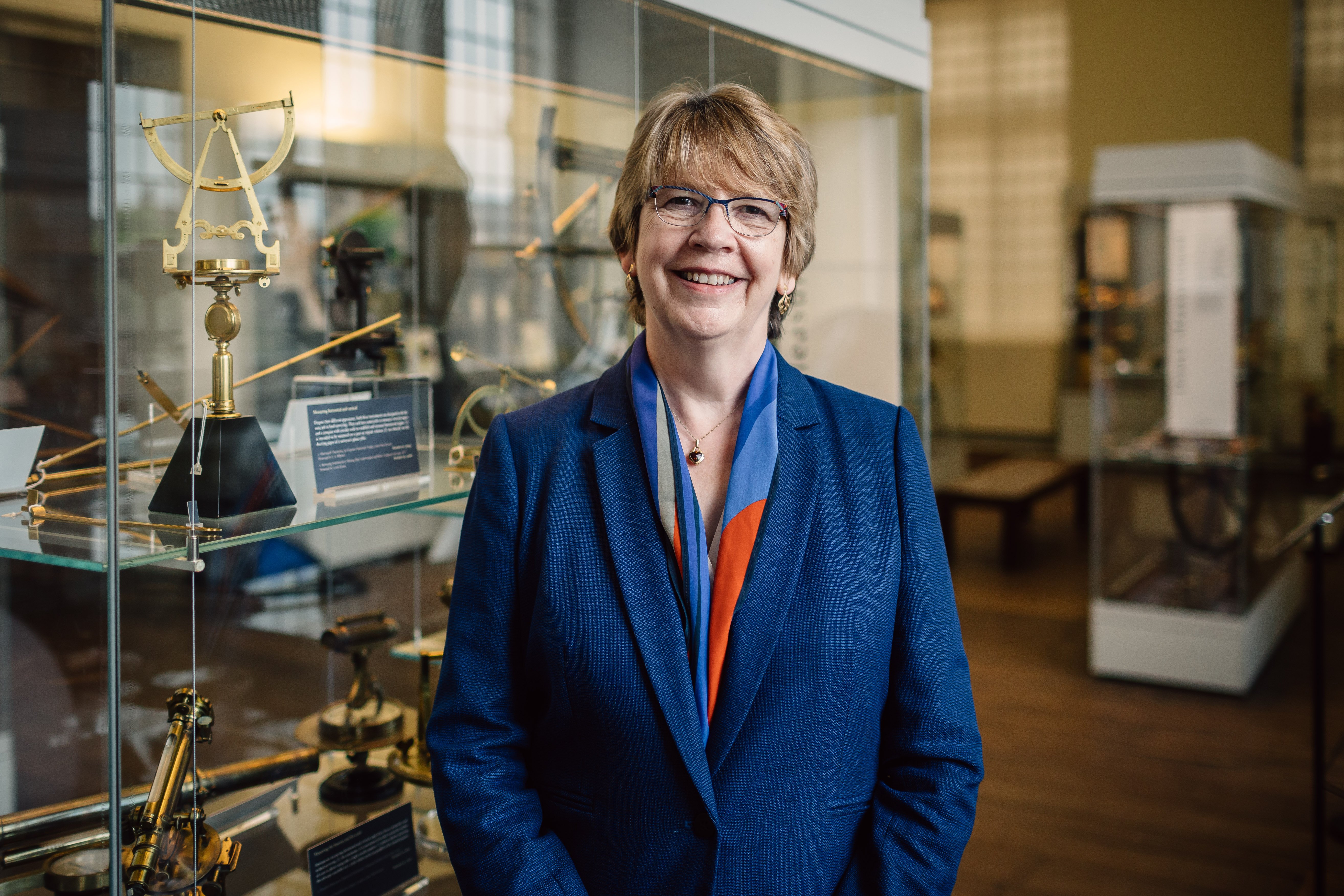
Ethics & Innovation: Can Trust Keep Up With AI?
Ethics & Innovation: Building an Innovation Ecosystem That Includes Everyone

Ethics & Innovation: Can AI Close the Justice Gap?

Ethics & Innovation: What Makes Us Human in the Age of AI?
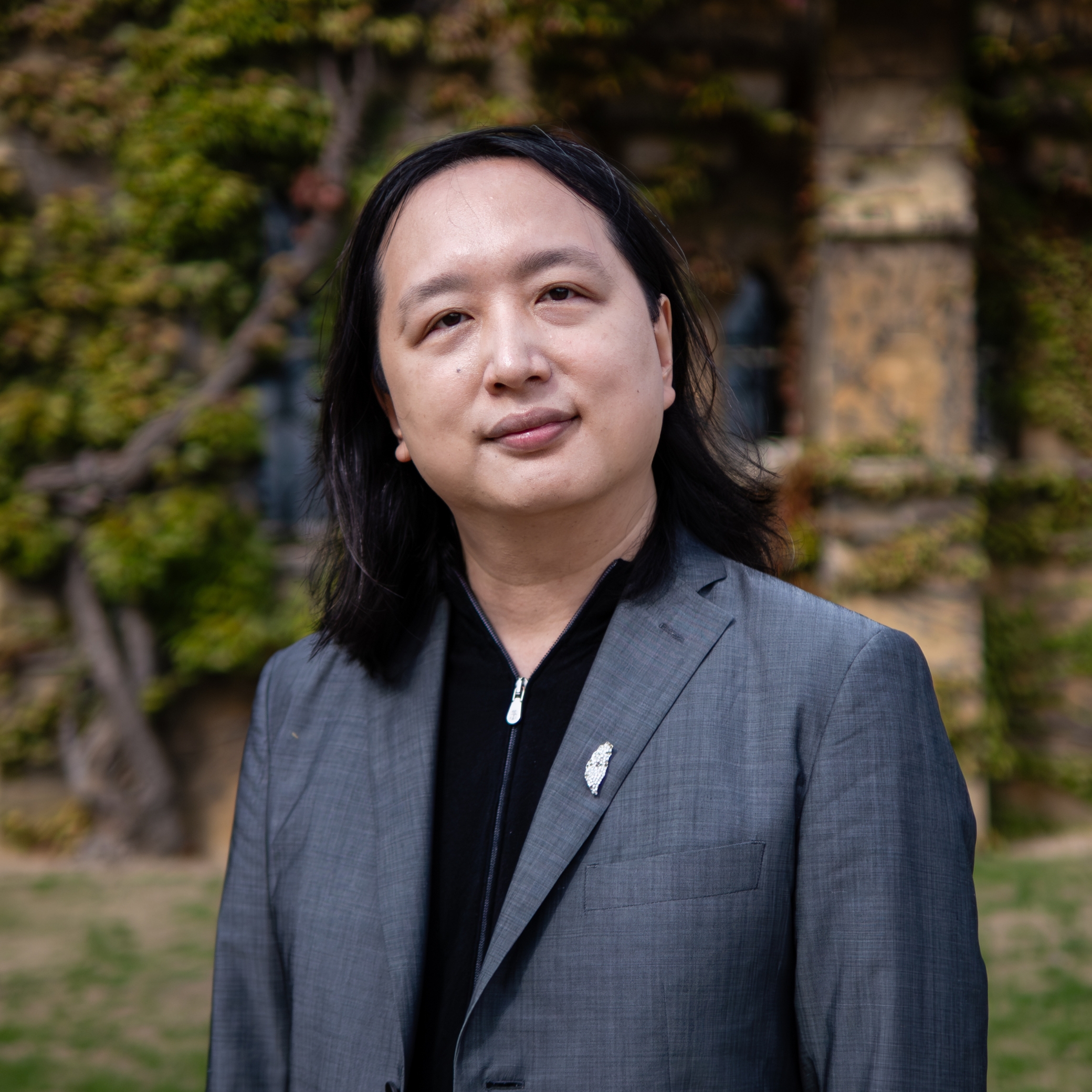
Ethics & Innovation: Civic AI, Data Soil and Digital Democracy

Ethics & Innovation: Does AI Actually Understand Our World?

Ethics & Innovation: The Social Media Ban, Sovereign AI, and the Race We Can't Stop

Recycling Capital and Talent in Oxford's Innovation Economy
Unconscious Bias, Responsible AI, and the Future of Workforce Decisions

Bridging the Gap between Scientific Research and Industrial Impact
OX Tech Week: From Pub Meetups to a City-Wide Tech Festival
Healthcare Innovation When Lives Are at Stake
Building a More Inclusive Innovation Ecosystem in Oxfordshire
Lord William Hague on Talent, Technology, and Capital

Building a World-Leading Climate Tech Ecosystem in Oxfordshire
Defence Innovation in the UK: How Startups Win Government Contracts

Building a £10 Billion Vision: Inside the Ellison Institute of Technology with Lisa Flashner

The Multiplier Effect: Funding Companies, Ecosystems, and the Future of the UK
Oxford North: The New Innovation District in Oxford
The Cluster Effect: How Bicester Motion is Driving the Future of Mobility
The Psychology of Scaling Companies and Teams with Professor Robin Dunbar: Part 3
The Psychology of Scaling Companies and Teams with Professor Robin Dunbar: Part 2
The Psychology of Scaling Companies and Teams with Professor Robin Dunbar: Part 1

The Future of Genetic Medicine with Zandy Forbes, CEO of MeiraGTx
How Founders Pledge Uses Data to Maximise Philanthropic Impact

The Oxford Trust at 40: How Innovation and Education Power Oxford's Future

Can Sirona Rival Ozempic? A New Chapter in Obesity Treatment with Camilla Easter

Aligning Founders and Investors with David Mott

Building Billion-Pound Outcomes with Jack Edmondson

How Machine Learning in Oxford Is Transforming Medicine Worldwide with Lionel Tarassenko

Bringing Science to Society with Molly Stevens

How Oxford University Innovation Bridges Science and Business with Mairi Gibbs
What Formula One Teaches Us About Startups and Success with Adam Parr

Risk and Reward in Early-Stage Tech Investments with George Robinson

Charting Fresh Career Paths with Sue Douglas

From Oxford MBA to Startup CEO with Lily Elsner

Navigating Market Dynamics with Marcus Stuttard

Harnessing Local and Global Talent with Sarah Haywood

Navigating Capital Markets with John Derrick
Building Oxford’s Future with Anna Strongman

Breaking the Myths Around University Spin Outs with Irene Tracey

Navigating the Future of Oxford Sciences Enterprises with Ed Bussey

Oxford's Role in the Next Industrial Revolution with Dave Norwood

Diversifying the Investment Ecosystem with Rowan Gardner

Pension Investment and the Mansion House Compact with Nicholas Lyons

Lessons from the Motorsports Cluster with Mark Preston

From Research to Reality with Cici Muldoon

Nurturing Founder-Driven Ventures in Oxford with Peter Crane